yahoo Press
Ebola outbreak live updates: Africa CDC warns 10 countries 'at risk' as Uganda confirms 3 more cases
Images
1 / 16
2 / 16

3 / 16

4 / 16
5 / 16

6 / 16

7 / 16

8 / 16

9 / 16

10 / 16
11 / 16

12 / 16
13 / 16
14 / 16

15 / 16

16 / 16
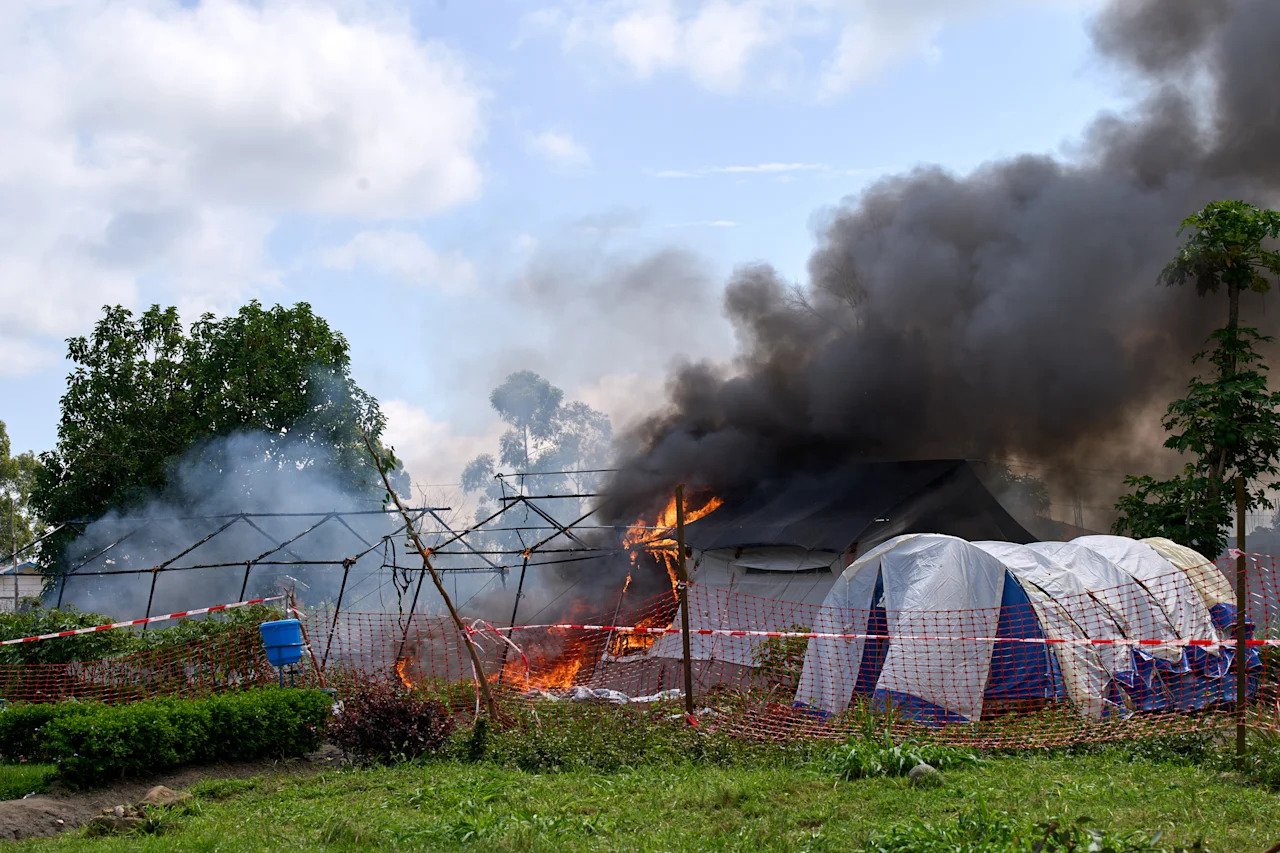
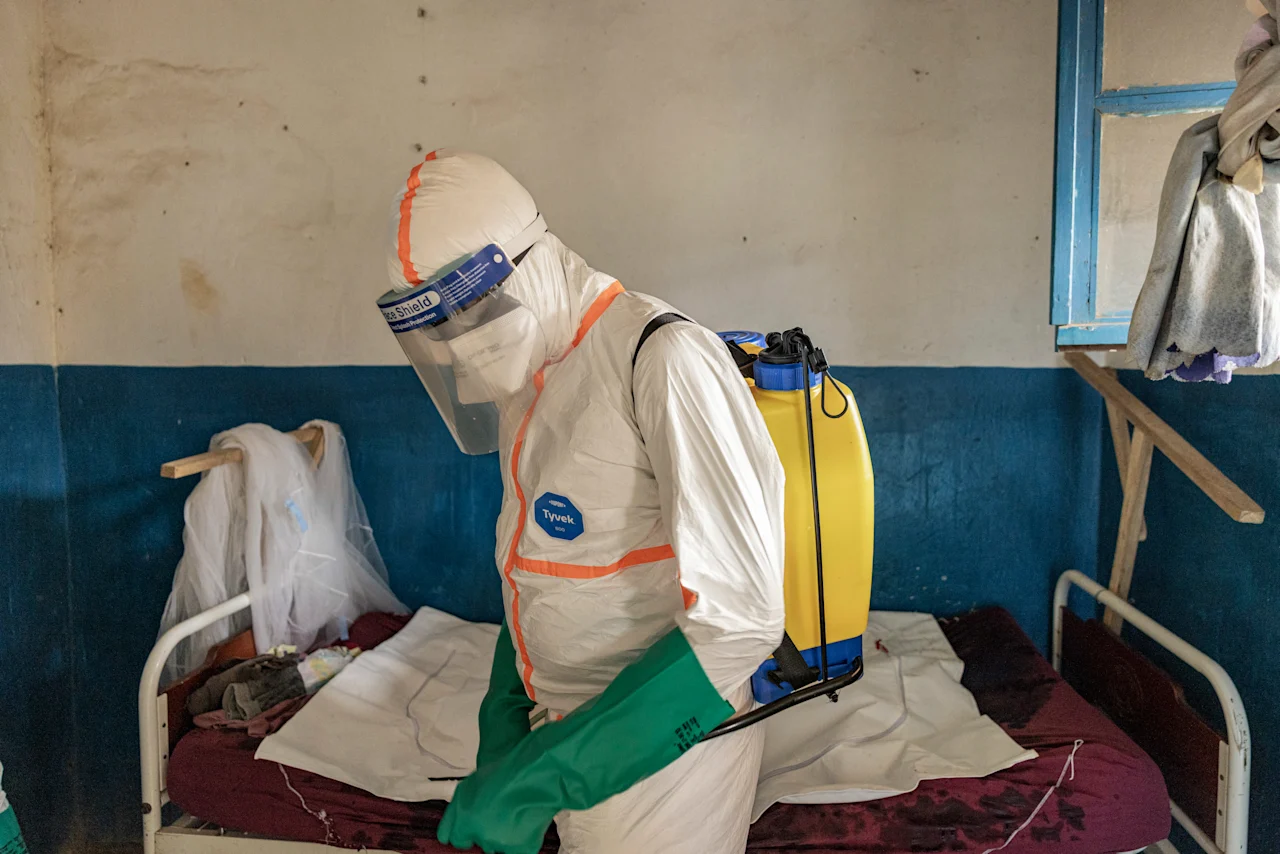
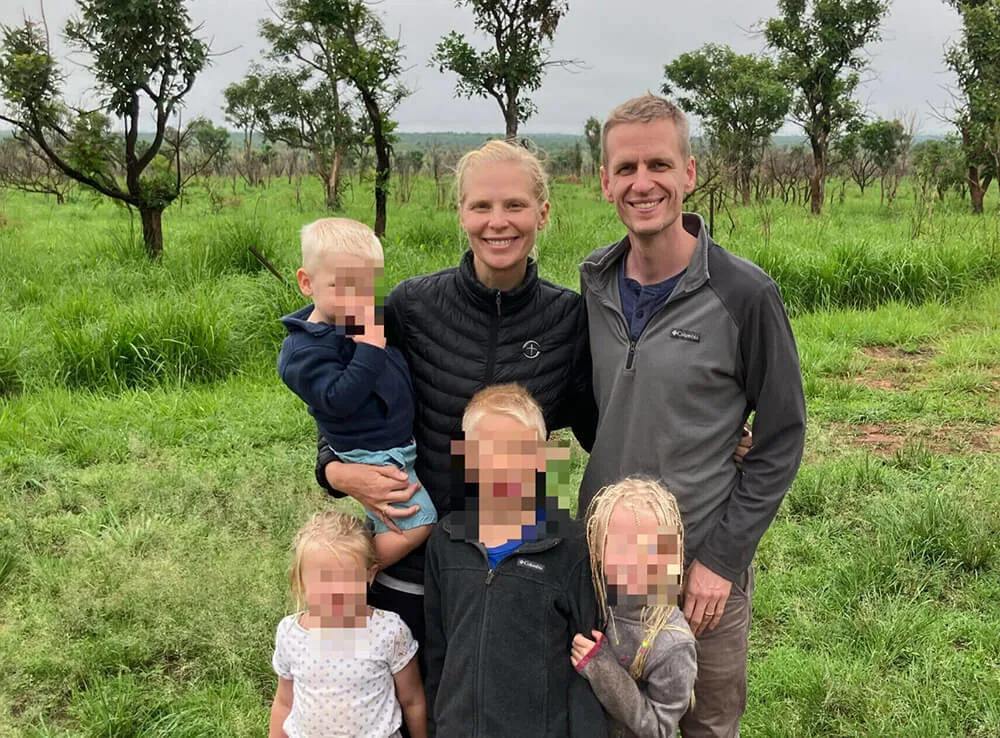
The Africa Centres for Disease Control and Prevention warned Saturday that 10 African countries are at risk from the worsening Ebola outbreak in the Democratic Republic of Congo and Uganda. Africa CDC Director General Jean Kaseya named Angola, Burundi, the Central African Republic, the Republic of Congo, Ethiopia, Kenya, Rwanda, South Sudan, Tanzania and Zambia as facing potential exposure. Africa CDC and the World Health Organization are seeking more than $314 million in emergency funding to fight the outbreak. The warning came after the WHO raised its risk assessment for DRC to "very high" on Friday, citing nearly 750 suspected cases and 177 suspected deaths in the country. In neighboring Uganda, five cases have been confirmed in people who traveled from DRC. The most recent include a Ugandan driver, a Ugandan health worker who cared for the country's first confirmed patient, and a Congolese woman who traveled through Uganda by chartered flight and sought care at a Kampala hospital before returning home. The announcement came as the U.S. pledged $23 million to help with the crisis response in DRC and Uganda. Earlier this week, WHO Director-General Tedros Adhanom Ghebreyesus said he was "deeply concerned about the scale and speed" of the outbreak and declared it a public health emergency. The U.S. Centers for Disease Control and Prevention has temporarily banned travel to the United States for people without American passports who have been in DRC, South Sudan or Uganda in the past three weeks. The CDC also confirmed that an American doctor working in DRC, identified as Peter Stafford, had tested positive for Ebola and was taken to Germany for treatment. Six other U.S. citizens have been exposed. A Christian missionary group that Stafford works with reported on Thursday that he was “critically ill but not acutely deteriorating.” Stafford’s wife, who is also a doctor, and their four children are asymptomatic and quarantining in Germany as a precaution, the group said. Follow the latest updates below. The Africa Centres for Disease Control and Prevention warned Saturday that 10 African countries are at risk of being affected by the Ebola outbreak in addition to the Democratic Republic of Congo and Uganda, where cases have already been confirmed. "We have 10 countries at risk," Jean Kaseya, the head of Africa CDC, said, according to France 24. He listed Angola, Burundi, the Central African Republic, the Republic of Congo, Ethiopia, Kenya, Rwanda, South Sudan, Tanzania and Zambia. Three Red Cross volunteers in the Democratic Republic of Congo are believed to be among the first known victims of the current Ebola outbreak, the International Federation of Red Cross and Red Crescent Societies (IFRC) said Saturday. The volunteers — Alikana Udumusi Augustin, Sezabo Katanabo and Ajiko Chandiru Viviane — worked out of the Mongbwalu branch in Ituri province in DRC, the region at the center of the outbreak. The IFRC said they are believed to have contracted Ebola on March 27 while handling bodies during a humanitarian mission unrelated to Ebola, before the outbreak had been identified. "These volunteers lost their lives while serving their communities with courage and humanity," the IFRC said. Uganda's Ministry of Health said Saturday that three new cases of Ebola virus disease have been confirmed in the country, bringing its total to five. Two of the new cases are known contacts of Uganda's first confirmed patient: a driver who transported the patient and a health worker who helped treat them. Both are receiving care. The third is a Congolese woman from the Democratic Republic of Congo who entered Uganda from DRC with mild abdominal symptoms, the ministry said. "All contacts linked to the confirmed cases have since been identified and are being closely monitored and followed up by response teams," the ministry said in the press release, signed by Prof. Charles Olaro, director general of health services. Tom Fletcher, the head of humanitarian relief for the United Nations, described the challenges facing global health workers as they respond to the ongoing outbreak in the Democratic Republic of Congo and Uganda. “These are some of the most difficult operating environments in the world for our life-saving work,” he wrote Friday on social media. “We face conflict and high population movement. We are working to secure safe and sustained access for frontline responders, including to areas controlled by armed groups.” Fletcher added that “community trust is essential” in areas where many locals are skeptical of outside intervention from international aid groups. The depth of that skepticism was highlighted on Thursday when residents in the DRC burned down tents at an Ebola treatment center after being stopped from retrieving the body of a local man who is believed to have died from the disease. Andrew Giuliani, the executive director of the White House Task Force for the World Cup, told ESPN on Friday that players on the Democratic Republic of Congo’s national soccer team must isolate for at least 21 days before coming to the United States for the World Cup. "We've made it very clear … they need to maintain that bubble or they risk not being able to travel to the United States. We cannot be any clearer," he said. DRC is one of 10 African nations to qualify for the tournament, which is being jointly hosted by the U.S., Mexico and Canada. They are scheduled to play Portugal in Houston in their opening match on June 17. All members of the team and their head coach are based outside of DRC, with most playing professionally in France, according to ESPN. The team was scheduled to hold a three-day training camp in their home country before the World Cup, but that plan was canceled earlier this week. The federal government has barred foreign nationals who have been in DRC, Uganda or South Sudan within the past 21 days from entering the United States. It’s unclear whether those restrictions will still be in place when the World Cup kicks off on June 11. The CDC said Friday that it is currently coordinating with FIFA, world soccer’s governing body, on protocols for the tournament in light of the ongoing outbreak. The U.S. Centers for Disease Control and Prevention held a conference call on Friday regarding the Ebola outbreak in the Democratic Republic of Congo and Uganda. “Currently, the risk to the United States remains low, because Ebola is spread through direct contact with body fluids and because the United States has a strong public health monitoring, infection control, and healthcare preparedness system in place,” said Dr. Satish K. Pillai, incident manager for CDC's Ebola response. The Department of Homeland Security issued an order late Wednesday night requiring U.S.-bound flights carrying passengers from Ebola-affected countries to land at Washington Dulles International Airport for additional health screenings. “I want to step back for a moment and remind everyone that you cannot get Ebola from passing someone in an airport, sitting near someone briefly, or through other casual contact,” Pillai explained Friday. “It's also important to note that as with any outbreak response, information will continue to evolve and CDC will continue to update guidance and work with you as we learn more.” At a press conference in Geneva, Switzerland, on Friday, World Health Organization Director-General Tedros Adhanom Ghebreyesus said the Ebola outbreak in the Democratic Republic of Congo poses a “very high” risk at the national level as cases and deaths continue to rise. There are now almost 750 suspected cases and 177 suspected deaths in DRC, he said, warning that the epidemic is “much larger” than the number of confirmed cases (82) and deaths (7) would indicate. The global risk posed by the Ebola outbreak, however, remains low, he said. The CDC on Thursday reported that the health ministries in the Democratic Republic of Congo and Uganda have counted 148 suspected deaths caused by Ebola since the outbreak began. That’s nine more deaths than the WHO reported on Wednesday. There have been a total of 575 suspected Ebola cases, though just 51 have been confirmed by lab testing, the CDC said. All but one of the deaths occurred in DRC. The Department of Homeland Security issued an order late Wednesday night requiring all U.S. travelers who have recently been to areas affected by the Ebola outbreak to be redirected to flights arriving at Washington-Dulles International Airport, where they will undergo additional health screenings. Under new protocols implemented by the CDC on Thursday, travelers entering the United States who have been in the Democratic Republic of Congo, Uganda or South Sudan within the past 21 days will be brought to a separate area of the airport where they will be evaluated for signs of illness and interviewed about their recent travel history. Travelers who do not have symptoms will be given information on monitoring their health and actions to take if symptoms later appear before continuing to their final destinations. Their contact information will be shared with state and local health departments. Travelers who have symptoms and “are reasonably believed to be infected with or exposed to Ebola” will be transferred to a hospital for further assessment, the CDC said, adding that the hospital “will isolate the sick person, provide medical care as needed, and work toward a diagnosis.” Foreign nationals who have recently been in the affected countries are currently barred from entering the United States under an order issued by the DHS and CDC earlier this week. “To date, no suspected, probable, or confirmed cases of Ebola have been reported in the United States, and the risk of Ebola domestically is low,” the CDC said in a press release announcing the new screening procedures. “However, public health entry screening is part of a layered approach that, when used with other public health measures already in place to detect symptomatic arriving travelers, can slow and reduce the spread of disease into the United States.” Dr. Peter Stafford, who is being treated in Germany after contracting Ebola while treating patients in the Democratic Republic of Congo, is “critically ill but not acutely deteriorating,” according to a new update from Serge, a Christian missionary group with which he works. “Peter is continuing to show the predictable sequence of Ebola signs and symptoms. He passed through the first days of nonspecific symptoms (fever, aches, fatigue), and has now passed into a phase with vomiting, diarrhea, and rash, with labs trending slightly in the right direction,” Dr. Scott Myhre, Serge’s area director for east and central Africa, said in a blog post on the organization’s website. In a brief phone conversation, Stafford told Myhre that he believes being evacuated to Germany may have saved his life. “Before I was evacuated I was feeling really concerned I wasn’t going to make it. And now I’m cautiously optimistic,” he said, according to Myhre. Stafford’s wife, who is also a doctor, and their four children are considered high-risk contacts and are being quarantined in Germany. All of them are currently asymptomatic. Another American doctor who works with Stafford, Dr. Patrick LaRochelle, was evacuated to the Czech Republic, where he is being monitored under quarantine. People set fire to an Ebola treatment center in Rwampara, Congo, on Thursday after being stopped from retrieving the body of a local man, police said. The town is part of the outbreak happening in eastern Congo, a region that lacks health facilities and where many people have been displaced by armed conflict. The bodies of those who die from Ebola can be highly contagious and lead to additional spread when people gather for funerals and bury bodies, which is why authorities are handling the burial of suspected victims where possible. These precautions have clashed with local customs, which may include mourners touching the deceased one last time during the funeral as a final farewell. Health workers in the Democratic Republic of Congo have told the BBC that local facilities are being overwhelmed by the spread of Ebola. Trish Newport, a Doctors Without Borders emergency program manager, told the BBC that health facilities are reporting that they are "full of suspect cases” and “don't have any space.” She said, “This gives you a vision of how crazy it is right now.” The number of suspected cases has topped 600, with the World Health Organization stressing that the scale of the epidemic is far larger than the number of confirmed cases. The majority of cases have been found in the Democratic Republic of Congo, with 136 deaths in the country, while one death has occurred in neighboring Uganda. However, there are almost 600 suspected cases in DRC, with the outbreak initially going undetected as a result of incorrectly stored lab results combined with local funeral practices. A flight bound for Detroit was diverted to Canada after a passenger from the Democratic Republic of Congo (DRC) boarded the plane “in error.” The U.S. has issued a temporary travel ban for people who have been in the DRC, South Sudan or Uganda in the past three weeks and do not hold a U.S. passport. “Due to entry restrictions put in place to reduce the risk of the Ebola virus, the passenger should not have boarded the plane,” a Customs and Border Protection spokesperson told NBC News. The flight operator, Air France, said there was no medical reason to divert the flight but that it was complying with U.S. restrictions currently in place. “There was no medical emergency on board, and like all airlines, Air France is required to comply with the entry requirements of the countries it serves,” a statement from Air France said. The Ebola outbreak in the Democratic Republic of Congo (DRC) and Uganda was already one of the largest on record by the time health officials confirmed the new infections. Delays stemming from incorrectly stored lab results combined with local funeral practices saw the outbreak spread undetected, Reuters reported, prompting the World Health Organization (WHO) to declare a public health emergency of international concern. The White House resisted allowing an American missionary doctor who tested positive for Ebola to return to the U.S., which delayed his evacuation from the Democratic Republic of Congo and his ability to receive care, the Washington Post reported Wednesday, citing five people familiar with the U.S. Ebola response. Dr. Peter Stafford was ultimately transported to Germany, where he remains in stable condition at a hospital, according to the Centers for Disease Control and Prevention. The Washington Post reported that around the same time that Stafford was transported, the wife and children of Dr. Patrick LaRochelle, from the same missionary group, returned to the United States after the CDC assessed the family twice. The White House denied the Washington Post’s report when asked about it. “Given that this American was in a very unstable part of the DRC, which as a whole is an unstable country, the administration continues to take the most effective actions to maximize this American’s odds of survival and minimize the odds of further transmission,” said White House spokesperson Kush Desai. The CDC announced entry restrictions on Monday for those who departed from, or were in, the Democratic Republic of Congo, Uganda or South Sudan during the last 21 days. The 30-day order doesn’t apply to U.S. citizens, nationals and lawful permanent residents. Dr. Peter Stafford, an American doctor who contracted the Bundibugyo strain of Ebola while treating patients in the Democratic Republic of Congo, has landed in Germany and is receiving Ebola-specific care at Charite University Hospital in Berlin, according to Serge, the Christian missionary group for which he works. The Centers for Disease Control and Prevention said Wednesday that he is in stable condition. Six other Americans with high-risk exposures remain asymptomatic and are currently in transit to Europe to “ensure they have access to specialized care if needed,” the CDC said. Serge has identified these individuals as Peter’s wife, Dr. Rebekah Stafford, their four young children and Dr. Patrick LaRochelle. According to Serge, Stafford’s wife and four children are being flown to Germany, while LaRochelle is being flown to the Czech Republic. There is currently no vaccine for the Bundibugyo strain of the Ebola virus, which is causing the outbreak in the Democratic Republic of Congo as well as Uganda. It could take months before a vaccine is ready, and even then, there’s no guarantee it would work, a top official with the World Health Organization said during a news conference on Wednesday. Dr. Vasee Moorthy, the lead for the WHO’s research and development blueprint, said there are two potential vaccine candidates. The more promising of the two vaccines could take six to nine months before enough doses are ready for clinical trials. An American doctor infected with Ebola has been flown to Germany for treatment, alongside his wife and four children, who are being monitored for signs of illness. Dr. Peter Stafford performed a gallbladder operation on a patient who later died from Ebola, before it was known that the patient had been infected. Later, Dr. Stafford — whose hospital is in the Ituri province, at the center of the outbreak — developed symptoms and tested positive for Ebola. Describing the scene as Dr. Stafford was transported, his colleague, Dr. Scott Myhre, said he was “really sick.” “There were people in full — we call it PPE — the personal protective equipment, and they’re completely covered, and he’s hanging on them barely strong enough to walk,” Myhre told NBC News. “He looked really tired and really sick.” The following numbers have been reported as of May 20: 600 suspected cases and 139 suspected deaths have been recorded so far, WHO director-general Tedros Adhanom Ghebreyesus told reporters in Geneva Wednesday. 51 cases have been confirmed by laboratory testing in DRC, and two cases confirmed in neighboring Uganda, both infections in people who traveled from DRC. In the 48 hours leading up to May 19, there had been 26 new confirmed cases and 143 new suspected cases, according to the CDC.