Press
The Enhanced Games: Like the Olympics, but steroids are allowed
Images
1 / 12

2 / 12
3 / 12
4 / 12
5 / 12
6 / 12

7 / 12

8 / 12
9 / 12

10 / 12

11 / 12
12 / 12
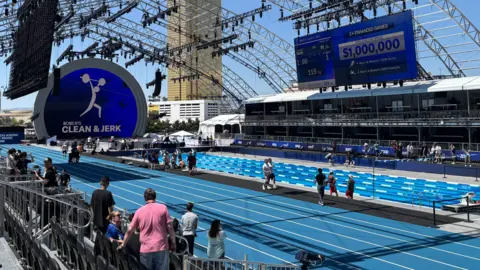
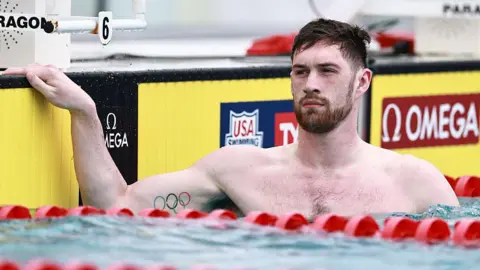
Under the blazing Vegas sun, giant billboards advertise "Live Enhanced" as the baritone voice of a sports announcer pretends to introduce British swimmer Ben Proud and other athletes.

The announcer is practicing at a new open air arena hosting one of the most controversial events in recent sporting history: the Enhanced Games.

Think Olympics on steroids. Literally.

The inaugural competition on Sunday will feature dozens of elite athletes using performance-enhancing drugs to try and break world records in track, weightlifting and swimming.

Some $25m (£18.6m) in prize money is up for grabs - with cash prizes for winners. World records in certain events, being eyed up by the likes of US sprinter Fred Kerley, pay a $1m (£740,000) bonus.

The drugs they use must be legal, and approved by the Federal Drug Administration. But substances like testosterone and human growth hormone - banned by the World Anti-Doping Agency - are not only celebrated here, they're encouraged and for sale.

The project was founded by entrepreneurs Aron D'Souza and Maximilian Martin in 2023 and has attracted backing from prominent investors including billionaire Peter Thiel and Donald Trump Jr.

Health experts warn that anabolic steroids and growth hormones can cause strokes and cardiovascular damage, among other risks.

Event organisers claim Enhanced will push the limits of human performance while critics, especially in the Olympic movement, dismiss it as an affront to the spirit and founding principles of competitive sport.

"You don't have to be pressured or use drugs in order to be the best," says Travis Tygart, CEO of the US Anti Doping Agency, USADA.

He tells the BBC that while there are clear failures with the Olympics' anti-doping protocols, the answer is reforming the system, not to dope.

Athletes, he says, need to be assured the Olympics are clean and cheats will not be tolerated.

"We don't want kids to have to say, 'in order to win an Olympic medal, when I'm 18 or 20 years old, I have to inject myself every day in the rear end with a potentially dangerous drug.'"

But Enhanced, the company behind the games, claims it is bringing out into the open what it says is an undercurrent of many athletes cheat and take performance-enhancing drugs in the shadows.

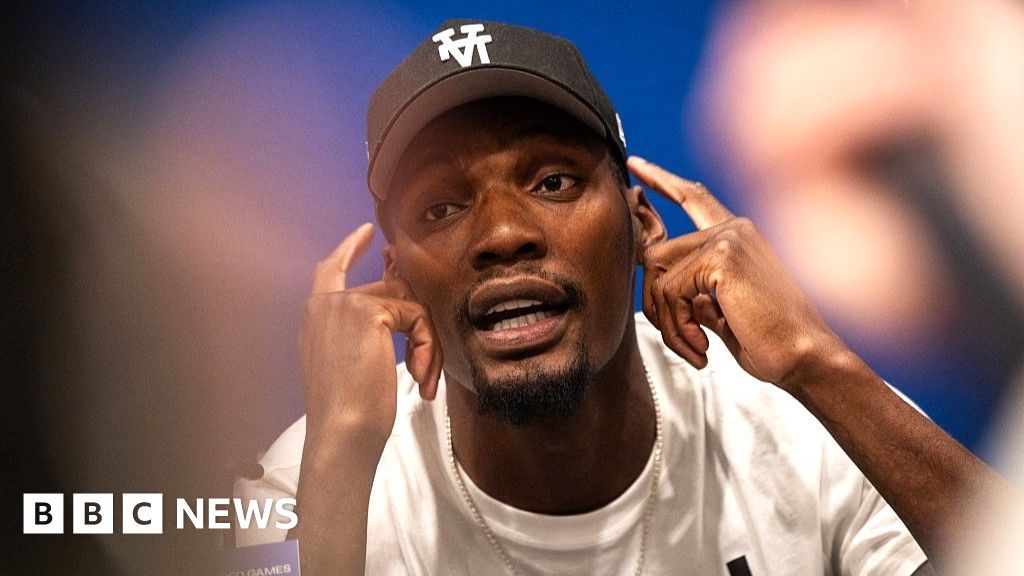
Packed into a ballroom at Resorts World casino, Enhanced athletes answered media questions for two hours, but only one - strongman Hafthor Bjornsson who hopes to break his own deadlift record of 510 kg (1,124.4 pounds) - would say which drugs he  was taking. Other athletes were tight lipped.

Bjornsson, who played the Mountain in Game of Thrones, says he's open about his steroid use because it's accepted in the professional strongman world.

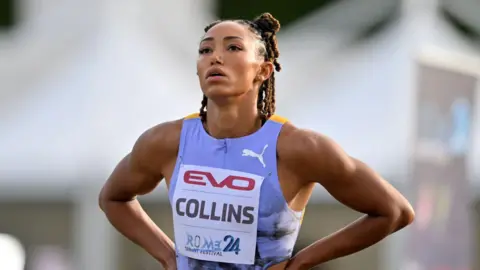
American sprinter Shania Collins says the fact that those taking part in the games admit to doping, already gives them more integrity than cheaters.

"We're being up front and honest and transparent from the start," she tells the BBC. "So how can you challenge our integrity when we're forthright with the information?"

Some sporting governing bodies have publicly rebuked athletes for choosing to compete in the games.

UK Athletics' chief executive Jack Buckner said he was "appalled" when it was revealed former Great Britain sprinter Reece Prescod had signed up in January. UK Anti-Doping (Ukad) has called the event a "reckless venture".

Meanwhile, GB Aquatics has said British swimmer Ben Proud will not be selected again for Britain's Olympic team if he competes at the Enhanced Games.

Proud, who won the silver medal in the 50m freestyle at the Paris Olympics in 2024, is hoping to break the world record using performance-enhancing drugs and win a million dollars on Sunday.

If he wins the race but doesn't break the world record, he will still make $250,000 (£185,000).

"There's no money in sport," Proud told the BBC before the games. "I was 30 and had just come off a silver medal, what future path do I follow?"

Proud, who has been widely condemned for joining the Enhanced Games, has said it would take 13 years of winning World Championship titles to earn this kind of prize money.

Enhanced has already paid a doped up swimmer a million dollars for breaking a record, during one of the trials it hosted ahead of Sunday's competition.

Of the 42 athletes competing at the Enhanced Games on Sunday, most will be using testosterone and some will also be using human growth hormone and stimulants like Adderall.

But not everyone will be doping - some are competing clean.

American swimmer Hunter Armstrong has said he "definitely" doesn't want to dope for the games, adding: "I personally have taken pride in getting as far as I can on natural God-given talent."

He plans to compete clean for a shot at the money and then return to compete at the Los Angeles Olympics in 2028. Whether he can is unclear, given the outcry from many sports bodies responsible for selection.

However, the US Anti-Doping Agency's Tygart told the BBC as long as an athlete passes doping tests to qualify for the Olympics, there's nothing to stop them from taking part.

Earlier this month, the Enhanced Group - the company behind the competition - began trading on the New York Stock Exchange.

And the competition is seemingly being treated as an opportunity for Enhanced to sell performance-enhancing medicine and supplements at the event and online.

This sparks broader concerns for some, at a time when social media is awash with offers to buy unregulated peptides and pressure on people to look a certain way.

Joe Vennare, founder of Fitt Insider, which analyses the health and wellness industry, feels normalising performance-enhancing drugs will bring unknown health and cultural consequences.

He says people have the right to use legal medical interventions, but is concerned some people are doing so at the expense of being fit and having a healthy diet.

"Kids are using social media filters, they're getting Botox injections," he tells the BBC. "They're having body dysmorphia - especially young men, in this case at record numbers."

Vennare says the Enhanced Games reflects those problems, but hasn't created them.

"That's a problem that parents and culture and society more broadly have to address."

Enhanced athlete James Magnussen agrees. The Australian swimmer says parents need to control what their kids watch and take personal responsibility - but he insists Enhanced is not "targeted at children".

"It's an entertainment company and product targeted at people looking at the longevity and human performance space."

None of these criticisms of the Enhanced Games are likely to go away any time soon.

Neither the athletes taking part, nor the invite-only crowd in Vegas, seem to be deterred.

The 80-year-old country music star said it will take some time for her to be "stage-performance ready" again.

The group was travelling to Las Vegas to scatter the ashes of one of their late husbands.

Rivals are emerging for the Las Vegas Sphere - are domes and spheres the future for entertainment?

Thousands of Robins' supporters are on the Las Vegas Strip ahead of the game against Leeds Rhinos.

Ireland's 'LeBron James' of Microsoft Excel has won the 2025 world championship in Las Vegas.