yahoo Press
Musk's Tesla Robotaxi Is Cheaper Than Waymo, But Longer Waiting Times And More Human Drivers Are A Drag, Analysts Say
Images
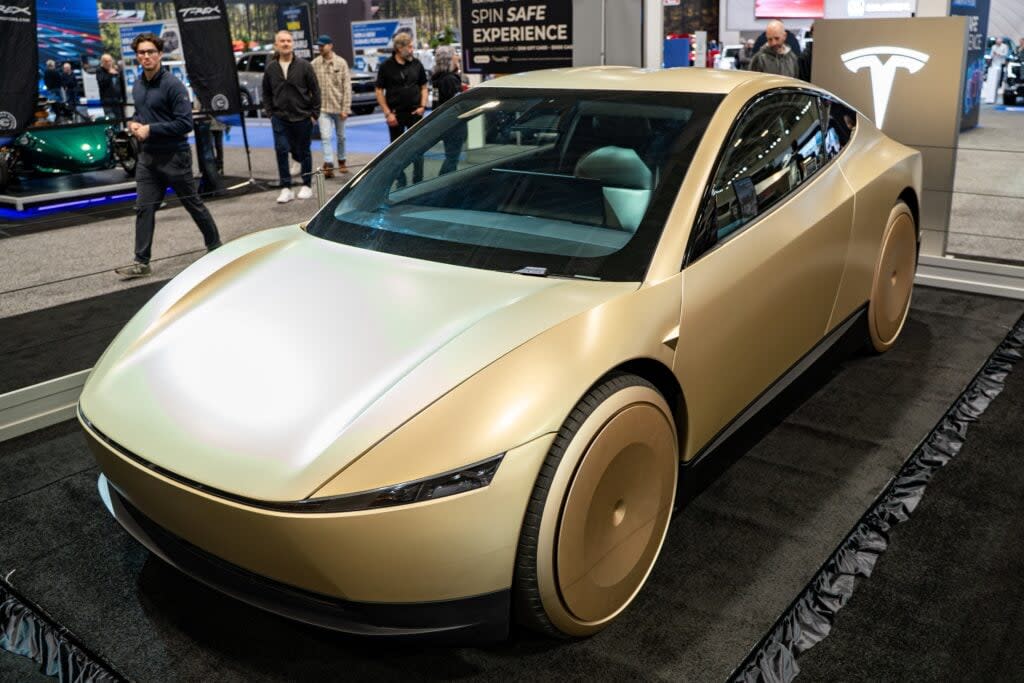
1 / 4
2 / 4

3 / 4

4 / 4
Tesla Inc.‘s (NASDAQ:TSLA) Robotaxi in Austin is cheaper when compared to its rival,  Alphabet Inc.'s (NASDAQ:GOOGL) (NASDAQ:GOOG) Waymo.

In a new research note released on Thursday, analysts from investment bank Jeffries analyzed ride-hailing services from Tesla and Waymo, taking over 15 rides in a Tesla and over 19 rides in Waymo. Analysts found that Tesla offered just 2 of the 15 rides without a safety driver and that they also failed to book a ride due to unavailability over 25% of the time.

"We found Teslas generally underperformed across KPIs," the research said, adding that robotaxi rides were offered with heavy discounts compared to Waymo rides. The cars also took suboptimal routes, resulting in longer trip times.

Don't Miss:

Explore the Fire-Safe Energy Storage Company With $185M in Contracted Revenue

Own the Characters, Not Just the Content: Inside a Fast-Growing Pre-IPO IP Company

Tesla’s Robotaxi has been under scrutiny after it reported 5 additional crashes in Austin. The new crashes take the total number of reported incidents from Mid-2025 when the service started, to 14.

While the robotaxi's progress could be slower than anticipated, a Cybercab was spotted testing on a highway near Chicago days after Musk touted an April production target for the vehicle and a $30,000 price tag.

Waymo, on the other hand, also took suboptimal routes and arrived over 3 minutes later than the prescribed ETA. Analysts also recorded one instance of remote human intervention for Waymo. The price for Waymos was similar to Uber Technologies Inc.'s (NYSE:UBER) UberX rides. Waymo robotaxis in Austin are available only via the Uber platform.

Trending: Blue-chip art has historically outpaced the S&P 500 since 1995, and fractional investing is now opening this institutional asset class to everyday investors.

Waymo rides have also been under scrutiny lately as NHTSA announced it was investigating over 3,000 Waymo AVs after multiple accidents involving the company's vehicles.

"We think AVs have initially relied on hype to help drive adoption. Our work suggests a scaled standalone AV fleet does not have a cost advantage vs. rideshare," the analysts said in the note.

Analysts also suggested that a hybrid model leveraging both AVs and human-operated vehicles would be the ideal solution as things stand, which could be in line with Uber CEO Dara Khosrowshahi's view that robots would drive Ubers in 15-20 years.

Read Next:

This Under-$1 Pre-IPO AI Company Is Still Open to Retail Investors — Learn More

Bad Ads Live Forever — See How This AI Helps Fortune 1000 Brands Avoid Them

Image via Shutterstock

UNLOCKED: 5 NEW TRADES EVERY WEEK. Click now to get top trade ideas daily, plus unlimited access to cutting-edge tools and strategies to gain an edge in the markets.

Get the latest stock analysis from Benzinga:

APPLE (AAPL): Free Stock Analysis Report

TESLA (TSLA): Free Stock Analysis Report

This article Musk's Tesla Robotaxi Is Cheaper Than Waymo, But Longer Waiting Times And More Human Drivers Are A Drag, Analysts Say originally appeared on Benzinga.com