yahoo Press
Stanley Druckenmiller Backed Up the Truck on This Wildly-Popular ETF
Images
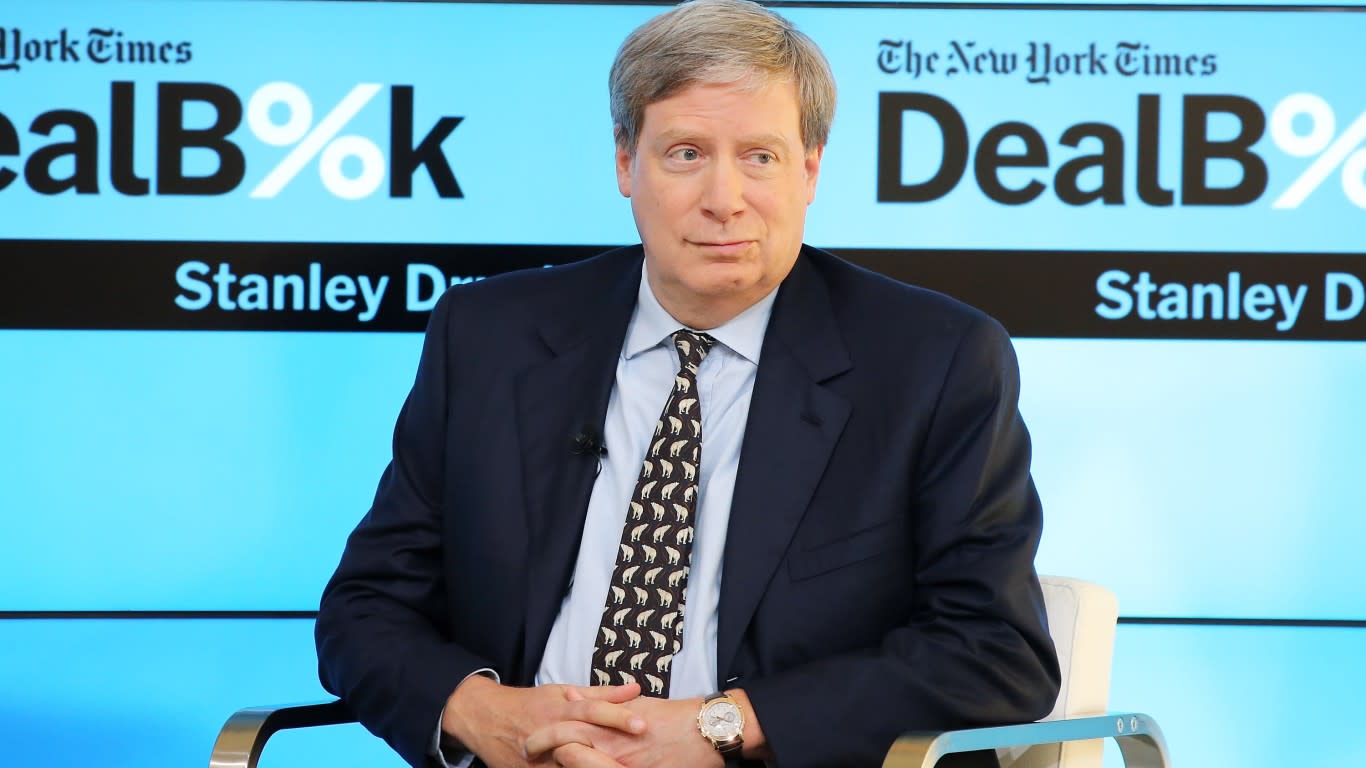
1 / 4
2 / 4

3 / 4

4 / 4
Nvidia (NVDA), State Street Financial Sector SPDR ETF (XLF) 7% of Duquesne portfolio, 2% gain past year, 17.1x P/E, Berkshire Hathaway (BRK.B), JPMorgan (JPM).

Banks benefit from yield curve steepening that boosts net interest margins, trade at modest valuations versus tech, and are investing heavily in AI automation.

The analyst who called NVIDIA in 2010 just named his top 10 AI stocks. Get them here FREE.

Stanley Druckenmiller is probably one of the smartest big-league money managers to follow in this environment. He doesn't just have the big name in the smart money crowd; he has the enviable track record that's stood head and shoulders above the pack.

Whether we're talking about his prior Nvidia (NASDAQ:NVDA) bet or his more recent three-year performance, which has topped the performance of the broad markets by a country mile, it's clear that Druckenmiller has a knack for spotting opportunities at the macro level and, perhaps most importantly, turning them into serious alpha.

With the Duquesne Family Office recently releasing its 13-F filings for the fourth quarter of last year, I think it's about time to check out what the man has been up to. The most remarkable buy from Druckenmiller and his team has to be the State Street Financial Sector SPDR ETF (NYSEARCA:XLF).

READ: The analyst who called NVIDIA in 2010 just named his top 10 AI stocks

Now, Druckenmiller didn't just place a small initial bet on the State Street Financial Sector SPDR ETF as many other hedge funds tend to do. Instead, he made a rather big swing, so much so that the ETF now comprises just north of 7% of the Duquesne portfolio. When it comes to tracking the smart money's moves, it can pay serious dividends not only to track what they've bought in any given quarter, but also the magnitude of such bets.

When it comes to the sheer size of Druckenmiller's State Street Financial Sector SPDR ETF pick-up, it's clear that the financial industry might be a timely place to be, especially now that some of the heat has shifted away from the AI and tech trades and towards more boring, traditional corners of the market. When it comes to the financial sector ETF, you're getting no shortage of big U.S. banks.

Additionally, you're getting a healthy dose of insurers (a lot of Berkshire Hathaway (NYSE:BRK.B)), credit card companies, a bit of fintech, various financial service firms (think credit rating agencies), and, of course, the private equity plays.

The big banks have been doing much of the heavy lifting for the financial sector of late, while private equity and other payments plays have lagged. With just over 2% in appreciation over the past year, the financial sector certainly seems to be going through a bit of a consolidation phase.

The sector is just under a percentage point from falling into an official correction (that's a 10% fall), and for the value-conscious investor looking to rotate out of tech, financials definitely seem to be an intriguing place to put some of the tech profits to work.

You've probably heard it one too many times this year: that the S&P 500 is expensive and destined for less stellar returns moving forward. While your average price-to-earnings (P/E) multiple is quite frothy, especially in tech, even after the latest market drop, I think the same cannot be said of your average financial stock.

Notably, the State Street Financial Sector SPDR ETF actually kind of looks cheap at 17.1 times trailing price-to-earnings (P/E). Of course, financials, especially the banks, tend to trade at a discount to the market. But given the AI tailwinds ahead, I'd argue that a richer premium may be more warranted, especially as investors look for opportunities outside of tech.

Finally, the yield curve un-inversion and steepening have been a boon to banking net interest margins (NIMs). Suddenly, the financials are a great place to be again. Add the potential for an M&A boom into the equation, and it feels like the financials are destined for macro strength across the board. Whether it's AI catalysts or industry tailwinds, the macro picture looks good for the financials.

In my view, it's no mystery as to why Druckenmiller has set his sights on the financials. The big question is will lightning strike again?

When it comes to AI automation, I think the big banks and insurers stand to benefit earlier on as agentic AI becomes the new normal. Given how much the banks are investing in AI, I certainly wouldn't be surprised if the AI-driven gains start trickling in over the next two to three years.

JPMorgan (NYSE:JPM) top boss Jamie Dimon says AI is "reshaping" the workforce, and investors have every reason to believe him. Notably, he sees AI cutting the workweek to two days, which is serious cost savings, especially for a behemoth-sized bank.

Now, Dimon has no reason to overhype the technology as some of the voices in the AI trenches may. And that's why I think the financial scene might be the sector to shift, not just for relative value, but for early AI-driven profitability gains.

Wall Street is pouring billions into AI, but most investors are buying the wrong stocks. The analyst who first identified NVIDIA as a buy back in 2010 — before its 28,000% run — has just pinpointed 10 new AI companies he believes could deliver outsized returns from here. One dominates a $100 billion equipment market. Another is solving the single biggest bottleneck holding back AI data centers. A third is a pure-play on an optical networking market set to quadruple. Most investors haven't heard of half these names. Get the free list of all 10 stocks here.