yahoo Press
Had You Invested $1,000 in Coca-Cola or PepsiCo 10 Years Ago, Here’s What You’d Have Today
Images
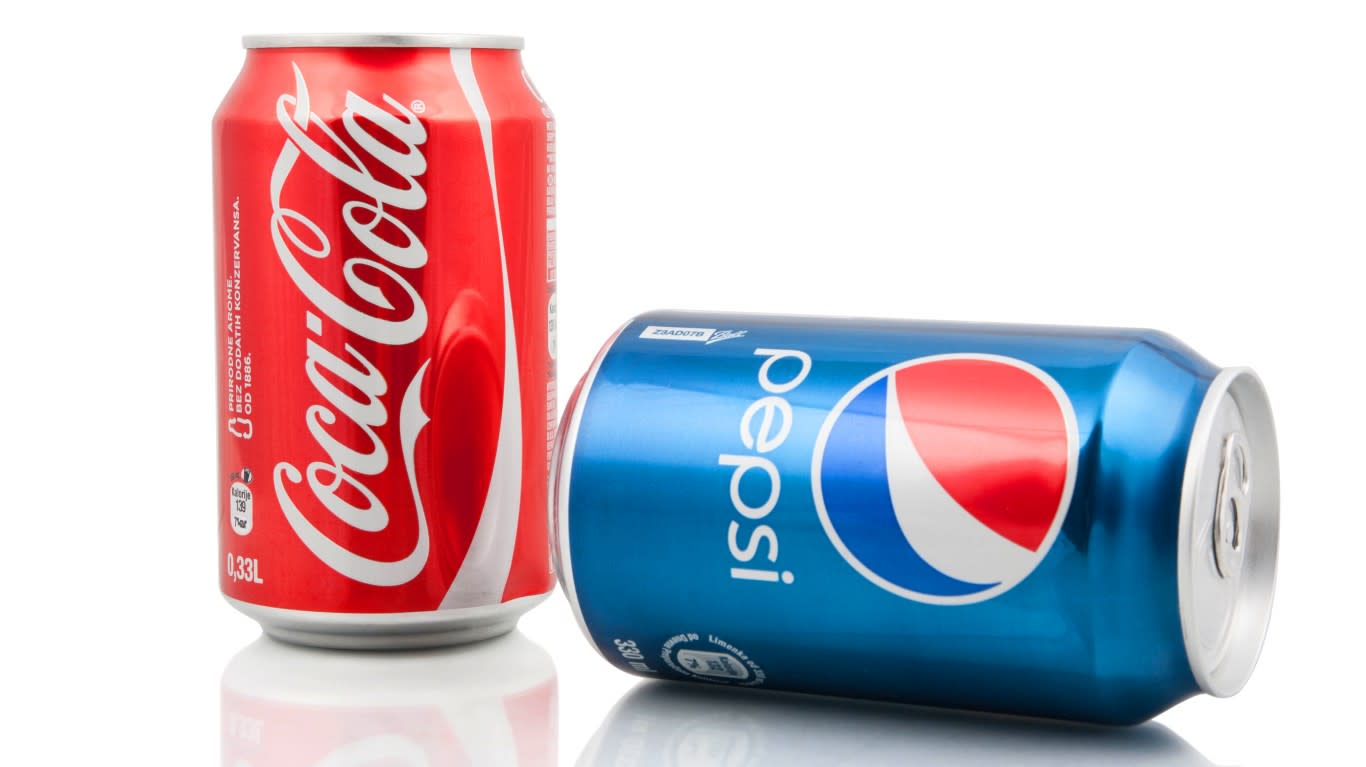
1 / 4
2 / 4

3 / 4

4 / 4
Coca-Cola (KO) returned +140.27% over 10 years and +13.44% over 1 year with Zero Sugar volume up 14%. PepsiCo (PEP) returned +120.04% over 10 years and +9.98% over 1 year with a $1.993B Rockstar write-down.

Coca-Cola’s asset-light franchise model and Zero Sugar momentum drove outperformance, while PepsiCo faced Rockstar write-downs and snack volume pressure from GLP-1 drug adoption affecting consumer appetite.

The analyst who called NVIDIA in 2010 just named his top 10 AI stocks. Get them here FREE.

On the surface, PepsiCo (NYSE: PEP) might appear to offer more diversification. It sells beverages and snacks, with iconic brands like Frito-Lay, Doritos, Gatorade, and Quaker sitting alongside its cola lineup. More diversification should mean more resilience. Over the past decade, though, that logic has not held up at the stock level. Coca-Cola (NYSE: KO) has quietly outperformed its rival across every meaningful time horizon.

Coca-Cola's story over the past 10 years is one of disciplined simplification. CEO James Quincey pushed the company toward an asset-light franchise model, refranchising bottling operations and focusing capital on brand and marketing. Zero Sugar became a genuine growth engine, with unit case volume up 14% for full year 2025. Pricing power held firm even as volumes wobbled in select markets. PepsiCo, meanwhile, absorbed write-downs on Rockstar ($1.993 billion in intangible asset impairments) and faced volume pressure in its North America snack business, partly from growing GLP-1 obesity drug adoption weighing on consumer appetite for salty snacks. A weak Q1 2025 forced PepsiCo to slash its full-year EPS guidance from mid-single-digit growth to approximately flat.

Here is what a $1,000 investment in each stock would look like across three time horizons, using adjusted price data as of March 5, 2026:

READ: The analyst who called NVIDIA in 2010 just named his top 10 AI stocks

1-Year Return

Initial Investment: $1,000

KO Current Value: $1,134 (+13.44%)

PEP Current Value: $1,100 (+9.98%)

S&P 500 (same period): $1,169 (+16.85%)

5-Year Return

Initial Investment: $1,000

KO Current Value: $1,767 (+76.71%)

PEP Current Value: $1,416 (+41.55%)

S&P 500 (same period): $1,776 (+77.6%)

10-Year Return

Initial Investment: $1,000

KO Current Value: $2,403 (+140.27%)

PEP Current Value: $2,200 (+120.04%)

S&P 500 (same period): $3,397 (+239.65%)

Neither stock matched the S&P 500 over 10 years, which is worth acknowledging plainly. But for income-focused, lower-volatility investors, the dividend streams matter enormously here. Coca-Cola has raised its dividend for 63 consecutive years, while PepsiCo has delivered 54 consecutive annual increases. Both are Dividend Kings. Warren Buffett's decades-long hold of Coca-Cola remains one of the most cited examples of patient dividend compounding in investing history.

Investors focused on low-volatility dividend income may find Coca-Cola's metrics worth examining. The 2.6% yield, 2026 guidance of 7% to 8% comparable EPS growth, and Zero Sugar momentum give the bull case real substance. Its beta of 0.33 reflects far less volatility than the broader market. Key risks include currency headwinds and the potential for an unfavorable resolution to the IRS tax litigation.

PepsiCo presents a different risk/reward profile. Its forward P/E of 19x looks cheaper than Coca-Cola's 24x, and the 3.4% dividend yield is attractive. However, analysts note that North America snack volume headwinds and GLP-1 uncertainty remain unresolved, and until those pressures stabilize, the diversification premium PEP once commanded is harder to justify. So, Coca-Cola has delivered stronger total returns over the past decade.


Wall Street is pouring billions into AI, but most investors are buying the wrong stocks. The analyst who first identified NVIDIA as a buy back in 2010 — before its 28,000% run — has just pinpointed 10 new AI companies he believes could deliver outsized returns from here. One dominates a $100 billion equipment market. Another is solving the single biggest bottleneck holding back AI data centers. A third is a pure-play on an optical networking market set to quadruple. Most investors haven't heard of half these names. Get the free list of all 10 stocks here.