yahoo Press
Japan to Release 80 Million Barrels of Oil From Reserves
Images
1 / 6
2 / 6

3 / 6

4 / 6
5 / 6

6 / 6
(Bloomberg) -- Japan will release 80 million barrels of oil from its strategic reserves as the nation and other major energy importers grapple with the fallout of the war in the Middle East.

Prime Minister Sanae Takaichi announced that Japan would go ahead with a unilateral move to free up some of its oil stockpiles in comments that came ahead of an agreement by the International Energy Agency to release a record 400 million barrels from emergency oil reserves.

Most Read from Bloomberg

Greek Oil Tanker Exits Strait of Hormuz With Its Signal Off

Georgia Democrat Leads in Marjorie Taylor Greene’s District

Trump Says US to Get New Oil Refinery With Reliance Backing

Trump Signals Possible End to War, Floats Removing Oil Sanctions

US Didn’t Escort Tanker Through Hormuz, Refuting Wright Post

Governments are seeking to contain a surge in energy prices driven by the Middle East war. The conflict has choked the vital Strait of Hormuz through which about a fifth of the world’s oil passes.

Takaichi said Japan would release the equivalent of 15 days of its oil consumption needs from private sector stocks, and one-month’s worth from national reserves. Speaking via a broadcast on NHK, Takaichi said the release would begin as soon as March 16.

Japan welcomed the decision made by the IEA to conduct the collective release in a statement released later on Wednesday. The statement did not specify how Japan’s unilateral release would be coordinated with the IEA’s collective one.

“This collective release demonstrates the determination of the IEA member countries to act in solidarity to ensure a stable supply of energy, which underpins people’s daily lives, and to stabilize the market,” the statement said.

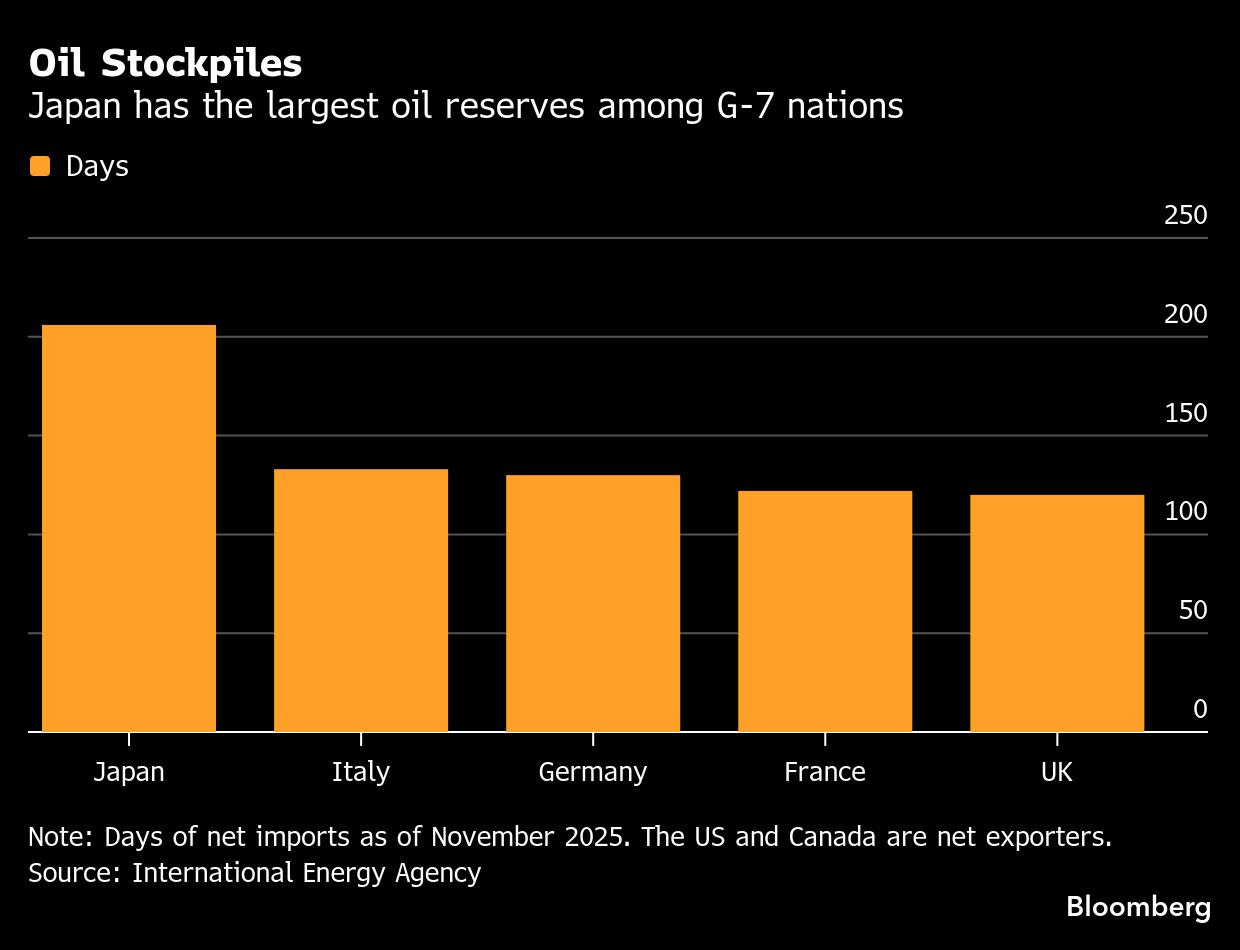
Resource-scarce Japan is vulnerable to disruptions to energy flows, as the war in the Middle East upends global oil and gas markets. While the nation boasts strategic oil stockpiles equivalent to 254 days of total consumption, prolonged hostilities in the Middle East and a shipping standstill in the Strait of Hormuz could start eroding those reserves. That could also derail Takaichi’s plans to tackle inflation.

Oil producers from the Middle East also hold stockpiles in the Middle East, which Japan has the right to access during emergencies.

Japan’s trade ministry projected that oil shipments from the Middle East would drop significantly from March 20. Japan is set to begin releasing a month’s worth of oil from its national stockpile from the end of March, and the government will also provide subsidies for petroleum products amid the ongoing war in the Middle East, according to the trade ministry.

“Amid growing domestic anxiety, Prime Minister Takaichi has decided to make a proactive move,” said Harumi Taguchi, principal economist at S&P Global Market Intelligence. “A reduction in crude oil supply would negatively impact the economy not only in terms of price, but also from the perspective of supply shortages.”

Elevated oil prices will boost the risk of Japan’s economy falling into stagflation and raise the pressure on Takaichi to contain the damage with more spending. Higher inflation and a weakened economy would also complicate the Bank of Japan’s efforts to normalize its policy settings with gradual interest rate hikes.

“Given that the outlook for the Middle East situation remains uncertain, we will continue to flexibly consider the form of support moving forward,” Takaichi said.

The government will implement measures to keep gasoline prices at around ¥170 per liter, by using existing funds that were set up in the past to keep the fuel price from rising, she said. The nationwide average is currently at ¥161.8 per liter.

Japan in the past has conducted releases from oil reserves held by the private sector. It first released fuel from stockpile held within the national reserves in 2022, when Russia’s invasion of Ukraine rocked commodity markets.

--With assistance from Stephen Stapczynski, Sakura Murakami and Paul Jackson.

(Updates with IEA agreement to release emergency oil reserves, adds Japan’s statement and more details.)

Most Read from Bloomberg Businessweek

China’s Gen Z Day Traders Trust in Chatbots and Move Markets

This Maker of $4 Million Sports Cars Is Weighing an IPO

How a Die-Hard Libertarian Is Negotiating Lower Health-Care Costs

How Data Centers Became a Casualty of War

Gas Prices Are Rising—and So Are the Iran War Stakes for Trump

©2026 Bloomberg L.P.