yahoo Press
Rising gas prices could disrupt restaurant sales recovery
Images
1 / 4
2 / 4

3 / 4

4 / 4
You can find original article here Nrn. Subscribe to our free daily Nrn newsletters.

The restaurant industry has been navigating whiplash for years now caused by uncertainties over everything from record-high beef prices to swiftly changing tariff policies.

Many operators, dizzied by the consistent lack of predictability and relentlessly high input costs, have taken a profit hit. The National Restaurant Association State of the Industry report shows that 42% of operators weren’t profitable in 2025, while 60% of operators said their business conditions have deteriorated since 2024.

Meanwhile, consumers are dealing with their own challenges. The February jobs report was bleak, with about 92,000 positions cut from the U.S. economy, and inflation has gripped everything from groceries to energy and rent prices, and U.S. household debt has reached record highs.

These realities have painted a troubling picture for much of the restaurant industry, in which traffic gains have become a near impossibility. At the start of this year, industry traffic was down nearly 2.5% year-over-year, according to Revenue Management Solutions. Fiserv’s February Small Business Index doesn’t read much better, with foot traffic in February falling 2.1% year-over-year.

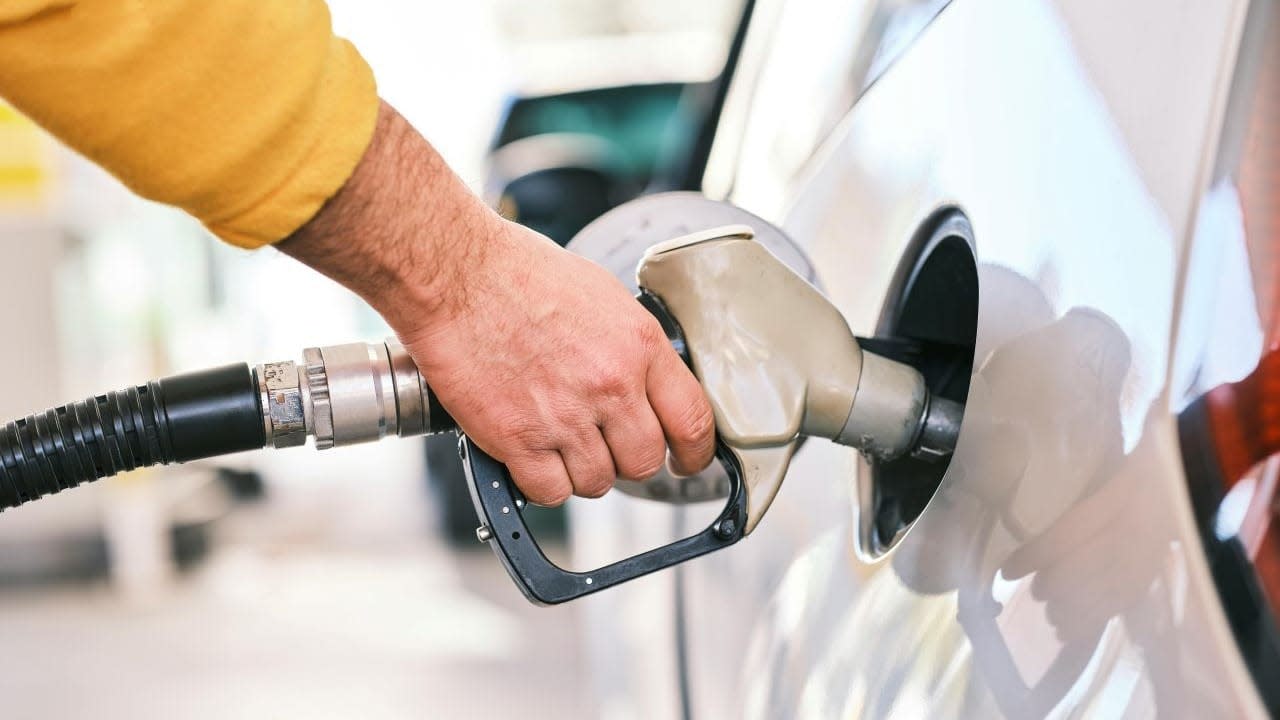
So, the timing couldn’t be worse for a spike in gas prices.

But that’s exactly what’s happening this week due to supply fears (and realities) created by the Iran War (oil prices tilted past $100 a barrel earlier this week for the first time since 2022 but have since eased to around $90).

How long gas prices will remain elevated is anyone’s guess, as the geopolitical landscape in the Middle East changes by the hour.

What we do know is this — higher gas prices correlate with reduced spending on foodservice. According to Technomic research, an increase in gas prices, especially those that result in $4-plus per gallon on average nationally, impacts consumer restaurant spending. As of today, the national average gas price is about $3.60, according to AAA. It is above $4 in six states.

Technomic found that nearly 90% of consumers are impacted by rising gas prices and spend less on goods and services to manage such increases. Younger Americans — 18-to-24-year-olds — are the most affected.

It is estimated that every 50-cent increase in gas price has a $68 billion impact on consumer spending.

“Gas prices have and will continue to have an impact on consumer spending, as long as gas-powered cars dominate the roads (over 90% of U.S. vehicles are gas or diesel-powered). With AAA reporting that gas prices are up 50 cents already since the end of February, consumers will be spending more on gas and have less money in their pockets on discretionaries, like going out to eat. With shoots of recovery emerging already this year, this is concerning as we might see another weakening in restaurant sales as a result,” said Technomic managing principal Joe Pawlak.

Consumer Edge recently released a report outlining which medium-to-large restaurant chains face the biggest risk as gas prices rise. The share-of-wallet analysis is based on U.S. credit and debit card data, quantifying how much of each brand’s customer spending is allocated to fuel.

The 10 full-service restaurant brands with the highest gas share-of-wallet among consumers include:

Peter Piper Pizza (3.9%)

Golden Correl (3.8%)

Waffle House (3.7%)

Buffalo Wild Wings (3.6%)

Denny’s (3.6%)

Pluckers Wing Bar (3.6%)

Texas Roadhouse (3.5%)

Bubba’s 33 (3.4%)

Black Bear Diner (3.3%)

Twin Peaks (3.3%)

The 10 limited-service restaurant brands with the highest gas share-of-wallet among consumers include:

Jack in the Box (3.9%)

In-N-Out Burger (3.8%)

Little Caesar’s (3.7%)

Carl’s Jr. (3.7%)

Del Taco (3.7%)

Dutch Bros Coffee (3.7%)

Cookout (3.7%)

El Pollo Loco (3.7%)

Pollo Campero (3.7%)

Panda Express (3.6%)

“Higher gas prices act like a tax on consumers — but the impact is not uniform,” according to Consumer Edge. “Lower-income households allocate a higher share of total spending to fuel, and consumers in suburban and rural markets are more car-dependent, leaving them more exposed to price spikes.”

Contact Alicia Kelso at Alicia.Kelso@informa.com

Follow her on TikTok: @aliciakelso