yahoo Press
8,000-Year-Old Human Remains Were Found 26 Feet Below the Surface in Mexico’s Cenotes
Images
1 / 10
2 / 10

3 / 10

4 / 10

5 / 10

6 / 10
7 / 10

8 / 10

9 / 10

10 / 10
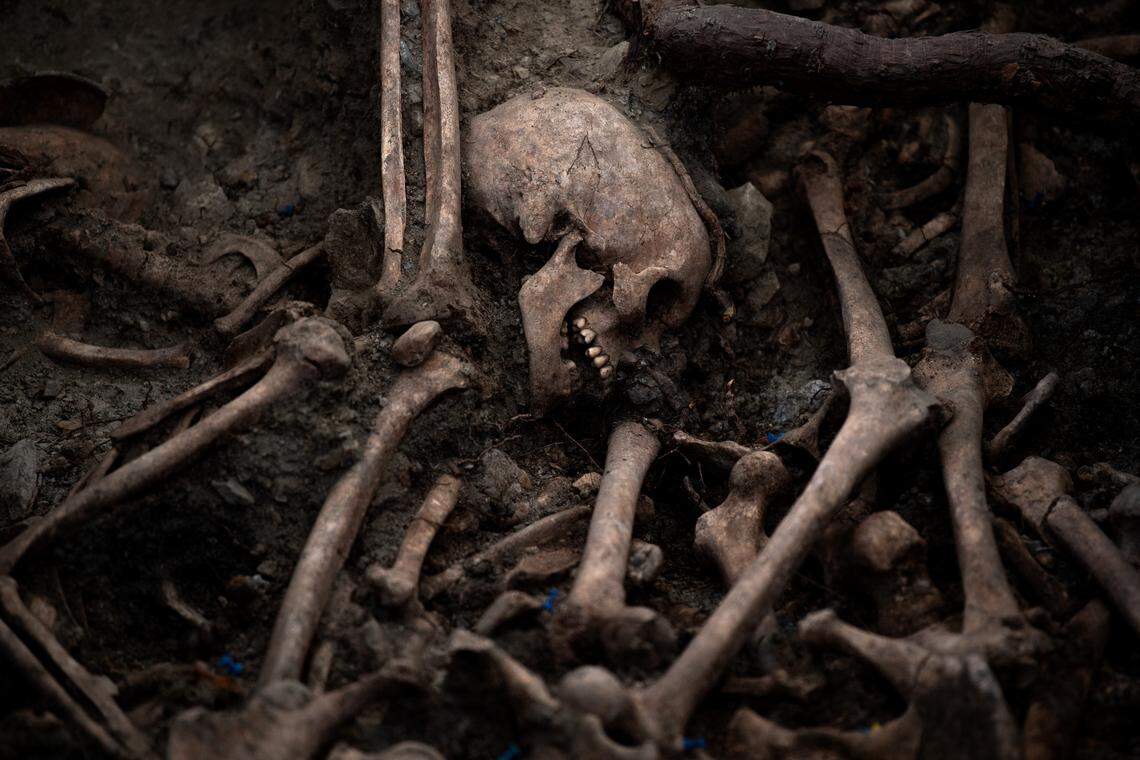
Deep beneath the turquoise waters of Mexico’s Caribbean coast, a shattered skull and scattered bone fragments have emerged from the darkness — remnants of a human who lived at least 8,000 years ago.

The discovery adds another extraordinary chapter to the story of the Americas’ earliest inhabitants.

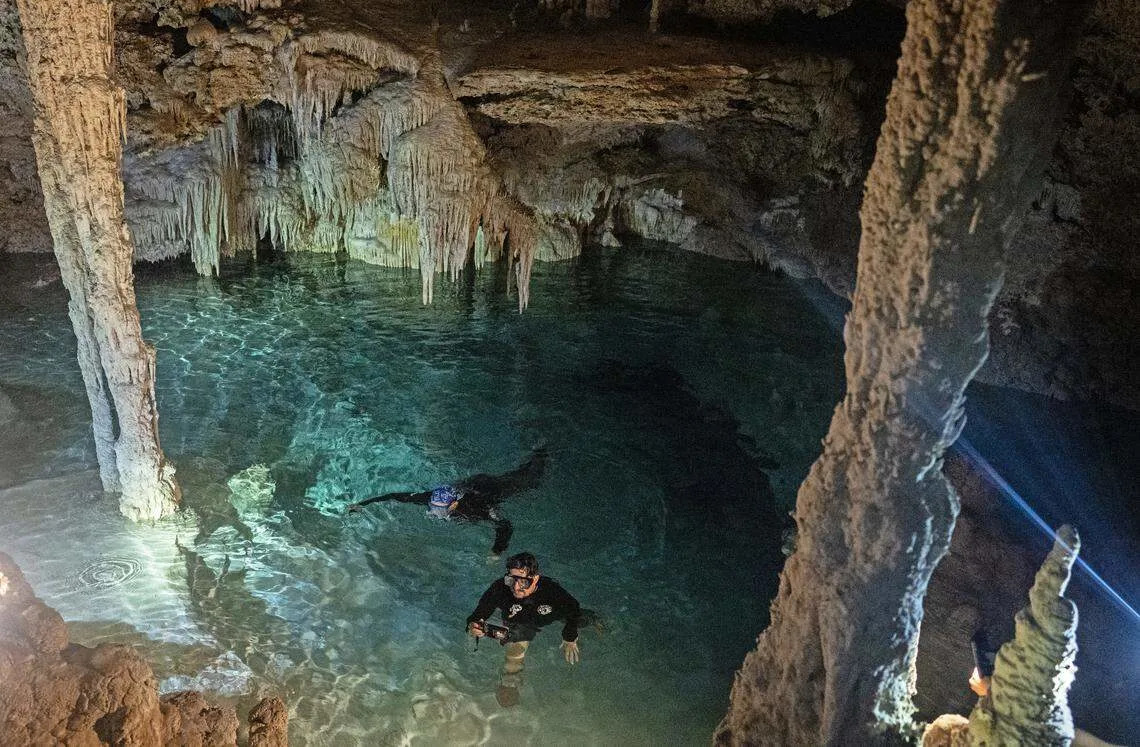
The prehistoric skeleton was discovered in an underwater cave system located between the tourist destinations of Tulum and Playa del Carmen. Found 26 feet below the surface, roughly 656 feet into the cave, the remains were recovered in late 2025 and are currently being analyzed.

Professional cave diver Peter Broger initially came across the shattered skull and bone fragments before contacting cave-diving archaeologist Octavio del Río to investigate.

Del Río, who collaborates with the National Institute of Anthropology and History, has been exploring the region’s cenotes — freshwater sinkhole caves formed from the collapse of limestone bedrock — for three decades.

“You can shout even under water,” del Rio told the Associated Press of seeing the skeleton up close for the first time.

This is the 11th such skeleton found in these caves over the last three decades.

The skeleton was found partially covered in sediment, and its position on a sediment pile suggests intentional placement — likely as part of a ritual funerary practice.

Its distance from the cave entrance rules out placement by later Paleoamericans, pointing instead to people who knew these caves well.

The cave system flooded at the end of the last ice age — the end of the Pleistocene epoch — approximately 8,000 years ago, due to rising sea levels from melting ice.

That timeline gives researchers a minimum age for the skeleton, though it could be much older. More study is still needed, including dating, photographic studies and collection.

Around the time this individual was alive, the Yucatán Peninsula was a semi-arid savannah with no rivers or lakes. Water and shade were scarce. Some researchers believe ancient peoples sought relief from heat in the caves, which were fed by fresh underground water.

Ancient Mayans later believed cenotes were sacred portals to the underworld, where gods and spirits dwelled.

What makes this cave system extraordinary isn’t just the newest find — it’s the staggering collection of ancient remains already recovered there.

Some earlier skeletons found in the same region date back approximately 13,000 years, making them some of the oldest human remains in North America.

In fact, the oldest known skeleton found in the cenotes is “Eva de Naharon” (Eve of Naharon), estimated at 13,721 years old — currently the oldest known human fossil in the Americas.

That number places human presence in the Yucatán thousands of years before the caves flooded at the end of the last ice age.

DNA data increasingly supports the theory that early inhabitants arrived from Asia via a land bridge at what is now the Bering Strait, though some clues also suggest a South American route.

Each new skeleton offers another potential data point for untangling these competing migration narratives.

Luis Alberto Martos of the National Institute of Anthropology and History told the AP that the history of Yucatan’s early inhabitants “is becoming better understood.”

Even as discoveries accelerate, so do the threats.

The cave system was significantly impacted by construction of the Maya Train under former President Andrés Manuel López Obrador, intended to connect Tulum and other tourist destinations to remote areas.

Steel support pillars driven into the caves have caused rust and iron pollution in the water, and falling stalactites are making some cenotes unsafe to explore.

“These ecosystems are very, very fragile,” geologist Emiliano Monroy-Ríos of Northwestern University told the Associated Press in 2024. “They are building upon a land […] full of caves and cavities of different sizes and at different depths.”

Mexican authorities are now working to designate the entire zone as a national protected area. Mexico’s Environmental Ministry confirmed to AP that the goal is to achieve that designation in 2026.

For now, archaeologists are under pressure to find and document as much as possible before mass tourism further impacts the area.

Only expert divers with specialized equipment can access the caves today — but what they keep finding down there is reshaping our understanding of who the first Americans really were and how they lived thousands of years before civilization as we know it took shape.

This article was created by content specialists using various tools, including AI.