yahoo Press
Entire Human Populations Vanished 3,000 Years Ago. Scientists Figured Out Where They Went.
Images
1 / 8
2 / 8

3 / 8

4 / 8
5 / 8

6 / 8

7 / 8

8 / 8
"Hearst Magazines and Yahoo may earn commission or revenue on some items through these links."

Here’s what you’ll learn when you read this story:

The famed neolithic decline that struck around 3100 B.C.E. in northern Europe has a new scientific explanation.

A distinct population drop across multiple regions opened the door for outsiders to repopulate with new demographics and cultures.

The influx of newcomers came from the south, as Iberians began repopulating the Paris Basin around 2900 B.C.E.

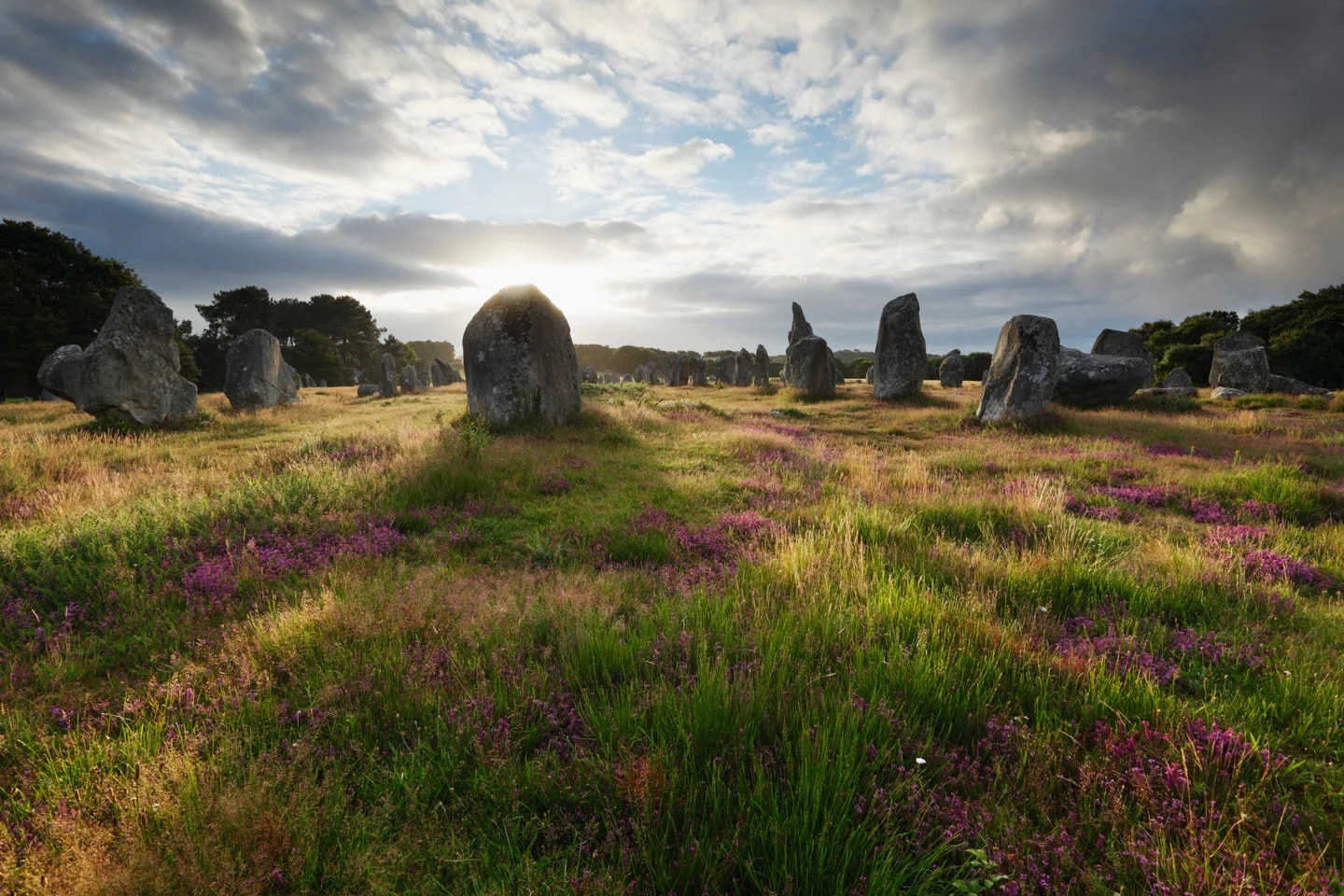
A strange gap in the contents of a 5,000-year-old megalithic tomb outside Paris may explain not only a widespread neolithic population drop, but also who stepped in to repopulate the Paris Basin. The Bury tomb, roughly 30 miles north of Paris, is a stone burial monument containing the remains of 300 people. Using a combination of DNA and demographics, researchers investigating the tomb believe they’ve found out why the Paris Basin suffered a dramatic population shift around 3100 B.C.E., and just who entered the region to take their place.

In a new study published in the journal Nature Ecology & Evolution, an international team of researchers link the Paris-region stone-age site to a massive continent-wide demographic crisis. Prior to the mysterious population decline, megalithic tomb construction defined the wide-reaching area for over 1,000 years. While each region put its own cultural touches on funerary construction, the tombs at Bury were consistent, communal, and housed tens of thousands of burials over centuries. The Paris Basin featured an especially high concentration of such tombs, as did central Germany and southern Scandinavia.

According to the new research, construction of these tombs abruptly “ceased across continental northwestern Europe” at the end of the fourth millennium B.C.E. The break in the millennial burial tradition happened everywhere—and until now, the reason remained unknown.

The investigation of the Bury megalith revealed that it represented two distinct phases of burials—the first was from roughly 3200 to 3100 B.C.E., and the second began around 2900 B.C.E. The 200-year gap in which there were no burials coincided with a wave of population losses across northern Europe, a neolithic decline that researchers haven’t fully understood, but which contributed to a complete remaking of populations in the area.

By examining DNA evidence from 132 individuals found in Bury, the team discovered that the two distinct historical phases were unrelated. Phase one individuals had a genetic diversity extending well beyond the Paris Basin, tied to farming populations across the continent. Phase two burials, on the other hand, were substantially more homogeneous, with over 80 percent of the group’s ancestry traced to neolithic Iberia (what is now Spain and southern France).

The burial styles were even different, with phase one burials featuring multi-generational families and evidence that women married into the community from the outside, while phase two burials included smaller families and unrelated individuals buried next to each other. With distinctly different Y chromosome lineages in the second phase, this wasn’t a gradual cultural shift, but a dramatic population turnover.

Paired with pollen data (which shows forests were regrowing during the gap) and a shift in farming practices after the gap, the turnover signals the abandonment of grazing lands and fields, implying that settlements were vacant. The pattern that matches the aftermath of the Justinian Plague and the Black Death.

The authors argue that the 3100 B.C.E. decline was geographically widespread, creating a demographic vacuum across northwestern Europe that opened the door for neighboring populations to fill in the void. In Scandinavia, steppe pastoralists replaced local farmers entirely. In the Paris Basin, Iberian farmers moved into the then-empty spaces.

“We may thus consider the possibility that both the Iberian northward migration and the expansion from the steppe were related responses to the Neolithic decline,” the authors wrote, “as widespread demographic contraction would have created a vacuum that neighboring groups could expand into.”

The first community that defined the Paris Basin was essentially erased, but clues to what caused the erasure were found in the Bury tomb. Researchers discovered ancient pathogens—including the plague and louse-borne relapsing fever—in the remains. Experts believe that infectious disease, environmental stress, and demographic contraction all led to the widespread demographic collapse. “These findings detail a population turnover at the end of the fourth millennium B.C.E.,” they wrote, “offering a possible explanation for the cessation of megalith building.”

You Might Also Like

20 Cars That Were Massively Improved by a Redesign

Going on Vacation? These Appliances Need to Be Unplugged Before You Leave the House

Roborock Reigns Supreme for Robot Vacuums, but We Also Loved These Other Models