Press
Pembrokeshire UFO holiday let: Why unusual UK stays are booming
Images
1 / 14

2 / 14
3 / 14
4 / 14
5 / 14
6 / 14
7 / 14
8 / 14
9 / 14
10 / 14
11 / 14
12 / 14
13 / 14
14 / 14
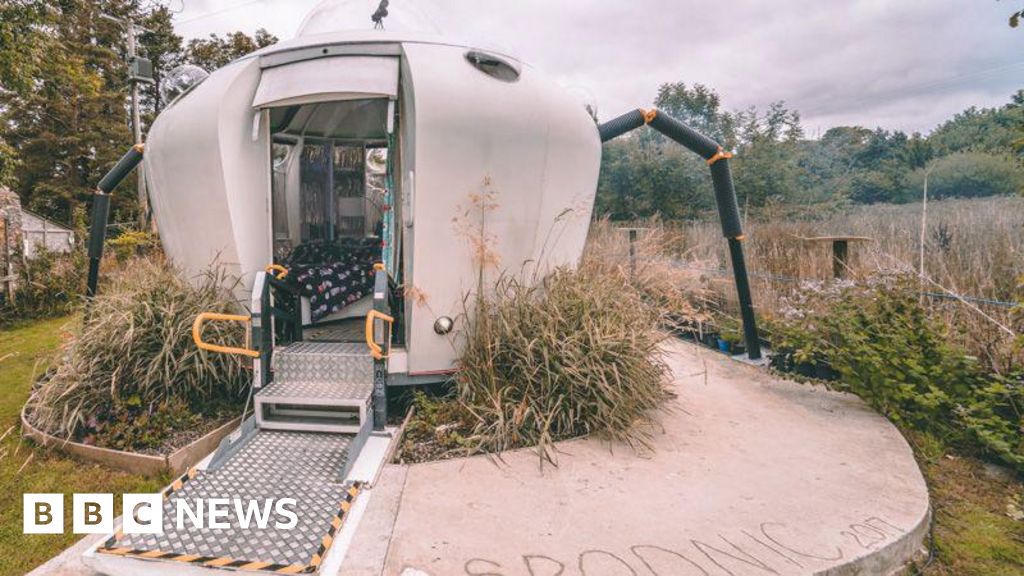
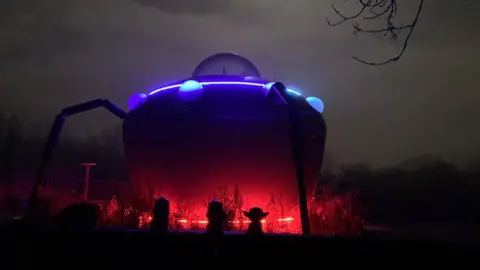
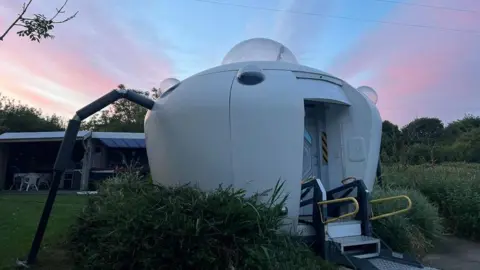
In a secluded corner of Pembrokeshire, a structure resembling a landed spacecraft rises unexpectedly from the landscape.

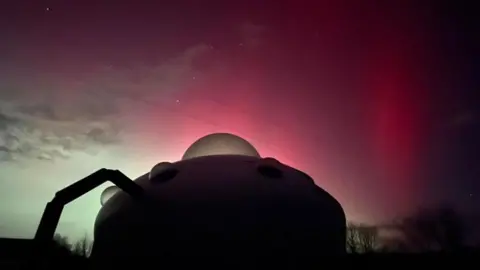
Set against rolling farmland and dark night skies, the UFO-shaped pod feels deliberately out of place - and that, increasingly, is the point.

The Spodnic UFO forms part of a small, independently-run glamping site owned by Martin and Carol Anne Johnson, who have spent more than a decade transforming what was once an "overgrown plot" around a derelict mill into a collection of unconventional holiday stays.

"People want to feel more from their holidays, often choosing the accommodation itself...over the location," as one industry expert puts it.

The couple's approach taps into a bigger shift in UK tourism, straying away from standard accommodation and towards what industry observers describe as "experience-led travel", where the stay itself becomes the destination.

Alex Wilson, co-founder of Host Unusual said: "We have seen a huge growth in this sector, with searches for more experiental types of accommodation growing in demand by over 32% in recent years.

"People just want something different"

Johnson added: "They want an experience."

That demand, he suggested, is less about specific cultural moments - such as space missions or science-fiction references - and more about a general appetite for unfamiliarity and escape.

While themed dates like Star Wars Day, on 4 May ("May the Fourth Be With You"), bring some seasonal interest, he believes the appeal runs deeper.

"It's a difficult one to narrow it down to," he said.

"We get families who want somewhere different for the kids, and then we get adults who are big Doctor Who or space fans. But mostly, people are just looking for something unusual."

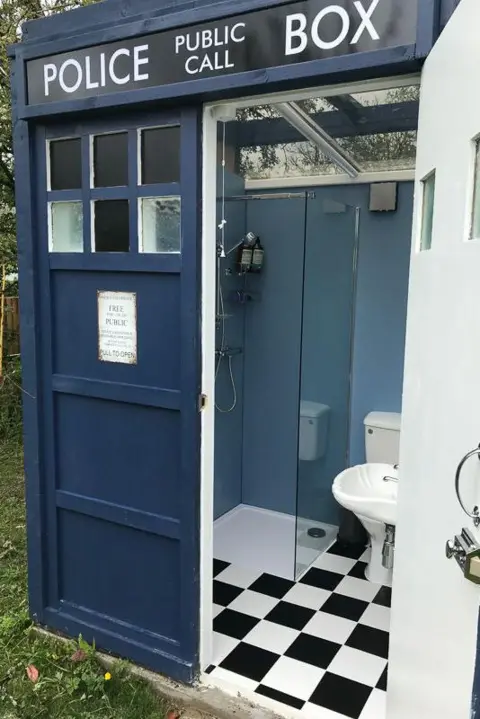
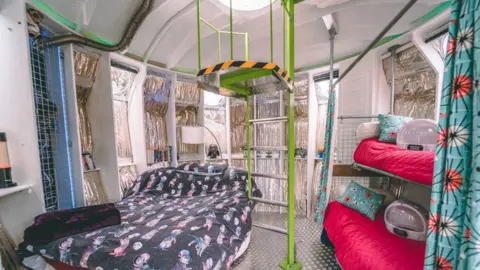
The site attracts a mix of visitors, from families seeking a sense of adventure to enthusiasts drawn by its detailed references to science fiction, including a Tardis-style bathroom and optional costumes inspired by popular franchises.

Yet for many guests, the experience is less about fandom and more about retreat.

"We find a lot of people come here and don't even leave the premises" Johnson said.

"They'll book two nights, and come here because they've got their own private space, a hot tub - everything they need.

"Money's tight for people, so they haven't got to go anywhere and spend further, they just come here to enjoy themselves."

This idea of self-contained escape has become a defining feature of recent travel patterns, with short domestic breaks offering a controlled and often more affordable alternative to longer holidays abroad.

The effect is also being felt beyond individual stays.

Travel journalist Simon Calder said the shift reflects a much bigger change in traveller priorities.

"There's a divergence in what travellers want," he said. "Sometimes they're after a low-cost hotel with decent Wi-Fi. But for other trips they want somewhere with character and stories to tell."

Calder said this wider impact is significant: "Inbound tourism is the most valuable element of any economy - it's the closest thing you can get to free money, so exciting enticements are just what Wales needs."

The origins of how the Pembrokeshire site came about, however, were far more modest.

The couple initially bought four acres of land with plans to restore the 17th Century mill and built a treehouse for personal use in the meantime. The shift towards hospitality came later, as the "glamping" trend began to emerge.

"I was looking for something different," Johnson says. "I fancied building a UFO, but doing it from scratch would have been too expensive."

Instead, he repurposed a fibreglass structure originally used during the 2012 London Olympics to hide generators.

"I saw it on eBay and thought that's an interesting shape... I can do something with that."

The transformation that followed was largely improvised.

"I didn't draw anything out on paper," he said.

"It was all in my head. I'd sit in the hot tub in the evening planning it, then try things out the next day."

The process was not without difficulty. Engineering a functioning drop-down door,  designed to mimic cinematic spacecraft entrances, proved particularly challenging.

"It was a hell of a task...a lot of trial and error," he recalled.

The final result leans heavily into theatricality.

Guests enter via a descending ramp, accompanied by lighting effects and smoke, while hidden sound features add unexpected moments of surprise.

One installation, triggered by flushing the toilet inside the Tardis, emits the sound of the fictional time machine taking off.

"I don't tell anybody," he said, "then I ask them afterwards what they thought - it makes them jump out of their skin."

Such details are central to the experience, but so too is the setting.

Built in 2017, the futuristic appearance continues to attract attention. Passing helicopters have reportedly diverted from routine routes to take a closer look, while guests often arrive with little idea of what awaits them.

Johnson said: "We quite often get people who don't tell their children where they're going."

"Then they walk up the path and suddenly see it, and the kids just run wild, completely excited."

For those wanting to stay somewhere away from the norm, there are choices around the UK ranging from lighthouses and windmills to prison cells and tree houses.

Wilson said that in Wales he had seen a steady rise in 'hobbit hole' style houses, as well as converted grain silos, glamping pods situated either by or over water,  converted horse vans and other former vehicles.

Amongst some of the most notable: "We even have a cabin in the form of a dragon's eye, two UFOs and two woodland 'conkers'"

But when asked why people were seeking out unusual accommodation, he said the  buzzword was "experiential".

"People want to feel more from their holidays, often choosing the accommodation itself these days over the location.

"It's an interesting shift in the market dynamics, and one that we noticed 10 years ago when we launched the business."

MPs and worried guests call for "all hotels" to enforce "robust" security procedures.

The Best Western Stoke City Centre Hotel and Best Western Quality Hotel Coventry are on the market.

Bosses say a good start to the year has been put at risk, but opportunities have also emerged.

Yorkshire holiday venue owners say they have seen a "spike in bookings" due to the Iran conflict.

A ban in two North Yorkshire coastal spots is made permanent after an 18-month trial.