yahoo Press
ECB Rate Hike in June Is ‘All But Inevitable,’ Kazimir Says
Images
1 / 6
2 / 6

3 / 6

4 / 6
5 / 6
6 / 6
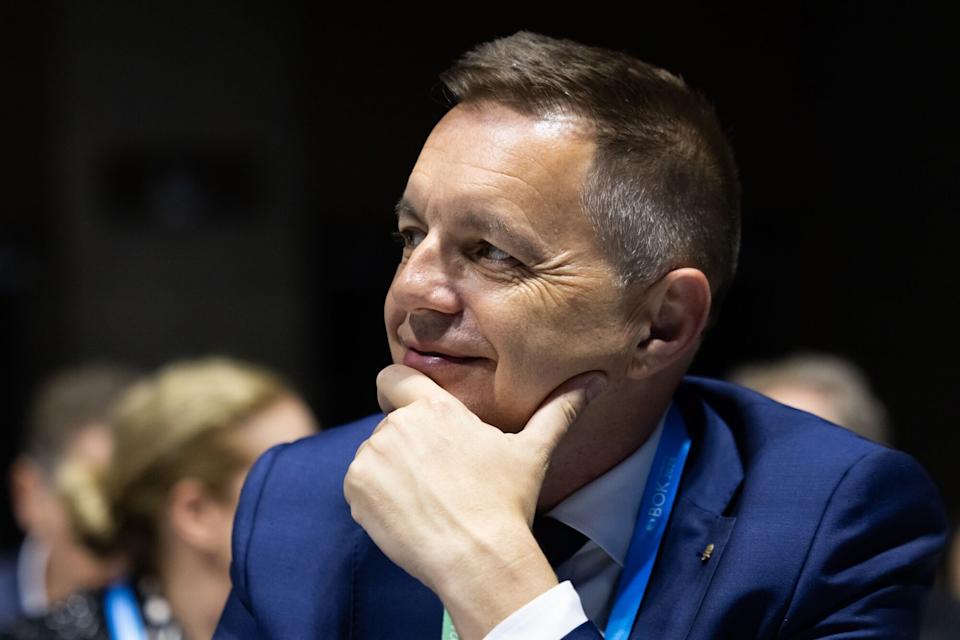
(Bloomberg) -- It’s highly likely that the European Central Bank will have to raise interest rates at its next meeting in June, Governing Council member Peter Kazimir said.

Most Read from Bloomberg

Beijing Tells China Firms to Ignore US Sanctions on Refiners

Supertanker Appears to Have Crossed the Strait of Hormuz

Former NYC Mayor Giuliani in Critical Condition, Trump Says

World’s Largest Container Carrier Plans Route Avoiding Hormuz

Philippines Says Thousands Evacuated as Mayon Volcano Erupts

While officials aren’t pre-committed to any fixed path and more data are needed to assess the fallout from the Iran war, “we remain firm in our approach,” the Slovak official said Monday.

“On this basis, policy tightening in June is all but inevitable,” he said in an op-ed. “It is becoming increasingly likely that we must prepare for a prolonged period of broad-based price increases coupled with visibly weaker growth across the euro zone.”

The ECB last Thursday kept borrowing costs unchanged while signaling that a rate increase will be considered at the June 10-11 gathering. Bundesbank President Joachim Nagel said Friday that such a move will be needed if there’s no significant improvement in the outlook for inflation and economic growth.

While some of his colleagues echoed such comments, others struck a more cautious tone.

“Obviously we’re talking about a possible increase in interest rates in June,” Lithuania’s Gediminas Simkus said Monday. “But whether the decision will actually be taken will depend on the situation and data.”

Should the conflict in the Middle East get resolved, “then it would be a factor that would allow us to think about some other decision,” he added.

Most economists and investors expect a quarter-point hike next month. Markets see two moves beyond that before the year is out.

While there’s little the ECB can do to offset the direct surge in inflation due to the energy shock, Kazimir said higher oil and gas prices are also “bound to spread to the rest of the economy.”

The ECB is facing current challenges from a “position of stability,” he said. “The memory of the high inflation years is fresh but so is our success in guiding inflation back to target.”

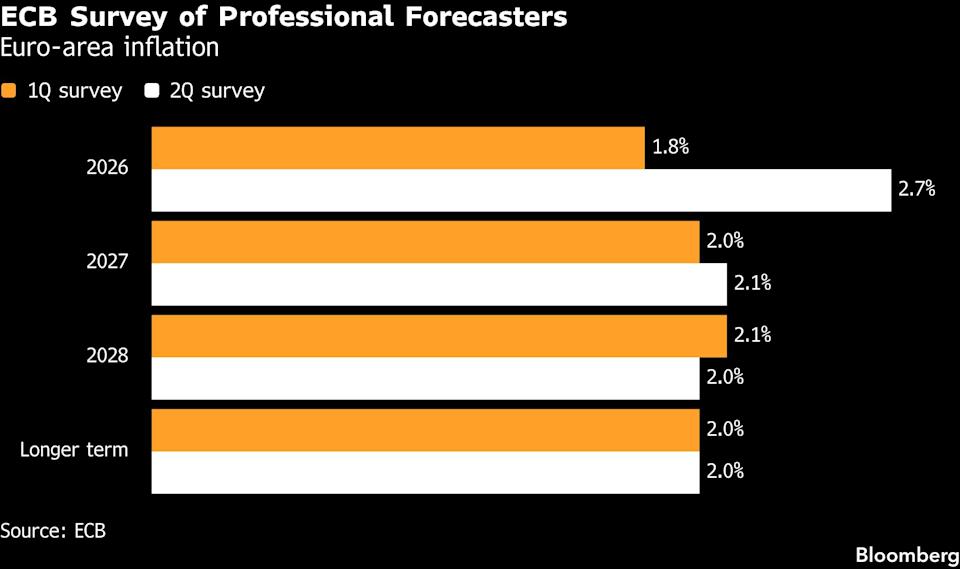
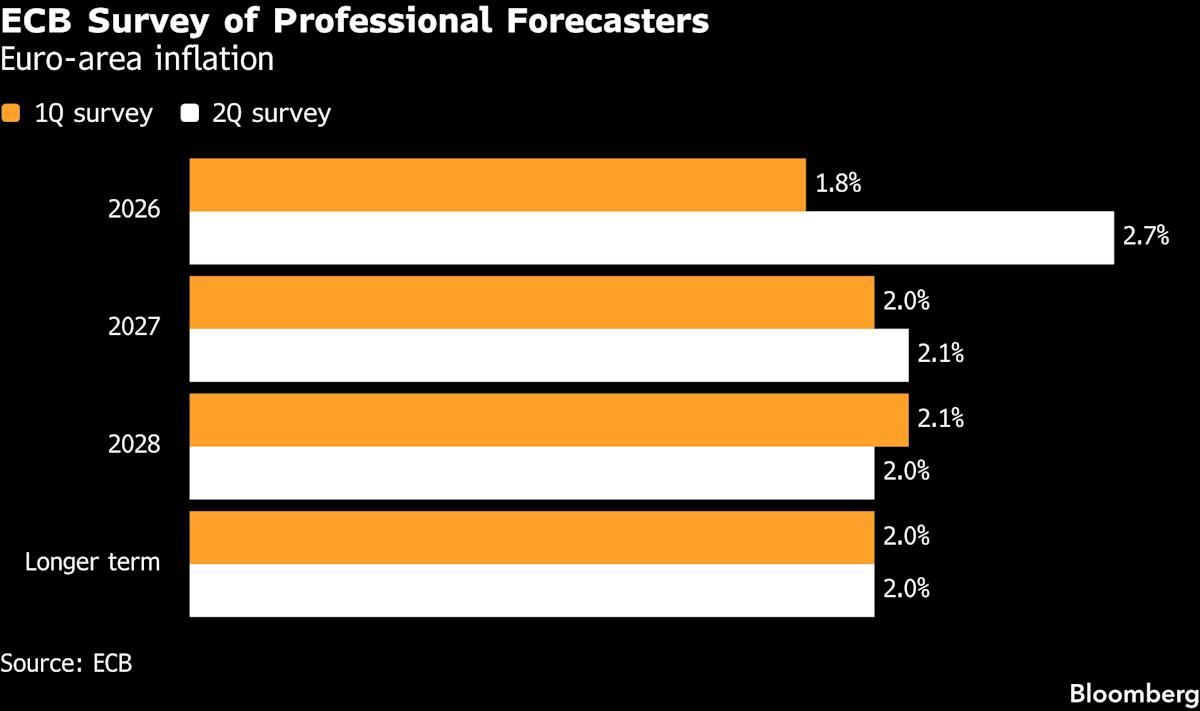
There was encouraging news Monday on the prospects for price gains returning to 2% as an ECB survey published showed professional forecasters expect only a temporary jump due to the war. While they see inflation averaging 2.7% this year, they think it will ease to 2.1% and 2% in 2027 and 2028.

A separate ECB poll concluded that the broader pass-through from higher energy costs “might be more gradual than in the past” but also warned that things could get worse if the fighting isn’t over soon.

Two other ECB officials also weighed in on borrowing costs on Monday, though both will step down from their roles before June’s meeting.

France’s Francois Villeroy de Galhau said the ECB must be both cautious and ready to act on rates should inflation spread beyond a surge in oil prices. Estonia’s Madis Muller said the neutral starting position for monetary policy allows time to determine a response.

--With assistance from Jana Randow, Ott Tammik, William Horobin and Zoe Schneeweiss.

(Updates with ECB survey, Villeroy, Muller in final three paragraphs.)

Most Read from Bloomberg Businessweek

America’s Go-To Autism Therapy Is Also the Most Controversial

It’s Boating Season, But Only If You Can Afford Fuel

Running America’s Second-Busiest Airport in Turbulent Times

Ready or Not, the AI Phones Are Coming

The NBA Draft Is Bad for Business

©2026 Bloomberg L.P.