yahoo Press
Iran hawks erupt over terms of Trump’s peace proposal
Images
1 / 7

2 / 7

3 / 7
4 / 7

5 / 7

6 / 7

7 / 7
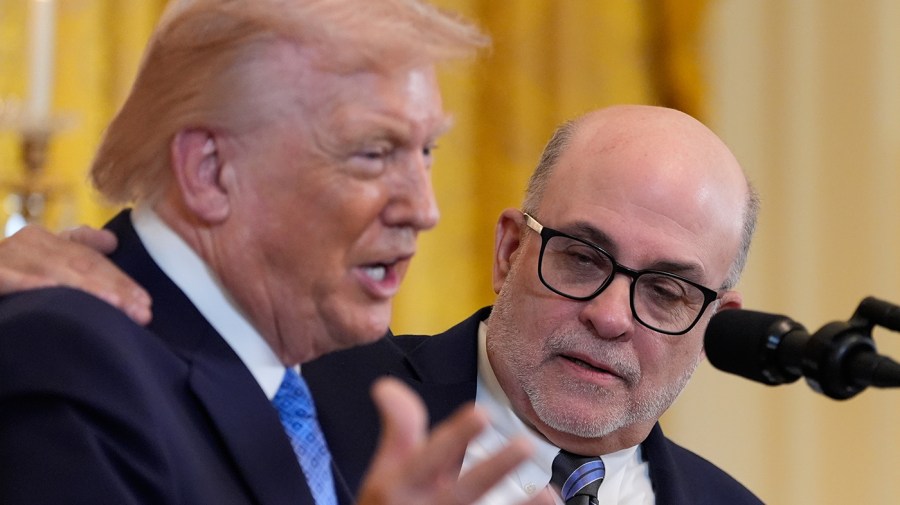
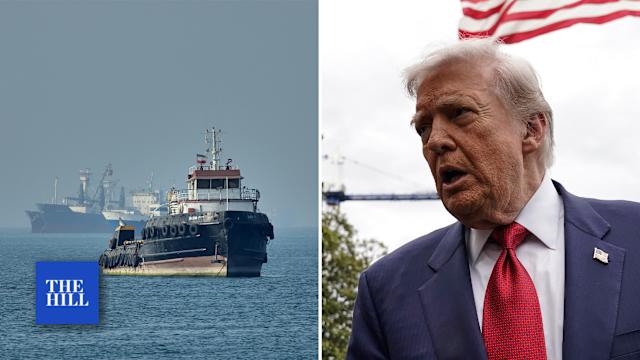
The reported terms of a one-page memorandum of understanding to end the Iran war spurred a swift backlash from allies of President Trump who have cheered on his fight against the Islamic Republic. Prominent conservative media figures and pro-Israel advocates spoke out against the deal, which would end Iran’s nuclear enrichment for a limited period and keep the regime in place, with U.S. sanctions scaled back over time. The proposal followed a surprise announcement by Trump on Tuesday to end Project Freedom, a military operation that began the previous day to free commercial ships stuck in the Persian Gulf. Fox News broadcaster Mark Levin, who Trump has praised for defending the Iran war against MAGA critics, said the deal would be “disastrous” for Iranians and for the Israeli government. “And here at home, despite all the blather about exit ramps and deals as the best political outcome for the president and Republicans, the opposite is true,” he wrote in an X post on Wednesday. “The Democrats, the media, and the isolationists will declare the operation a failure.” Levin said he was inclined to believe the report in Axios laying out the terms was “largely fake.” However, neither Trump nor the White House has pushed back against the report. The U.S. is awaiting Iran’s response to its proposal. Trump told Fox News on Wednesday that Tehran has a week to reach a peace deal. The U.S. struck Iran for the first time on Thursday since starting a ceasefire last month, in retaliation for attacks on U.S. warships in the Strait of Hormuz, according to the Central Command. Trump called it a “love tap” and said the ceasefire remains in place. According to Axios, the one-page agreement would create a 30-day period to negotiate the details of a nuclear deal, with both sides relaxing their blockades in the Strait of Hormuz during that period, eventually allowing free passage as existed before the war. In exchange for Iran agreeing to end nuclear enrichment for some 10-20 years, the U.S. would ease sanctions and return frozen assets to the regime. Iran hawks see any end to the U.S. blockade as giving up crucial leverage when Tehran is feeling intense economic pain. “This would be a terrible deal,” conservative radio host Hugh Hewitt, another Trump backer, wrote on social media in response to the Axios report. “I hope the terms of any deal would be significantly stricter: No enrichment, ever. HEU to us stat,” he continued, referring to highly enriched uranium. “No more proxies. Turn on the internet. President Trump never gives up leverage. Why would he start now with #Iran on the ropes?” Hewitt added. Many of Israel’s staunchest supporters in the U.S. don’t trust Iran’s current leaders to abide by any agreement and are pushing Trump to follow through on the regime change that he envisioned when the war started. “If this regime remains in place, they will do all they can to continue moving forward with their agenda, funding terrorism, developing nukes and ballistic missiles,” Morton Klein, who heads the Zionist Organization of America, told The Hill. “And if they’re so desperate for a deal, as President Trump keeps saying, why aren’t we in a position to dictate to them what the deal has to be? I really don’t understand this.” Trump again said on Wednesday that it’s Tehran that’s pushing for a deal. “We’re dealing with people that want to make a deal very much, and we’ll see whether or not they can make a deal that’s satisfactory to us,” he said. But behind the scenes, the White House is growing increasingly anxious about the economic and political implications if the war drags on and the Strait of Hormuz remains closed. The Wall Street Journal reported on Thursday that Trump advisers are eager to wrap up the conflict to start bringing down gas prices and avoid jet fuel shortages that could cause summer travel costs to spike. More skeptical figures in Trump’s orbit, namely Vice President Vance, have reportedly raised concerns over how the depletion of U.S. military stockpiles during the war is hurting its ability to defend U.S. allies and interests in other parts of the world. Klein said if the Trump administration’s own claims about the success of its blockade are true, Iran is only a few weeks away from breaking. “I think if we end up with a poor and weak deal, this is a greater danger to Donald Trump and Republicans politically than continuing what needs to be done to eliminate this regime,” he said. “In addition, President Trump told us they’re losing $400 to $500 million a day. So the blockade is working. A few more weeks. [Treasury Secretary Scott] Bessent has said, and others have said, the regime will collapse. So why aren’t we continuing the blockade since it’s working, and since they believe this will mean the end of this regime?” Bessent told Fox News over the weekend that Iran’s oil infrastructure is rapidly deteriorating under the blockade, predicting the regime may have to begin shutting in wells “in the next week.” He said Trump has directed the Treasury Department to unleash “economic fury” on Iran. “The way to think about that — we were running a marathon over the past 12 months, and now we are sprinting towards the finish line,” he told host Maria Bartiromo. “We are suffocating the regime, and they are not able to pay their soldiers.” While Bessent and Trump have argued gas prices will quickly fall once the war is over, the divide within Trump’s base over Iran goes deeper than the economic impact. Figures including Tucker Carlson and Megyn Kelly, longtime Trump supporters, have accused the president of breaking his promise to keep the U.S. out of regime-change wars and risking American lives in foreign conflicts. Carlson and Kelly regularly trade fire with the likes of Levin and Iran hawks in Congress like Sens. Ted Cruz (R-Texas) and Lindsey Graham (R-S.C.), who argue the war is worth the risks. The senators have been notably quiet since terms of the latest deal emerged. Mark Dubowitz, CEO of the Foundation for Defense of Democracies, a hawkish D.C. think tank, warned Trump against lifting sanctions, ending its blockade or taking military action off the table until it extracts maximum concessions on its nuclear program. “The right response is not to give them what they want for free, it’s to keep the vice tight,” he said on his podcast “The Iran Breakdown.” Dubowitz worried Trump could be “talked into believing the ceasefire is good enough and walking away with a deal that locks in less than the moment makes possible, that would be the squander.” “Two and a half years of presidential authority; a regime running out of money, leaders and time; a population the regime can no longer count on,” he added. “That is not a position of weakness, that is the strongest hand any America administration has ever had against the Islamic Republic of Iran.” Both Dubowitz and The Wall Street Journal’s editorial board warned that the contours of the deal reported by Axios resembled the Iran nuclear deal negotiated under former President Obama, which Trump pulled out of during his first term. “It will be essential for Mr. Trump to hold firm, knowing that Iran has no need for domestic enrichment other than for a bomb, and that he can’t count on a change in regime behavior over time, a mistake Mr. Obama made,” the Journal’s editorial board wrote. “He also can’t trust a future President to reimpose strict limits later. Mr. Trump has been unique in his willingness to confront Iran. The task in any deal is to secure full nuclear dismantlement while Mr. Trump is still in office. If Iran won’t do it, the President will have to make good on his threats” to resume military action, it concluded. Copyright 2026 Nexstar Media, Inc. All rights reserved. This material may not be published, broadcast, rewritten, or redistributed. For the latest news, weather, sports, and streaming video, head to The Hill.