yahoo Press
Jensen Huang’s message to electricians and plumbers: ‘This is your time,’ as AI buildout leads to soaring demand for skilled trades
Images
1 / 4

2 / 4

3 / 4

4 / 4
In the artificial intelligence age, industry leaders say the most in-demand and potentially lucrative professions might not be the roles building AI models themselves, but rather the sorely lacking manual labor needed to supply the technology’s massive infrastructure needs.

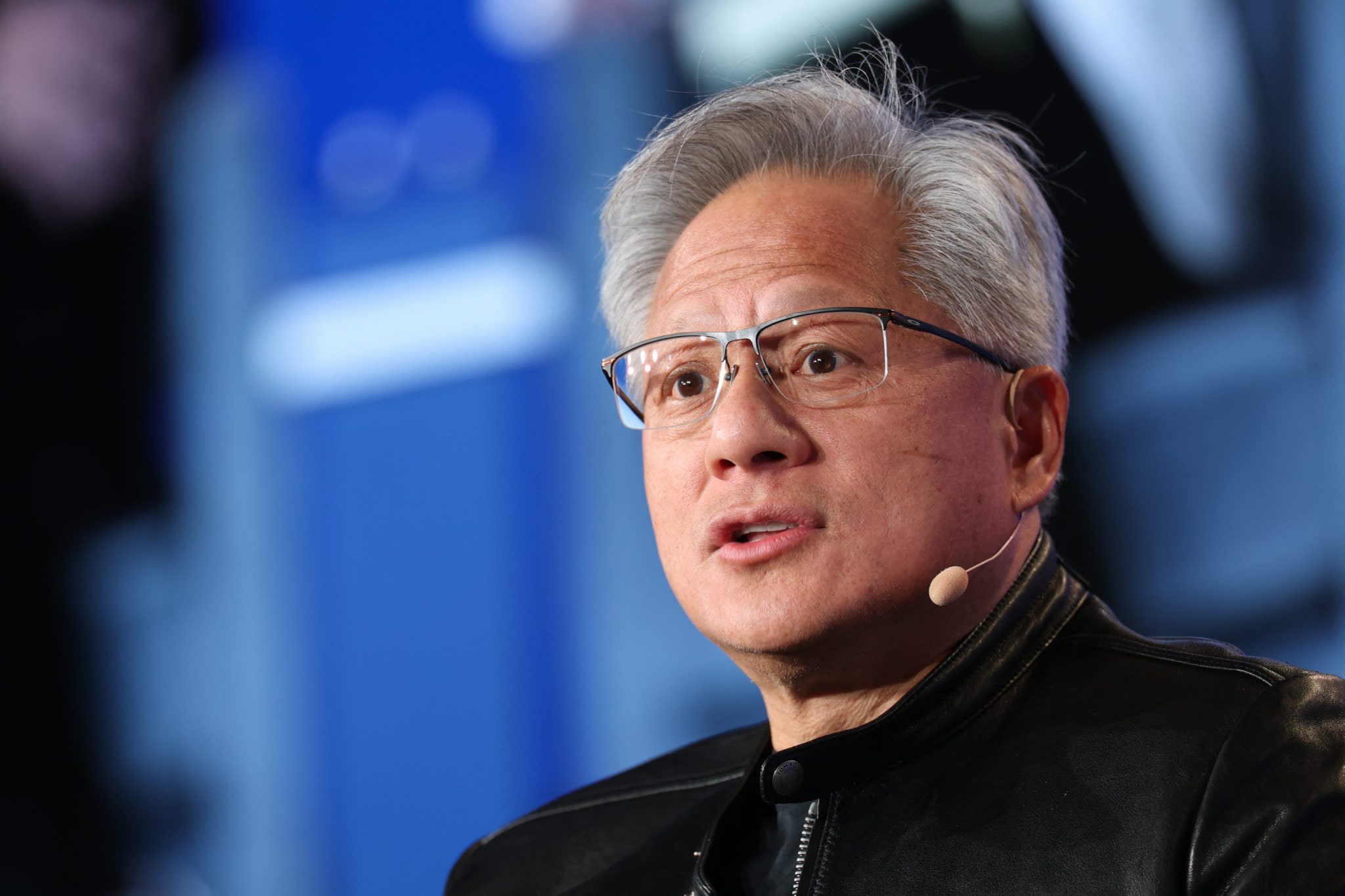
That’s the endorsement of Nvidia CEO Jensen Huang. Addressing Carnegie Mellon University’s class of 2026 during a commencement speech on Sunday, Huang described an AI-era jobs market that extends far beyond the confines of software and engineering degrees.“AI gives America the opportunity to build again. Electricians, plumbers, iron workers, technicians, builders—this is your time,” Huang said. “AI is not just creating a new computing industry, it is creating a new industrial era.”

The investment in the physical side of the AI boom is, indeed, enormous. Capital expenditure from the country’s largest tech firms could add up to some $700 billion this year, largely driven by commitments to build the data centers and other infrastructure required to train, deploy, and maintain AI models. Globally, the data center boom could generate almost $7 trillion in investment by the end of the decade if companies can keep up with the demand, according to a McKinsey report published last year.

While white collar jobs, particularly those highly exposed to AI, seem more precarious by the day, AI’s infrastructure needs to have Huang and others pointing to the roles traditionally considered blue collar as perhaps the wise choice for new grads.

Some data suggests Huang might be on to something. A March analysis of several million job postings by staffing firm Randstad found demand for skilled trades has soared 27% over the past three years. The need for construction workers is up 30%, welders 25%, and electricians 18%, according to the report. At the same time, companies aren’t able to hire enough young workers to keep up with their needs and to replace the millions of older trades people now entering retirement, a recent JLL report shows.

Figures in the AI world often talk about hardware and computing limiting their loftiest ambitions to scale the technology further, but the lack of physical workers to build out that infrastructure is quickly becoming a bottleneck in its own right.

It’s not a problem exclusive to the AI industry either.

“I think the intent is there, but there’s nothing to backfill the ambition,” Ford CEO Jim Farley told Axios in September, speaking about the lack of interest in the skilled trades that could support the country’s data center and manufacturing reshorting goals. The headache for employers could be to the benefit of workers, as Huang has previously suggested trades people could soon command six-figure salaries, even early in their career.

During his speech over the weekend, Huang challenged students to rise to the occasion.

“This is the largest technology infrastructure buildout in human history and a once-in-a-generation opportunity to reindustrialize America,” he said. “To support AI, America will build chip factories, computer factories, data centers, and advanced manufacturing facilities across the country.”

While data centers and related AI infrastructure have raised demand for construction and other skilled trades, not every signal in the industry has been positive. For one, hopes of a hiring boom and surging salaries hinge on the fate of the volatile AI industry, and trades workers involved in data center construction have no guarantee of a permanent job once their share of the work wraps up. Despite high demand, data center construction actually slowed last year for the first time since 2020 as developers faced delays in dealing with zoning laws, permits, and securing power supply.

And beyond data center spending, construction and related trades have not had a great time as of late. Nonresidential construction spending has been mostly flat since 2024, according to the Associated Builders and Contractors, a trade group. It might now be dipping slightly, the association has signaled, in part due to tariffs, higher input costs, and a weakened construction labor force in the wake of the Trump administration’s immigration crackdown.

“With the exception of the ongoing boom in data center construction, there are few sources of momentum,” Anirban Basu, chief economist at the Associated Builders and Contractors, said last week.

Huang described a future of plentiful and high-paying jobs in the trades, and a growing share of young workers—whether due to disillusionment with four-year degrees or out of an urge to AI-proof their careers—are beginning to see these roles as a real possibility. But not unlike the prospects of office-bound employees, the outlook for workers in skilled trades might be uncomfortably entwined with that of the technology they are helping build.

This story was originally featured on Fortune.com