yahoo Press
What to know about Artemis III, NASA's next mission in its journey back to the moon — and beyond
Images
1 / 8
2 / 8

3 / 8

4 / 8

5 / 8
6 / 8

7 / 8

8 / 8
It was only two months ago that the world was captivated by the record-setting voyage of Artemis II, which took its four crew members farther from the Earth than anyone in history as they flew around the moon.

Long before Artemis II had even left the launchpad, NASA was already deep into the planning of its follow-up mission. Like its predecessor, Artemis III represents a critical step in NASA's ambitious goal to put humans back on the moon and, eventually, send them to Mars.

NASA revealed the Artemis III crew on Tuesday during a press conference, where the agency also provided an update on the mission's progress toward its planned launch next year.

Here's what we know about the Artemis III mission and how it fits into NASA's ambitions to take space travel into an entirely new era.

As groundbreaking and inspiring as it was in its own right, Artemis II was, above all, a test flight. Its primary objective was to allow NASA to try out the systems it will use to get back to the moon.

Artemis III has a similar objective. It will serve as a proving ground for the final step NASA needs to accomplish before it can once again put human footprints on the lunar surface, where it plans to set up a base with the goal of eventually venturing to Mars.

There are three key types of spacecraft that NASA needs to return to the moon: rockets to get away from Earth, a module to carry astronauts to their destination, and a landing system to take them down to the lunar surface. Artemis II showed that the first two — NASA's Space Launch System rocket and its Orion spacecraft — worked as intended. Artemis III will be a trial for the third and final piece.

The Artemis III mission will take place entirely within low Earth orbit. Its core goal is to test the Orion spacecraft's ability to rendezvous with a lunar landing spacecraft so NASA can work out any kinks before launching a mission to land on the moon. The crew will also be making scientific observations along the way to gather information that will inform plans for future missions.

Nope. Artemis III was originally going to be the mission that put humans back on the moon for the first time since 1972. But earlier this year, NASA announced that it was changing its plans and turning Artemis III into another test mission.

"This is just not the right pathway forward," NASA Administrator Jared Isaacman said when announcing the revised plan in February. "Going right to the moon … is not a pathway to success."

Artemis IV will now be the mission that lands on the moon.

NASA named the four-member crew of Artemis III on Tuesday. The mission will be led by commander Randy Bresnik, a retired colonel in the U.S. Marine Corps with more than 32 hours of spacewalk experience. The crew will also have two mission specialists, Andre Douglas and Frank Rubio. The final member of the crew is Italian pilot Luca Parmitano, who will be representing the European Space Agency.

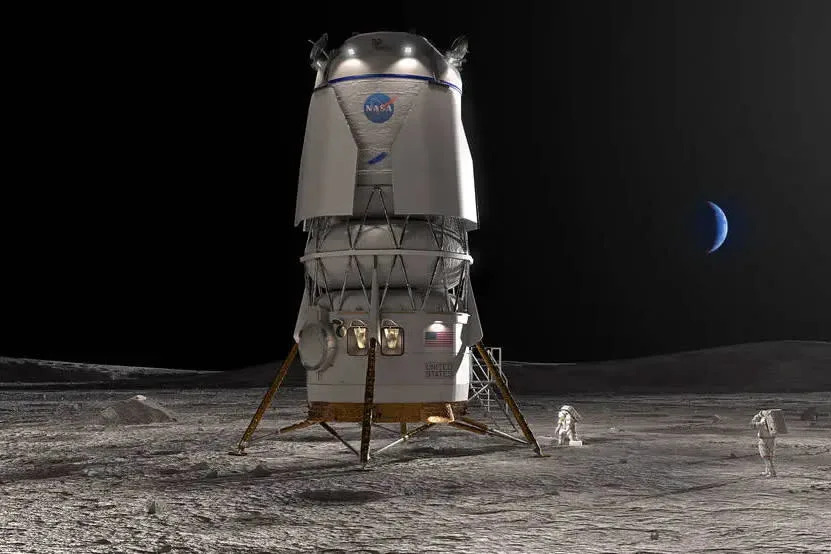
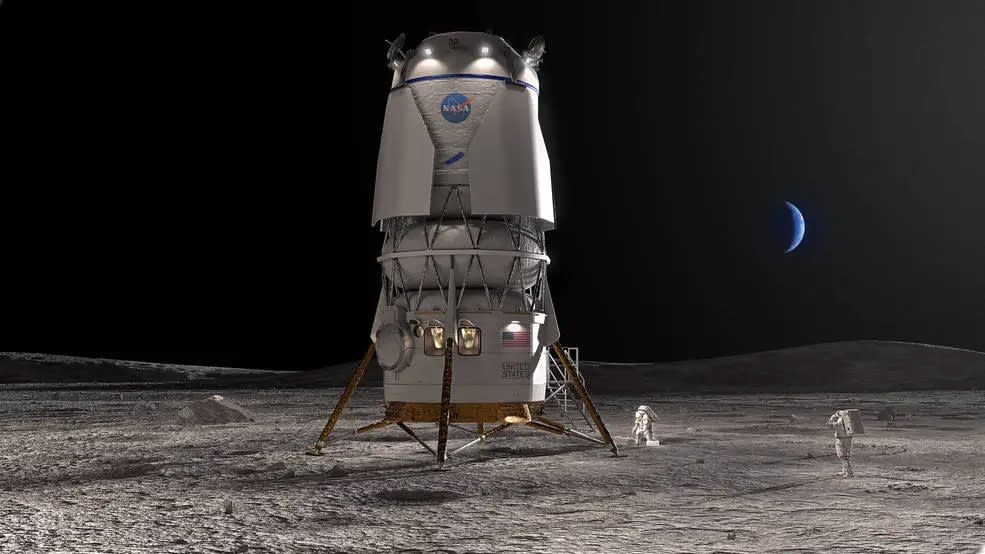
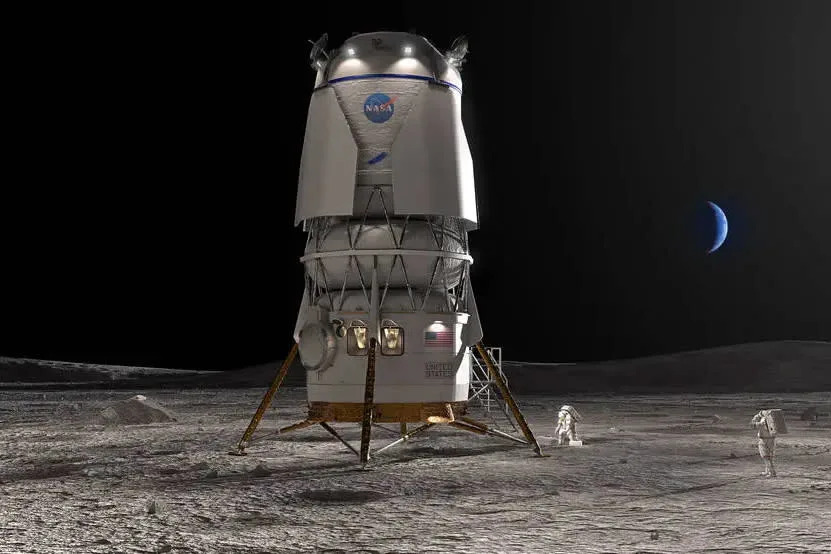
While NASA itself built the rockets and Orion module for the Artemis missions, it's relying on two private companies for the system that will take astronauts down to the lunar surface.

The project pits two of the world's richest men — SpaceX owner Elon Musk and Blue Origin owner Jeff Bezos — head-to-head as their companies compete to build the spacecraft that will carry astronauts to the moon.

Until recently, NASA had only said it plans to test Orion's ability to dock with "one or both" of the companies' landers. But on Tuesday, Isaacman said the Artemis III crew will rendezvous and dock with both landers during the mission.

Both SpaceX and Blue Origin have had some high-profile hiccups in their quests to dominate commercial space travel. Those problems have largely involved issues with their rockets, which will be needed to get their lunar landers into space so they can link up with NASA spacecraft.

NASA's future plans for the moon, including the establishment of a base on the lunar surface, depend on the existence of reliable, privately owned spacecraft that can take supplies to the moon on a regular schedule to keep the astronauts there alive and support their research.

We don't know yet. Isaacman said Tuesday that the mission will launch "no earlier than this time next year." It may be some time before we know for sure. The official launch date for Artemis II wasn't announced until just a few weeks beforehand.

Assuming everything goes according to plan, Artemis IV will launch in early 2028 to finally put astronauts on the moon again. The next mission, Artemis V, is scheduled to launch later that year. That mission will also land on the lunar surface, and it's when NASA is expected to "begin building its Moon base."

Details of what might come after that are scarce. NASA has only said it plans to launch future moon missions once per year after Artemis V is complete. Eventually, the agency hopes to establish a base on the moon that will allow a "sustained human presence" there.

NASA has said it wants to send humans to Mars and is actively working to develop the technology to make that possible. The agency believes it may be possible to accomplish that goal "as early as the 2030s" but hasn't shared any specifics beyond that — in part because any ambitions it has to go to the Red Planet depend on how successful its moon missions prove to be.

So, so much. Humankind is in the early stages of another groundbreaking space race that will redefine what is possible outside the bounds of our planet. China is aggressively working to become the second country to put humans on the moon. A long list of companies are vying to secure their place as titans of the private space industry. Probes are currently on their way to explore new planets and meteors. And new telescopes will allow us to view the universe in a way we've never done before.