Press
Iran attacks Bahrain, Kuwait, Jordan in retaliation for US strikes
Images
1 / 4

2 / 4

3 / 4

4 / 4
Strikes come after US attacked Iranian ports and islands in the Strait of Hormuz over the downing of a helicopter.

Save

Share

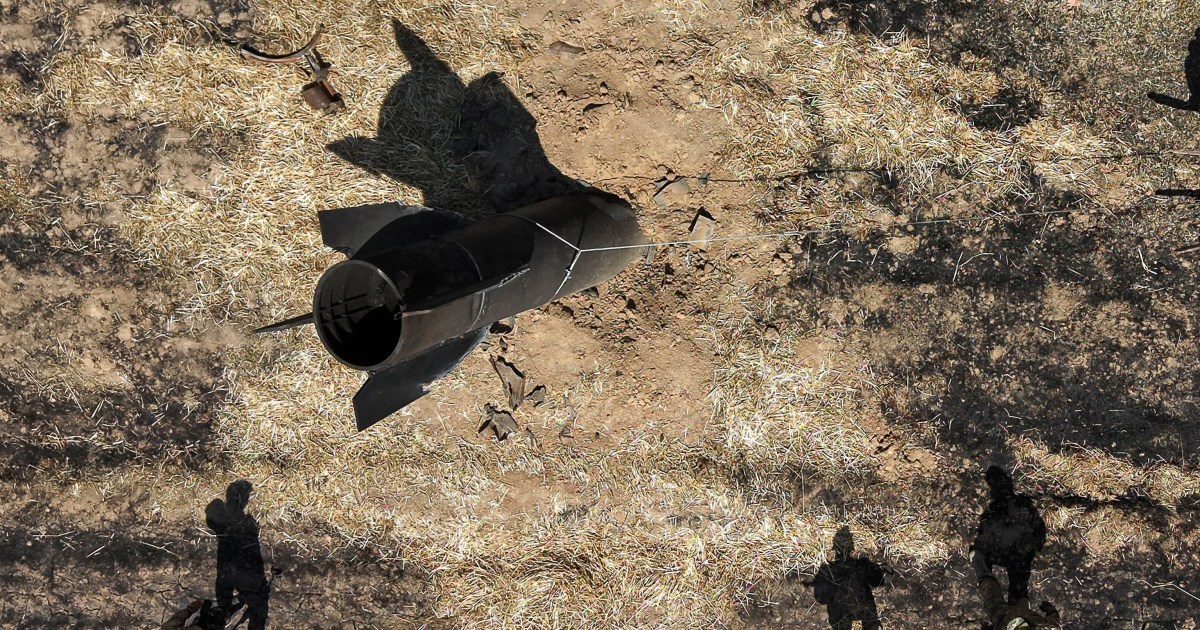
Iran’s Islamic Revolutionary Guard Corps (IRGC) has claimed attacks on United States military bases in Bahrain, Kuwait and Jordan in retaliation for US strikes on Iranian ports and islands in the Strait of Hormuz.

In a statement carried by state media on Wednesday, the IRGC said it launched drone attack on the US Fifth Fleet in Bahrain and the Ali Al Salem base in Kuwait, as well as a long-range missile strike on an air base in Azraq, Jordan.

It said it attacked 21 US targets and destroyed four of them, including an F-35 fighter jet hangar at the base in Jordan.

It also claimed shooting down a US MQ-9 drone in the skies over the Iranian city of Jam.

The latest flare-up comes after the US military attacked Qeshm Island and ports along the Iranian coast in the Strait of Hormuz after blaming Iran for the downing of a US Apache helicopter earlier on Tuesday.

The IRGC said the US’s attacks had caused damage to a telecommunications tower in the town of Sirik and destroyed to water tanks there.

It also warned that its forces remain fully prepared to deliver a “crushing and decisive” response to any US military actions, and said Washington would bear full responsibility for the consequences of further escalation.

There was no immediate comment from the US.

In Jordan, the military said it intercepted and shit down five missiles launched from Iran towards Azraq and said the operation “resulted in the fall of shrapnel without any human injuries or material damage”.

The attacks prompted air raid alarms in Bahrain and Kuwait.

The Kuwaiti Army said earlier that it was intercepting “hostile aerial targets” in the country’s airspace, without elaborating further.

Trita Parsi, executive vice president of the Quincy Institute for Responsible Statecraft in the US, said Iran’s swift response to Washington’s attacks signalled a new doctrine.

“They believe they have to respond proportionately, but very harshly and swiftly, against any American attack. Because otherwise a new normal is established, one in which the United States can strike at Iran with more or less impunity,” he said.

The Iranians, he said, were make clear that any attack on them would be responded to, regardless of the size and the scope,” he said.

“But at the end of the day, every time, these different types of events have occurred, the sense I have gotten from both sides, is that their confidence and their trust in the ability of reaching a deal is starting to diminish,” he added.

The escalation came a day after Iran and Israel exchanged fire in their most serious escalation since a ceasefire took effect in April. The war began with US and Israeli strikes on Iran on February 28, and has shaken the global economy, driven up the cost of fuel and food.

Progress toward a peace deal remains slow, complicated further by Israel’s intensifying campaign in Lebanon against the Iranian-backed Hezbollah.

Al Jazeera’s Mohamed Vall, reporting from Tehran, said that despite the latest strikes, neither side wanted a return to full-scale war.

“Whether the Americans are going to absorb this latest retaliation from the Iranians and end their operation or whether there will be new attacks will become clear in the next few hours,” he said.

“But the understanding is that both sides would like to go back to negotiations, even though  the Iranians say they don’t trust any American initiative with regards to peace.”