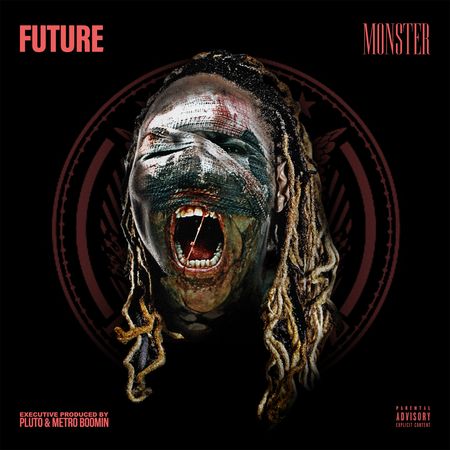
Future: Monster
Photo record
14 images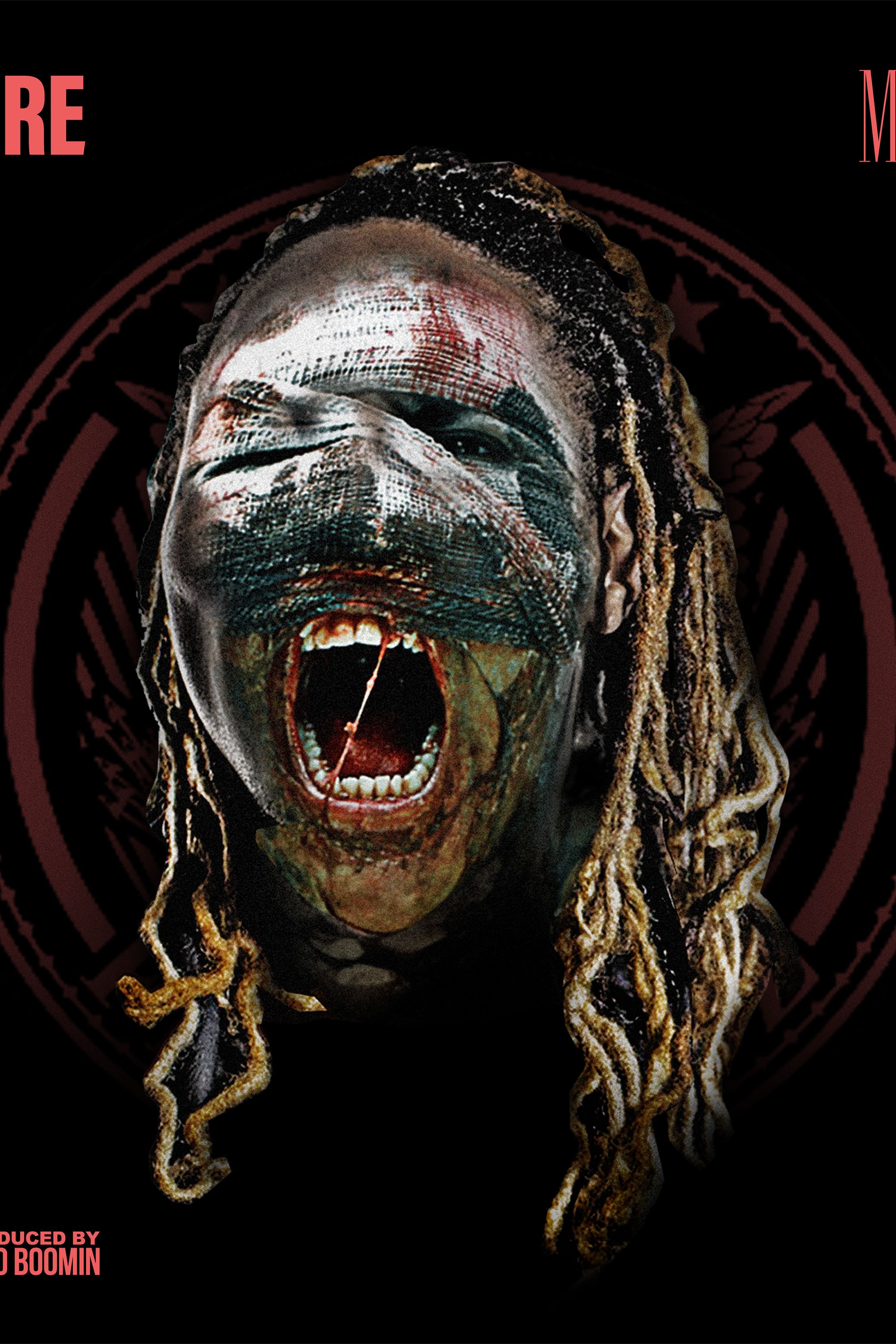
0.0
0.0
Reader Score
No score yet, be the first to add.
0.0
Genre:
Rap
Label:
Freebandz
Release Date:
2014
“You’re, um, in a public relationship now,” radio host Angie Martinez tells him coyly, toying with the bracelet on her wrist. “How does that feel?”
“It feel good,” Future replies unenthusiastically, “going from me being with different girls every day to coolin’, being with one.” He hides his expression behind sunglasses, as usual, but his body language could only be described as lax.
No score yet, be the first to add.
0.0
“Wait, you went from different girls every day to just one?” Martinez asks.
“Every day!” Future shoots back. “Rockstar lifestyle, you know what I’m sayin’? At the same damn time.”
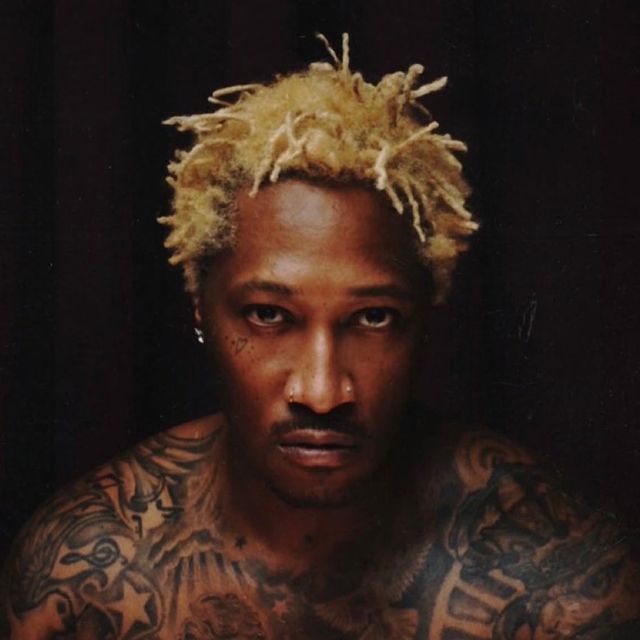
As the wait has intensified for his second album, Honest, Future’s team hasn’t seen a press op they didn’t like: He’s sitting down with the prestige magazines, the big-time radio shows, the local radio shows; he’s giggling to Nardwuar about cheesecake and opening up to DJ Vlad about growing up in a dope hole. By now, the almost-30-year-old maverick is a certified public figure, a lot more famous than any new rapper from Atlanta has been in a long time. His early 2010s run of instant strip club classics—“Racks,” “Love Me,” and “Same Damn Time,” to name a few—has made him a hot commodity in the industry and a hot topic wherever brothers feel like congregating: the barbershop, the lunch table, the basketball courts and parking lots. He was handing out sauce to Bieber and Miley Cyrus and locking sessions in with J-Lo and Shakira—even Beyoncé’s “Drunk in Love” has his fingerprints all over it. Add a highly publicized relationship with multi-platinum artist Ciara into the mix, and now he might as well be a walking tabloid.
It was strange ‘cause, in public, you could tell Future was really trying to embrace the relationship while also remaining guarded. He was relatively talkative in interviews, but the way he responded to personal questions by steering back to the motifs of his music felt like a diversion tactic. (In an interview on “Sway in the Morning,” the hosts kept saying “I’m just being honest” along with him.) Future denied the Ciara dating rumors when Vlad confronted him with them in December 2012, but when he eventually opened up about it in the following months, he preferred to keep shit on his own terms. “When you go to sleep with somebody and wake up with them, there’s certain stuff that she’s gonna have to know about that other people aren’t gonna know about,” Future told The FADER. “That’s what we share, and what we’re building our foundation around—those things that we know about each other that nobody knows.”
The music alone was enough to make headlines. A lot of hip-hop purists didn’t fuck with Future because of the way he deconstructed the genre, and yet his process was the appeal: He bludgeoned piano-led trap beats with brolic repetition and treated Auto-Tune like a cloak to strut around in. Lyrics were thrown up and stress-tested at will, no pen or pad (or dictionary) needed. Through his sandpaper rasp, random names and phrases became mission statements and lifestyle indicators. Before I even knew what Scarface was as a kid, Future made the idea of “Tony Montana” feel like a standard to live up to. Both on wax and on camera, he self-mythologized at such a level that’d seem extremely foolish if he literally wasn’t Future.
When asked about falling in love with Ciara, Future often said that she understood him and sympathized with his lifestyle on the road; she was warm and motherly to his four kids and served as a strong creative partner. They meshed instantly, got tattoos of each other’s initials, and were engaged with a son on the way within a year of knowing each other. “The way he makes me feel is just, like, ‘Why not?’” Ciara told MTV News after she and Future went public. “If you love somebody, you should express it… There’s nothing sexy about hiding your love.”
The couple first met in late 2012 because their label, Epic, wanted them to work together. The decision was a layup. After Goodies made her an instant superstar as a teenager, Ciara’s momentum was gradually slowing. As she grew from a sleek Crunk&B prodigy to a seasoned R&B mainstay, she began vying for more creative control from a label (Jive) that, according to her, would instead rather sabotage her career. Her most recent album at the time, 2010’s Basic Instinct, peaked at No. 44 before plummeting out of the picture thanks to Jive blocking radio play and making her pay thousands for promo. Epic eventually swooped in to help give Ciara a fresh start—she needed something (or someone) to reinsert that battery in her back.
Thankfully for her, Future, her new labelmate, had emerged as both a hitmaker and a genre-breaker, a studio junkie who stretched tight phrases and puppeteered astral melodies for days at a time. His 2012 Epic debut, Pluto, proved to the masses that for every pot-scraping speaker knocker in his arsenal, there was always some avant-R&B shit in the cut. Pluto’s penultimate track, “Turn on the Lights,” is still the best rap/R&B hybrid I think I’ve ever heard, and its jangly, cosmic bounce pared Future’s titanium shell to reveal something rose-golden. He had dropped love songs before, but nothing so capable of unfurling butterflies like this. “I wanna tell the world about ya just so they can get jealous,” he howls over tingly synth arpeggios. “And if you see her ‘fore I do, tell her I wish that I met her!” Rare is an outpouring of affection this shameless, this tender and desperate, but delivered in a way that makes you feel invincible despite it.
In the studio, he and Ciara hit the ground running. They collabed on remixes for “Turn on the Lights” and Ciara’s “Sorry” before carrying the sexual tension into her 2013 self-titled album. Lead single “Body Party,” co-written and ad-libbed on by Future, acted as the smooth, sensuous consummation for Atlanta’s newest power couple. The “My Boo”-inspired slow burn took off and went gold in 6 months, dovetailing into an album that nearly doubled the sales of her last one and debuted at No. 2 on the Billboard charts. When speaking about Ciara’s “Where You Go,” a spacy, unapologetically corny slice of EDM pop, Future describes it as a gift to her. “At first I had the song for [Honest], then she sat with it for a minute. She [was] like, ‘I need this song, it just seems like it’s speaking to me. Give it to me!’”
For SPIN a year prior, critic Andrew Nosnitsky called Future a “populist star” who was “mutating the mutation.” “The more adventurous listener might wonder what he could accomplish if he broke free of his genre’s gravitational pull entirely,” he wrote. Future’s 2014 album, Honest, is actually the closest he’s ever gotten to actualizing that idea. The production regularly ditches his trap roots for atmospheric pop and bionic R&B, and he builds on the melismatic, seductive elements of his work with Ciara (and Rihanna, and Kelly Rowland) to craft some of the best melody-driven work in his career. In the long-ass press run he embarked on, he continuously marketed Honest as his “most passionate” and, well, “honest” record to date. In actuality, it felt more like a ploy to prove his versatility and star power than an earnest depiction of vulnerability.
Honest arrived at a time when Future’s legitimacy was being tested by the gatekeepers in spite of how successful he already was as a songwriter. “When they put you on the MTV Top 10 best rappers [list], I was like, ‘Why is Future on that list?” Ebro Darden told him the week the album came out. In a conversation uploaded to YouTube the same day, Elliot Wilson admitted he wasn’t a fan at first either: “It was a couple cats that hit me in the head to let me know the power you had in the game.” In his efforts to prop himself up as the cutting-edge artist of the moment, Future surrounded himself with A-list royalty—Kanye West, André 3000, Drake, Pharrell—and retrofitted his off-kilter delivery for pop-friendly textures. “Look Ahead” might be the most glaring example of the latter: The boom-clap percussion, the Santigold sample, the cheesy back-against-the-wall sentiment (“Was it cold nights that made me cold?/Do the stress increase my hunger?”).
What’s more, as much as he tried (and as good as “I Be U” is), the lover boy motifs never fully aligned with who Future really was. On “I Won” with Ye, he professes love in terms of possession above all else: possession of his partner’s sexuality, of her likeness, of her material interests. (He claims the song wasn’t about Ciara, but bruh, c’mon.) There’s a real disconnect between the love he feels he’s professing and what it actually means to love someone. For Honest to be his “I’m about to marry my wife” album, it’s lowkey crazy that there’s still no shortage of bars like, “Got bitches kissin’ on bitches, I’m just bein’ honest.” Future warps the idea of a soulmate into a vessel that affirms his ego, and despite his genuine desire for a warm embrace, it’s outweighed by a restlessness that he can’t seem to shake.
Four months after the release of Honest, and three months after the birth of their son, Future Zahir, Ciara broke off from Future. She found out that he was cheating on her with his stylist and that “this was clearly not a one-night thing.” Considering how controlling he was of his perception, Future was not about to take the blame for their engagement failing. Ciara was rightfully humiliated by the situation, but Future made it a point to absolve himself of any responsibility. And when I say absolve, I really mean say as close to nothing about it as possible. A week after the news broke, he took to Instagram to post his initial response: “I Dnt respond to rumors I respond to money #MONSTER.”
Everything we know about Future as an artist was built through his prolific early-career mixtape output. Before Pluto, his first studio album, dropped in 2012, the highlights on his tapes had highlights, tiny moments that still stick like sap: the yelps of “movie!” on Kno Mercy’s “Watch This,” the gruff, Jeezy-esque tone of True Story’s “Out Da Mudd,” the chirpy glee of the hook on Streetz Callin’s “Running Through a Check.” There was a guttural feeling to the street-facing urgency of his mixtapes that started to dissipate once Future and Epic started focusing on chart-chasing albums instead. “The label isn’t really feeling Future putting out 20 free songs,” Metro Boomin told XXL in 2013. “At this point, they see every Future song as capital… Putting out free music is what he’s used to. He’s used to satisfying his fans.”
“Would I do it again?” Future asked about Honest right before its release. “Fuck no!” The album went on to debut at No. 2 behind the Frozen soundtrack and right above Iggy Azalea’s The New Classic (2014 was crazy). It didn’t take long before Honest’s hype fizzled out. “I can drop an album [three months from now] if I want to,” Future continued, “because I don’t have to deal with this lawyer, that lawyer, you not responding in a timely manner, you you you you you—it’s always about you, it’s never about me. I don’t want to be put in that situation again.”
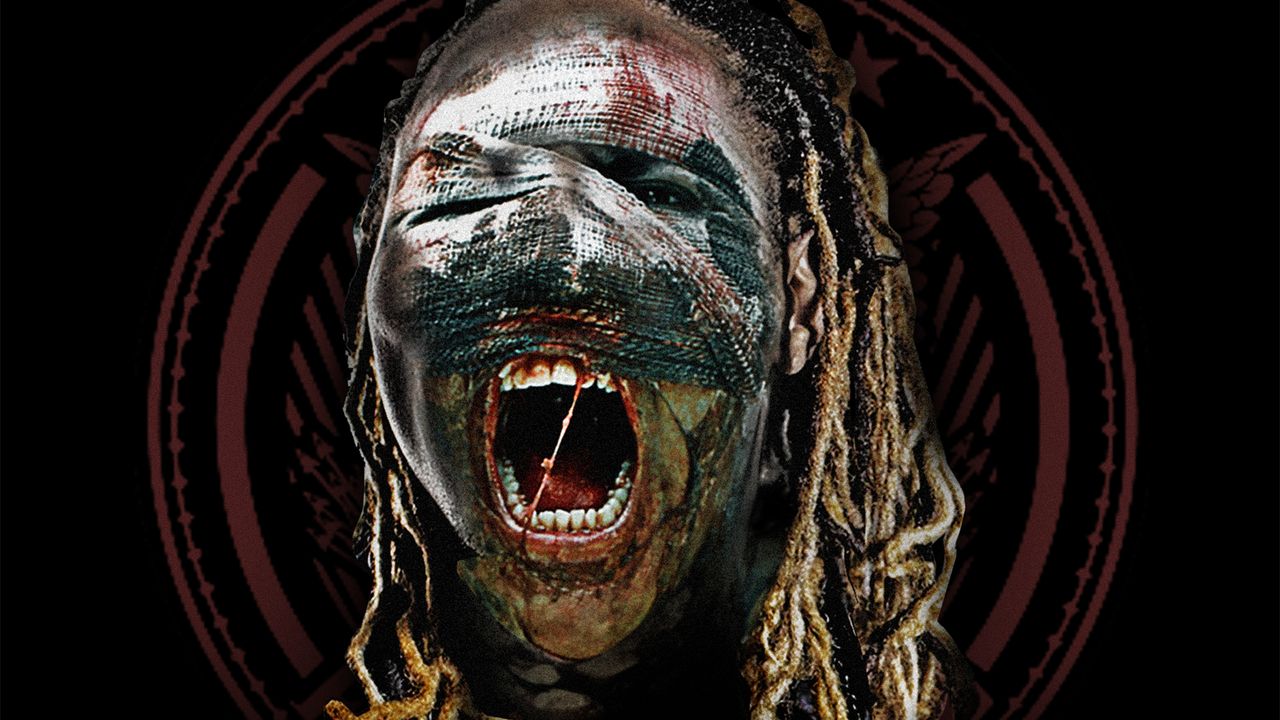
So what do you do after your fiancée leaves you for cheating and your pivot to pop music didn’t bear the fruit you expected? You go back to your roots (the strip club). Future began promoting his Honest follow-up, Monster, practically as soon as the news broke about him and Ciara in August 2014. It was initially going to be called Evol (a title he’d return to later), but it eventually took on the name of its Metro-produced lead single, a generational mask slip from a man who never claimed to be a saint in the first place.
Over slinky, wobbly alarm trills and nervy woodwinds, Future dives into a display of lechery so vivid, you would think the 15-carat ring he bought for Ciara was actually a set of shackles for his wrists. “All my niggas some junkies, they keep that bread on ‘em, dawg/Yo lil hoe is a monkey, she got a head on her, dawg,” he raps out the gate. Less than a year prior, Future was featured on magazine spreads talking ‘bout kicking his lean addiction and going out to restaurants for dinner for the first time in years. “Monster” throws all that shit out the window: He’s mixing lean with kush and opening fresh packs of molly; he’s “fuck[ing] her throat when she gets home from church” and watching girls kiss for his amusement. “I promote prostitution,” he spits plainly.
More important than the subject matter or even the timeless production is that Future is rapping like he got a new lease on life. No amount of well-intended pandering or sanitized motivation music can usurp pure, unbridled conviction. I genuinely believe that Future believes everything he’s ever rapped, but hardly ever does he sound as inspired as he did by the carnage of the context leading up to Monster, which came out three days before Halloween that year. Despite him being completely at fault for the collapse of his relationship, he feels as though he’s the one who’s been scarred by betrayal. Ironically, by allowing himself to lick his wounds on wax, Future ended up with the rawest, most honest work of his career. The result is quite possibly the greatest mixtape of my lifetime.
Growing up, I used to sit with my dad and watch Dwyane Wade corral whatever band of misfits the Miami Heat could keep on their payroll and put them on his back. He was a physical player by every stretch of the imagination, one who attacked the rim with ease and absorbed contact like no other guard could. For some reason, no matter what kind of game he was having, there was always a switch that he could flip if he was hit hard enough. He’d rise from the hardwood with a bloody lip after getting smacked in mid-air and suddenly lose his fuckin’ mind, making every shot that left his fingertips.
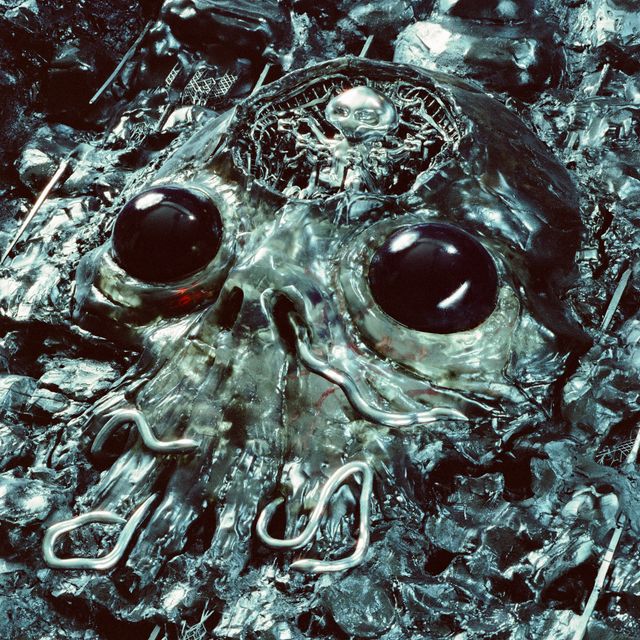
The uncontrollable, awe-inspiring momentum of those moments is what the opening stretch of Monster feels like to me. The eerie, blood-pumping intro pieces together interview clips and news reports about Future’s career—his infectious sound, his polarizing perception, the highs and lows of his time with Ciara—and places them over chilling operatic harmonies that feel straight out of a Blumhouse film. The dark ambiance fades into the echoey, goblin-like gurgle at the center of “Radical,” where Future’s slurred hysteria drops in like a twister in the Midwest. “All this shit radical/All this shit magical,” he projects ad nauseam, seemingly at risk of getting lightheaded. It’s delirious to the point of nearly bursting at the seams.
That carnal aggression is at a premium throughout, striking a balance between the absurd wealth he’s finally gotten used to and the dirt he had to do before he could get rich. It could be said about myriad trap albums before and after Monster, but the blurring of lines between Future’s past as a dope dealer and present as a rap mogul makes for a ridiculous outlet for the rage he felt. He’s so invigorated by “[making] oldhead niggas go get they plugs back” on “After That” you can hear his vocal cords trembling. On “Gangland,” he gloats about moving packs up and down the East Coast so brazenly he feels it necessary to call on Johnnie Cochran.
Ahead of its release, mixtape host DJ Esco looked at Monster as a way for Future to “get back ratchet” and “start having fun again.” You get that feeling off rip as “Radical” goes into “Monster,” but it’s really the build-up of “Fuck Up Some Commas” that shot that sentiment past the moon. “Commas” speaks to the simplicity at the heart of the mixtape: a brisk, minor-key piano roll, some hard-hitting drums, and a little motivation is genuinely all Future needs to spawn a hit. Its chest-pumping no-nonsense hook, boosted by him literally just listing out numbers, is a stroke of genius so simple, you can’t help but shake your head at the fact that it works.
Executive-produced by Metro Boomin, Monster is dominated by infernal blips and synths over punishing trap drums. Metro’s joined by a tight-knit group of Future’s best and most trusted producers (except Mike Will, who was likely running off with Rae Sremmurd at this point): Southside, TM88, Nard & B, Will A Fool, and DJ Spinz. Monster wouldn’t be what it is without the beats sounding as feverish and disheveled as the emotions Future poured over them. The head-spinning fervor of “Fetti,” chest-caving gloom of “Hardly,” and eerie dysfunction of “Wesley Presley” shouldn’t even make sense next to each other. Past the money showers and sex binges, listening to Future claim pyrrhic victories over these beats feels like watching the demise and rebirth of a monarch happen at the same time. He’s in the best form of his life and is just barely keeping it together.
The tone takes a sharp turn with “Throw Away,” the first real acknowledgement of the breakup that brought him here. The Nard & B two-parter starts off as business-as-usual: Future saunters across chilling, suspenseful tones, throwing money at, and having unemotional sex with more women than he can count. Without warning, the beat falls out and is replaced by harsh synths on the verge of malfunctioning, prompting Future to say some shit I’d never think to ask of anyone in my life: “Go ‘n’ fuck that nigga, get it over with,” looking Ciara straight in the eye as the synths dissolve into soup. After months of hardly addressing the cheating rumors, he finally owns up to them with a ridiculous level of audacity: “The sexing on the late night mean that much to you?/My love don’t mean that much to you/Fuckin’ these hoes meant too damn much to you.”
If you’ve ever dedicated this song to a love interest, I hope someone is out there praying for them. Breakup songs don’t get more cynical than this. As the production grows woozier and muddier, Future only gets more twisted, hoping and pleading that whoever his ex has sex with next somehow brings her back to him. Each passing bar seesaws between petty vengefulness and a forlorn yearning for reconciliation. “If loving me in public ain’t safe, you can take my love and hide it,” he coos softly. That a song this goofily brazen can genuinely convey the anguish it intends to is a miracle, even coming from Future.
If there was ever an album that needed to be named Honest, it’s funny that it ended up being the one right before this one. With “My Savages,” a bluesy ode to the friends that have held him up through the years, Future ponders his role in the fragmenting of their relationships. Throughout “Hardly,” Future jumps around from near-overdoses to violent flashbacks to impulsive shopping sprees, no longer able to distract himself from the price he’s paying for his hedonism.
Album closer “Codeine Crazy,” a TM88-produced instant classic, delves into that reality even further. It’s heartbreaking and stomach-turning and strangely uplifting the way Future runs his hands over the chinks in his armor: his insecurity over his public perception, his use of drugs as a crutch, his inability to feel the true weight of his problems. The beat—which was originally made for Nicki Minaj—flips a remix of “Summertime Sadness” and adds in these supple, playful synth flourishes that compound the melancholy. Everything he wants to bury under his vices, he can and he does. “Let’s pour up a pint, I’ma fuck around faint like I’m Kid Cudi, prob’ly,” he spits, almost numb at the possibility of losing consciousness. “Codeine Crazy” is less of a cry for help than it is an embrace of the man that he is, flaws intact. “Celebrate like the championship,” he repeats on the bridge, sounding unsure of what he’s actually won in the end.
It’s impossible to limit Monster to one thing. It’s a dour, underserved breakup record, most definitely, but it’s also a story of redemption. It kicked off what Meaghan Garvey referred to as a “trilogy of career-resuscitating mixtapes,” leading into the 2015’s Beast Mode and 56 Nights before the era-defining album release of Dirty Sprite 2 solidified Future as an epochal figure in rap history. “I turned the whole world up, now they wanna treat me like an outcast or sumn’,” he spit on “Hardly,” not knowing that he’d turn the world up 10 times harder soon after.
As messy and fucked up as it is, Monster represents the pinnacle of trap music as emotional release and the strongest release in Future’s catalog. “Monster is me going back [and] stripping everything down,” he said in an interview in London that November. “It don’t matter who have anything to say about it—whether it offends anyone, whatever it is—I gotta make music for myself.”
During the Honest press run, it became pretty apparent he was tired of letting off the same motivational spiels about love and music and his career. Somewhere deep down was an underlying desire to take the muzzle off and go off the rails. That same period in London, Future went to another interview, this time with Tim Westwood. After a couple simple questions to start, he trails off as he reflects on the last time he was in the UK. “Monster, man,” he grumbles to himself. Then he says it again, the phlegm rattling his throat making it sound coarser and more primal. He snarls at Westwood like a tiger and then lets out a laugh. Lord knows he needed one of those.
0.0
0.0