Canadian Country Music Awards Announce Second Wave of Performers
Photo record
7 images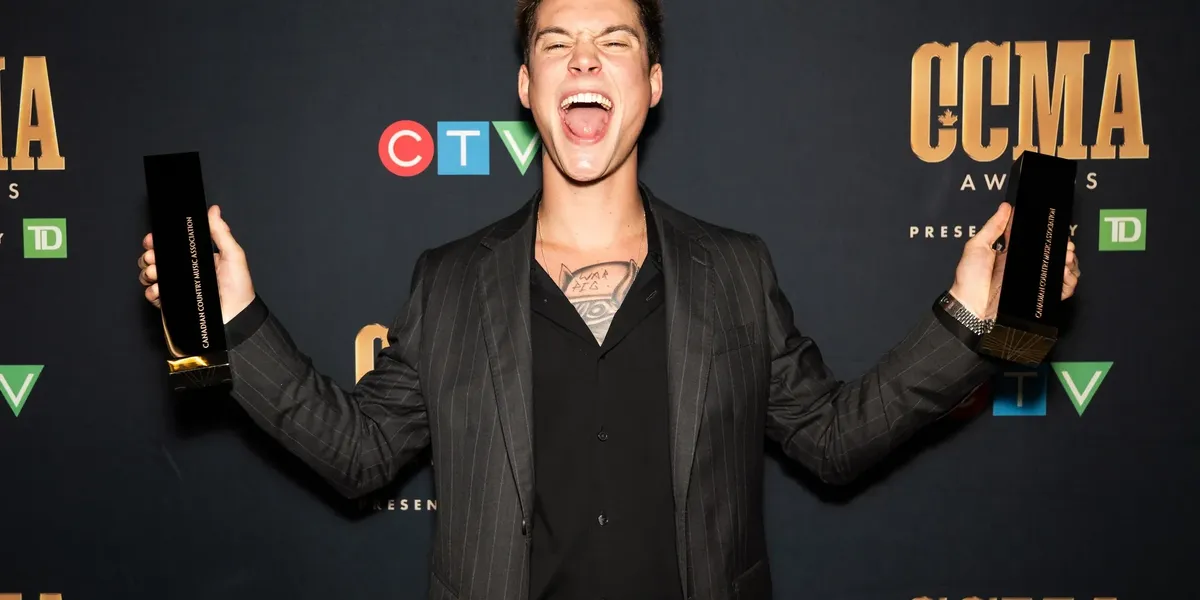

Story video
1 clipTenille Towns and The Strumbellas are among the newly announced names.
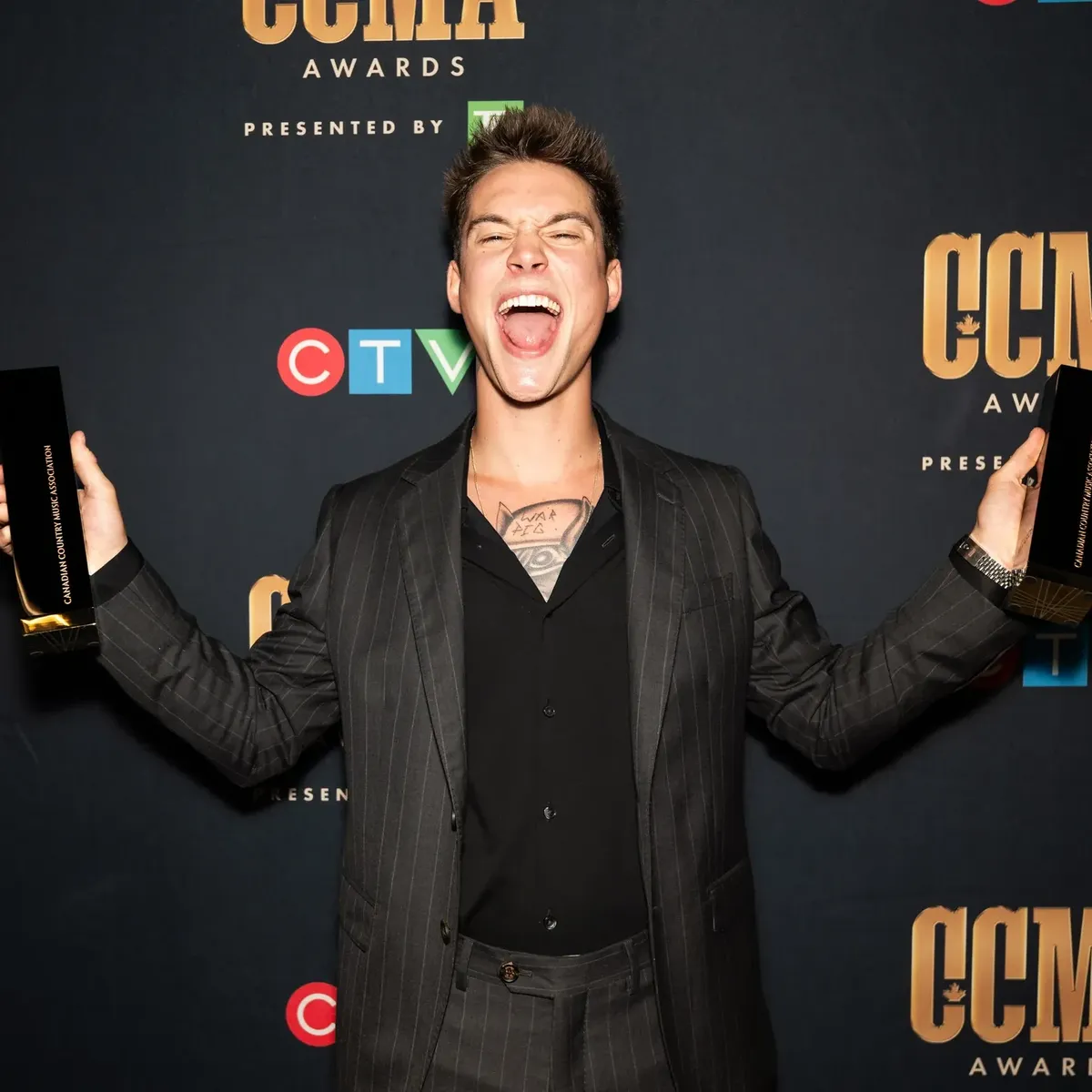
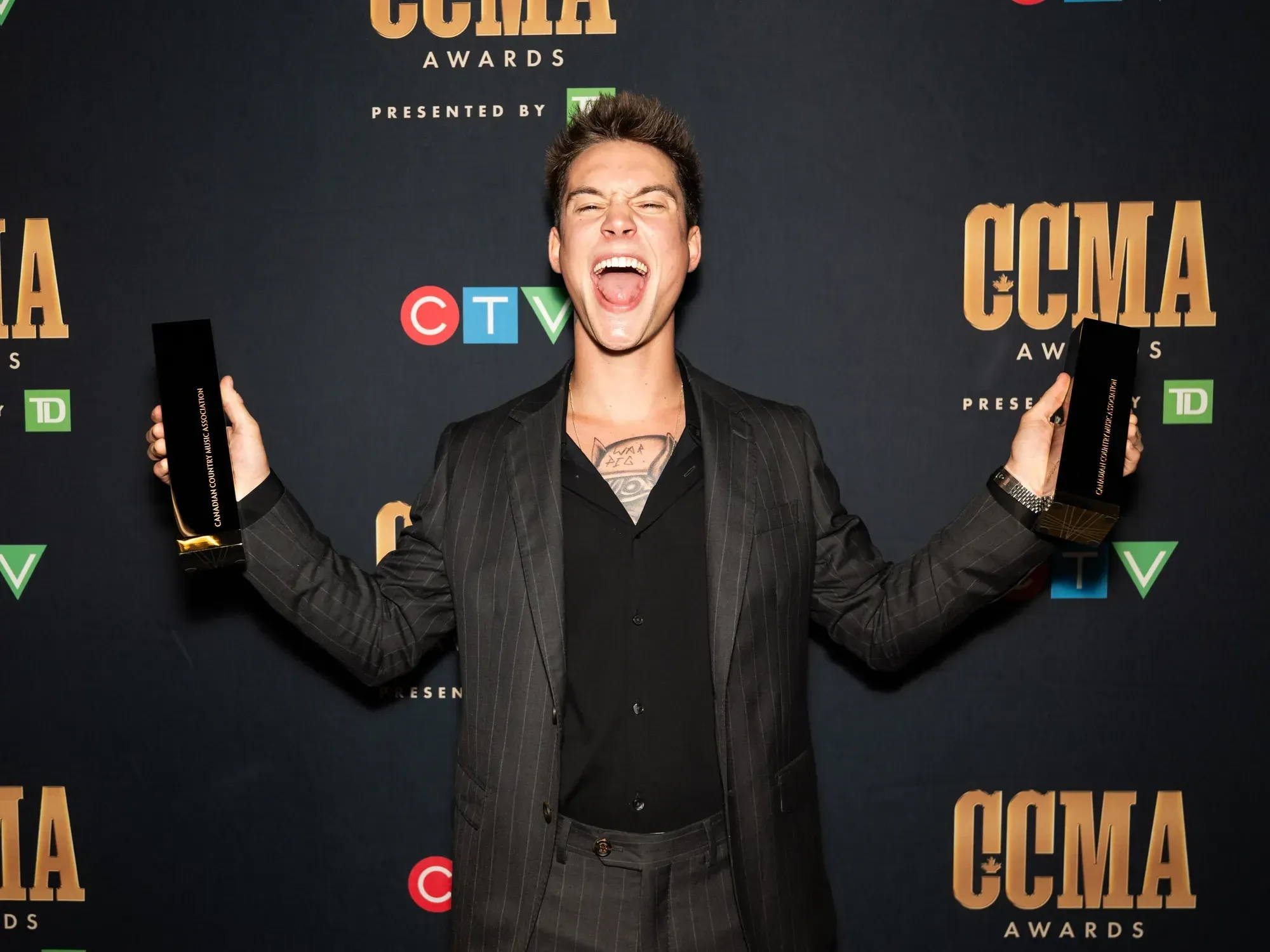
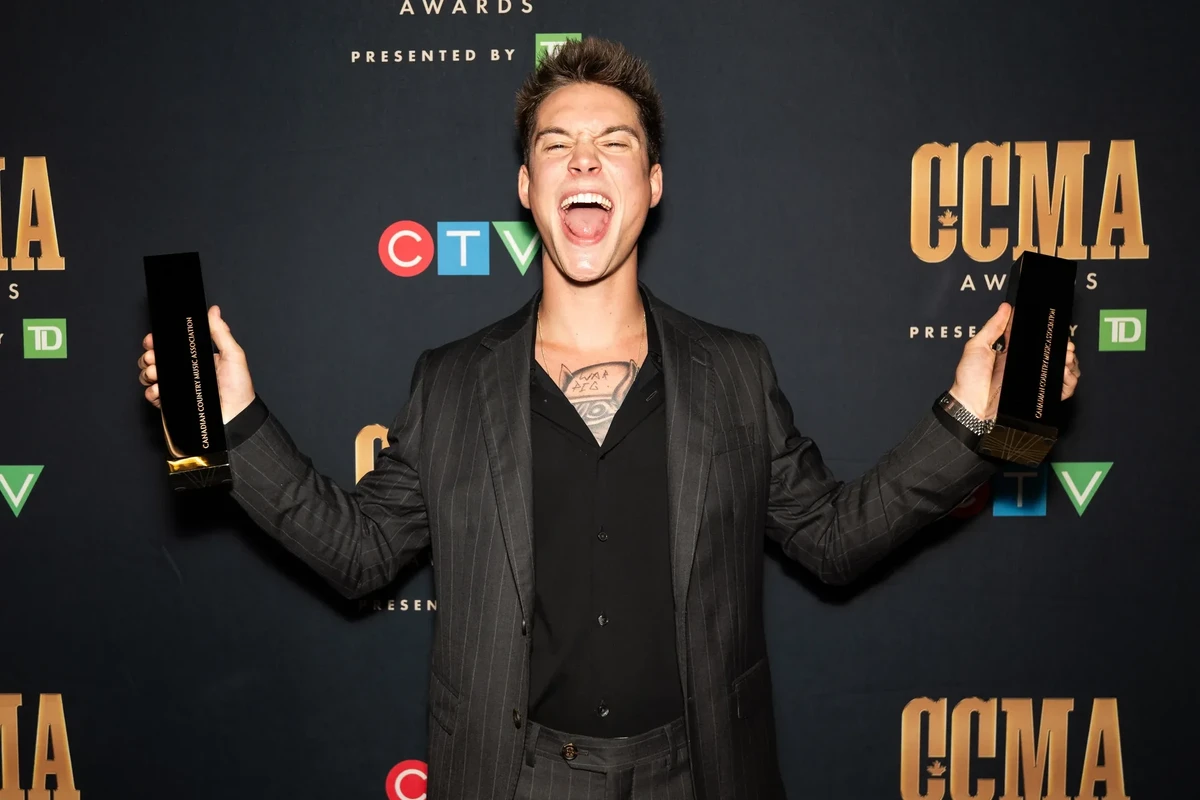
Cameron Whitcomb at the 2025 CCMA Awards
The 2026 Canadian Country Music Association Awards have announced a second wave of performers that should give the Saskatoon ceremony even more flair.
Tenille Townes, Nate Haller, High Valley, The Strumbellas and Thelma & James have been added to the September 19 lineup, joining a previously announced group that includes Dean Brody, James Barker Band, The Reklaws, Owen Riegling, Tenille Arts, Hunter Brothers, Kalsey Kulyk and Jess Moskaluke.
Tenille Townes’ performance is particularly meaningful, as the Alberta singer-songwriter heads into the awards with five nominations. She’s had a stellar year and is competing for Female Artist of the Year and Album of the Year. Fans will also be waiting to see if she’ll join fellow performer and nominee Nate Haller to perform their duet ‘’Backfire’’.
Haller is one of Canadian country’s fastest-rising stars, with over 40 million global streams. He is nominated in three categories.
Thelma & James arrive with an equally impressive nomination haul. The duo also picked up five nominations. High Valley, meanwhile, returns to the CCMA stage as a veteran presence.
Also joining the celebration is The Strumbellas, the Toronto-area group that has spent more than a decade moving between folk, rock and roots music, making them one of the most unique and popular voices in Canadian country.
With the ceremony still weeks away, the CCMA Awards have yet to reveal who will host Canada's country music community gathering in Saskatoon.
The 44th annual CCMA Awards take place September 19 at SaskTel Centre and will air on CTV.
Ten years ago, during the same week that Frank Ocean released his mixed-media tableau — the short film/album Endless, the rarefied Boys Don’t Cry zine, and his seminal album Blonde — Werner Herzog’s film Lo and Behold, Reveries of the Connected World arrived. In the film, the German documentary filmmaker considers the heady question of what the internet might be doing to us humans. He makes contact with a community whose members swear they’re allergic to Wi-Fi. The film ominously warns of an inevitable solar flare on the scale of the 1859 Carrington Event, one that, once unleashed, would reduce all communications networks, the foundations of so much of our modern world then and even more now, to dust.
And so, on “Seigfried,” Frank explains: “A moment one solar flare would consume, so why not/Spin this flammable paper on the film that’s my life?”
In the decade since its release, Blonde, like Herzog’s documentary, has come to feel like the final stamp on a discrete moment in history. Released less than three months before Trump’s first election, the album now lives as an artifact of a prehistoric world; yet emotionally, Blonde feels more expansive than any frame of time can contain. That has always, of course, been Ocean’s skill as a writer: his ability to occupy emotion untethered from time or place, instincts and sensations jumbling into one another with chaotic, maybe even euphoric, abandon. On 2012’s Channel Orange, he arranged that gift into scenes populated by taxi drivers, rich kids, dealers, and doomed lovers. Blonde loosens the plot, leaning into the unreliability of memory and the false truths that occupy the gaps between love and certainty.
It’s the way that last “Good!” pierces the second half of “Ivy,” landing closer to the punk instincts that flash elsewhere on the album, in sonic conflict with the song’s shimmering opening turn. Or how, on “Nikes,” Frank trapezes between sonic registers and perspectives, painting a kaleidoscopic view on his own sexuality, all under the banner of the most iconic brand in the world.
Across Blonde, what feel like dispatches from another dimension arrive like warnings from the past and future about the very romance the narrator finds himself sliding into. In one of the handful of interviews he’s given, Ocean described the album’s competing narratives as a “collage or bricolage,” saying that memory has a way of arriving as overlapping images. Each song, too, has its own overlapping instincts. The deceptively mellow “Self Control” manages to mourn a lost love with existential clarity. It features vocals from Slow Hollows’ Austin Feinstein, who sings the devastating “Keep a place for me” refrain before Frank takes us into the stratosphere on a swell of strings arranged by Jon Brion, repeating, “I know you gotta leave,” until his voice splits into a choir.
Even bite-size moments like “Good Guy” contain universes of their own. The interruptions imitate the way an old relationship returns to you with a flash of potent sensation. That construction has kept Blonde from aging in place. The person who heard “Self Control” at 19 and the person returning to it at 29 are effectively hearing two different songs. At first, its plea to remain somewhere in an old lover’s life can feel like the whole tragedy. Later, the more devastating recognition may be how much time has passed since asking.
“Why am I preachin’ to this choir/To this atheist?” he sings on “Close to You,” acknowledging the futility of trying to convince someone who knows the story but no longer believes in it. Like with Channel Orange, Frank is narrating life from 10,000 feet up, able to communicate pain and lust and longing with a kind of precision that, if nothing else, should prove how singular the human spirit truly is. An AI could never create Blonde precisely because of how deeply human an album it is. “This is not my life, it’s just a fond farewell to a friend,” Frank sings on “Seigfried,” before the song effortlessly widens from one failed romance to contain the meaning of existence itself. It’s something that no machine can ever understand.
After hosting the World Cup earlier this summer, Toronto is getting another major event as South Korean supergroup BTS will take over Rogers Stadium for two sold-out concerts on August 22 and 23, bringing an estimated 100,000 fans to North York across the weekend. This will be their first Canadian performance since three shows in Hamilton in 2018.
For local fans, the wait has been especially long. BTS had planned to return to Toronto in 2020, but those concerts were ultimately cancelled during the pandemic. The group was then forced into a lengthy hiatus, while all seven members completed South Korea’s mandatory military service.
Now, they are back with their ARIRANG world tour, and Toronto is the only Canadian stop on a massive international run that spans 88 shows across 34 cities.
Anticipation for this event is already high, as members of the group have started showing up in the city. Earlier last week, J-Hope and RM were spotted at a Chris Brown concert, which sparked outcry from some of their local fans.
An official BTS merchandise pop-up on Bloor Street has been attracting hundreds of fans each day, with concertgoers and collectors lining up for special merchandise, including $37 posters, $75 keychains and hoodies for over $250.
Toronto is also embracing the arrival beyond the commercial side of the concerts. City council has approved the temporary co-naming of a section of Yonge Street between North York Boulevard and Finch Avenue as ‘’BTS Boulevard’’ during the group's visit. A similar measure was approved to co-name a stretch of the city ‘’Taylor Swift Way’’ when the pop superstar came to town in 2024.
See on Instagram
The concerts also coincide with the Toronto Korean Festival, which runs from Friday through Sunday and will feature programming celebrating Korean culture. Local BTS fan organizers will have a presence at the festival, while additional fan activities are planned around Rogers Stadium before the shows.
For longtime fans, this is the culmination of years of waiting. BTS last performed in Toronto in 2015, when the group was still playing much smaller venues. Their next Canadian appearance came three years later in Hamilton, where they sold out three nights. This time around, BTS will now perform at Rogers Stadium with a 360-degree, in-the-round stage designed specifically for the tour, bringing the group much closer to the 50, 000 fans.
Their latest album, ARIRANG, debuted at No. 1 on the Billboard 200 in April and recorded the biggest sales week for a group album in more than a decade.
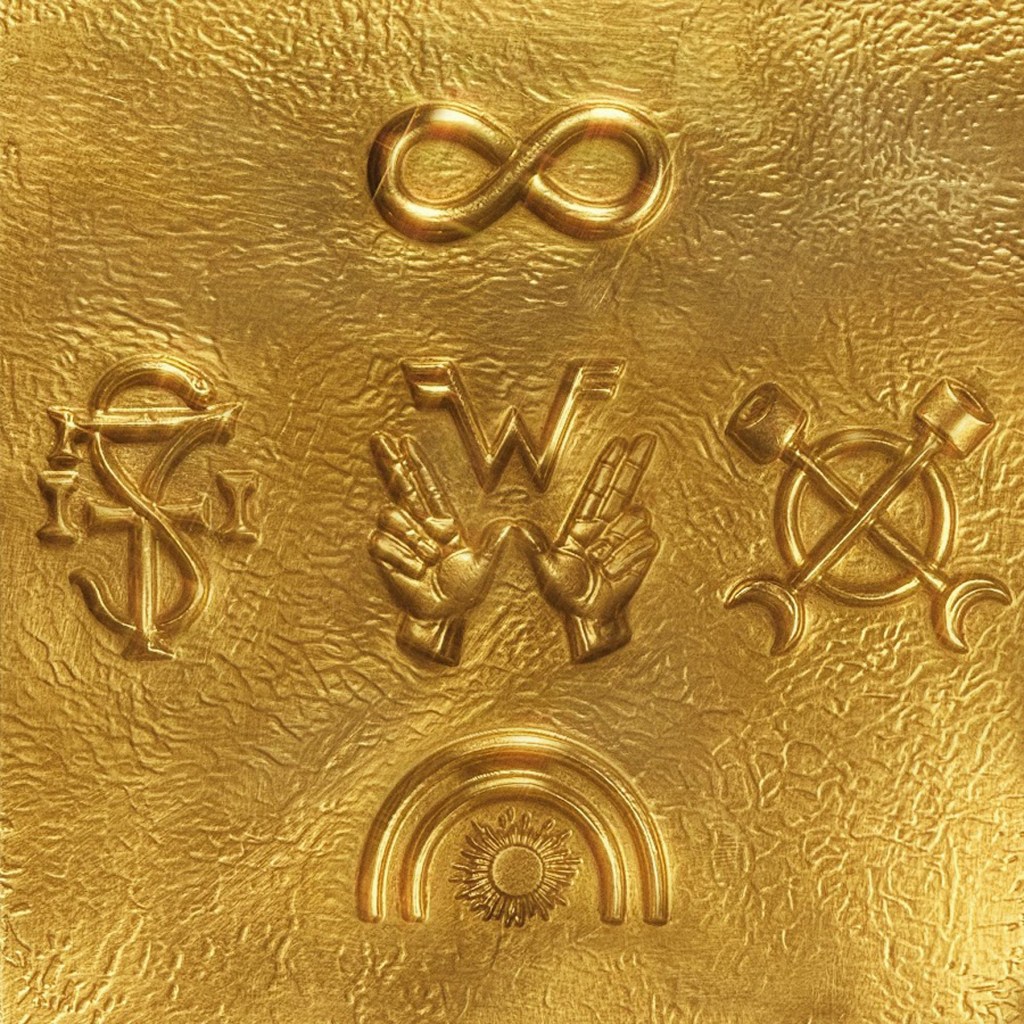
Weezer has always had a thing for concept records, whether they’re imagining “the Beach Boys gone bad” (2017’s Pacific Daydream), doing a set of beloved old radio hits (2019’s The Teal Album), getting in touch with their quasi-sensitive side (2021’s OK Human) or paying tribute to the Eighties metal greats (that same year’s Van Weezer). For their 20th LP, technically self-titled but also known as The Gold Album, the concept is at once highly ironic and gloriously straightforward: a Weezer record that sounds like a classic Weezer record. “There’s something special about your early shit,” Rivers Cuomo intones — simultaneously tongue-in-cheek and heart-on-sleeve — at the opening of “C.E.O.,” a highlight anthem that sounds unmistakably indebted to their own 1994 classic “Undone (The Sweater Song).” The sentiment set the table for a record that often suggests what might’ve happened if the band had released a transitional album in 1995, between their debut 1994 alt-rock smash The Blue Album and their 1996 emo-adjacent masterpiece Pinkerton. Weezer’s Gold is, in fact, Weezer gold.
The band described the organic process behind the album as “less talk, more rock.” You can hear the poker-faced detachment that often defines their music falling away on the album opener, “Say Yes,” which shares a title with a 1997 tune by indie-folk icon Elliott Smith. Cuomo starts off in a malaise of cynical self-doubt. “Everybody here’s gonna make me feel so afraid/So I only think about how my ass is getting paid,” as the rest of the band underscores his uncertainty with a drolly ominous lurch. But the song takes off into a chorus as catchy as great Weezer oldies like “Buddy Holly” or “The Good Life,” with lyrics about turning the ritual of cranking out yet another automatic alt-rock banger into an affirmation of joy.
That freewheeling feeling is all over The Gold Album. Working with producer Kenny Beats (whose credits include Rico Nasty, Vince Staples, and Geese’s Getting Killed), the band sounds more garage-rock-y than usual, often rooting its songs in thick, bottom-heavy guitars that are more desert-rock than power-pop. So when they switch from growling riff to golden chorus on “Don’t Make It Weird” or “Shine Again,” the visceral payoff hits deeper than it would on a more run-of-the-mill Weezer disc. On the feelings-first “We Might as Well Be Strangers,” the guitars burn and wail as Cuomo rhymes “debating Nietzsche” with “how much I need ya,” and shouts it out alongside ace belter Karly Hartzman of Wednesday, one of the bajillionty bands who grew up in Weezer’s long shadow.
Cuomo spends a lot of the album chewing over a middle-aged indecisiveness that mirrors the journey of his fans, adding a drolly poignant tinge to a warmly familiar sound. “Hoops” is an agro complaint that begins “Bought a toaster just to make some toast/First I had to scan a QR code.” Preach, brother. On “Nowhere,” Cuomo proffers the NIMBY protest “Why did they clear the trees just to put up some shitbox condo?” over a churning, fuzzbomb riff, coming up with one of the best Cali-rock combos of his vaunted career: the anti-sprawl spirit of Joni Mitchell’s “Big Yellow Taxi” set to the wide-open sludge of Kyus.
Naturally for a band that’s often made poker-faced self-awareness its emotional safe space, the album’s centerpiece moments are about how tapping their bedrock sound can trigger feelings about rock itself — does it still feel real? Are we just going through the motions? Does that difference even really matter? “C.E.O.” contrasts innocent images of tinkering with his guitar in his teenage bedroom with the honest reality of cranking out the same old Nineties tunes for his corporate paymasters, navigating the tension between his “mad professor” indulgences and the need to “keep the rocket in the sky.” (The everyday fan listening along at home is invited to insert “kids’ college fund” or “401(k)” for “rocket in the sky.”) He’s not the first guy to make this observation, but the song’s gilded-grunge charm makes the sentiment stick.
The album-closing “The L.A. Sound” is The Gold Album’s nostalgic coup de grace. Written by guitarist Brian Bell, it’s a sweet remembrance of what it’s like to be a baby band grinding out long overnight van drives from crappy club to crappy club, winning over new fans one tiny little show at a time. “We came to melt your face/We’re gonna torch this place,” the band sings over the kind of candied alt-rock chug Weezer blew up with more than 30 years ago. This band has been putting its own sidelong spin on rock rituals since “In the Garage,” back in the Blue days, and they do it with real affection here too. Turns out, after all of these years, Weezer being Weezer is still a good look.
Matt Collyer knows Warped Tour is a festival like no other. For the Planet Smashers frontman, it is part summer camp, part punk rock boot camp, part family reunion, and part survival test. It’s also one of the reasons so many bands from the punk, ska, hardcore, and emo worlds were able to find each other, tour together, and build scenes that reached far beyond their own hometowns.
So as Warped Tour weekend returns, Collyer is going in with the right attitude. Not expecting it to be exactly what it was, but ready to feel that old energy again.
“I’m very excited,” he says. “I mean, it’s not the same Warped Tour. So if we go in thinking that it’s the same Warped Tour as it was 20 years ago when we did it. It changed through those years too.”
Still, what made Warped special was never really the lineup, but the movement. The feeling of sprinting from one stage to another, catching only 15 minutes of a band before racing off to see someone else. It was discovering your new favorite group by accident, watching heroes and unknowns share the same parking lot, the same heat and chaos.
- YouTube www.youtube.com
The Planet Smashers’ first Warped experience was as DIY as it gets. Collyer remembers playing Québec City in the festival’s early days, before the band fully understood what they were walking into.
“We played on the flatbed of a truck,” he says. “And I was like, ‘This is different’. And then we had to do our own merch, but we didn’t know you were supposed to bring a tent. So we were that band in the sun with just a table, and the sun was just pounding down on us.”
They had copies of their early releases, one Planet Smashers shirt design, and no real plan. The shirts sold out almost instantly. Then, an icon walked up. “I just remember Tim Armstrong walked up and I’m like, oh my gosh,” Collyer says. “And he stopped and goes, ‘Hey, are you guys that band that does that song ‘Pierce Me’? I’m like, ‘yes. How the fuck do you know?’”
That, to Collyer, was the magic of Warped Tour. It flattened the hierarchy.
“There was equality throughout the tour, which was really cool,” he says. “Everyone got 30 minutes, no one got more time.”
Nick Farkas, Senior Vice President of booking and events at evenko, who are co-producers of Warped Tour’s Montréal stop, also remembers his first Warped Tour. Back then, he was a young, DIY booker, having co-founded Greenland Productions in 1993. “It really takes me back to the beginning of my career. It was the first real festival we ever did, and we always had an amazing time,“ remembers Farkas. That first year, the festival was being held at the now-shuttered Blue Bonnets horse racing track. “We had sold 3000 tickets, but about 6000 people showed up without tickets, and we hadn't set up a different line for people without tickets. Security had to sort people and create different lines, we were walking around with change and selling tickets directly in the line.“
“That they chose Montréal over another Canadian or American market tells you how important punk rock is to Montréal,“ says Farkas, who is also behind some of Canada's biggest festivals, including Osheaga and Lasso.
Warped Tour also helped bands build real networks between local bands and international ones. Before social media made every scene feel connected, you had to meet people in person. “You met them at Warped Tour. And you just made friends,” Collyer says. “And suddenly you go, oh, I’ve got a friend in Atlanta now. Oh, I’ve got a friend in Charlotte. Oh, I’ve got a friend in Washington. Now you’ve got a tour.”
Despite the fun, surviving Warped Tour as a band was not an easy feat. It was hot, exhausting, smelly, and chaotic. The glamour level was low. Collyer remembers vans, RVs, overnight drives, terrifying highway moments, and trying to find a usable shower only to discover that someone had ruined it for everyone. He also remembers losing his voice in Miami because of the heat and the culture of staying up late, yelling, laughing, and hanging out.
Matt Collyer of The Planet Smashers
So what is his advice for surviving the weekend?
First, the obvious one. “Hydrate. You’ve got to stay hydrated,” he says.
He means it. One year, water was hard to come by but energy drinks were everywhere. Their drummer Scott started drinking too much Monster and ended up with a painful inflamed heart sac that bothered him for months.
Second, sunscreen. It might feel basic, but Warped Tour is well-known to be a sunburn factory.
“Obviously, the sunscreen is going to be a lifesaver. I know it’s the end of the summer, but it’s going to get you eventually,” he says.
Third, do not gamble with the bathrooms.
“If you feel you need to go to the washroom, don’t wait,” he says. “Go as fast as you can, they can get pretty nasty very quickly.”
Fourth, buy merch early. Bands, especially those traveling across the border, can only bring so much. If you wait until the end of the day, your size might be gone. “When it’s gone, it’s gone,” Collyer says.
Most importantly, pace yourself. The urge to see everything is part of the fun, but you need to survive long enough to enjoy it. “If you find a slot where there’s a band that you know, a time when there’s no one you’d want to see, take that moment,” he says. “Take a little nap and then go back and get them.”
And if you see band members walking around, be cool. That is part of the point. Warped Tour was built on accessibility, community, and Kevin Lyman’s famous attitude that there is “no room for rock stars.”
Warped Tour returns to Montréal starting tomorrow, featuring The Planet Smashers, Simple Plan, Sublime, and many more.
Ariana Grande on Jan. 11, 2026 in Beverly Hills, California.
A Los Angeles judge has granted Ariana Grande the fast-track subpoena power she says is crucial to identifying hackers who allegedly stole her unreleased music, photos and videos, then sold the material on the “dark web” for “significant sums of money.”
Los Angeles County Superior Court Judge Mark H. Epstein ruled Wednesday that because Grande currently has no way to identify the alleged hackers, she doesn’t have to comply with a waiting period tied to providing notice to the defendants in her recently filed invasion of privacy lawsuit.
“The 20-day waiting period will never run because plaintiff cannot — even with reasonablediligence — [determine] the defendant’s identity without this discovery, and therefore will never beable to serve defendants,” the judge wrote in his minute order obtained by Rolling Stone.
In her application for expedited discovery, Grande says she needed to accelerate her legal lawsuit, first filed on July 27, because if she doesn’t quickly identify the alleged hackers, “their hacking, theft, dissemination, sales, and publication of [her] content will continue.” She argues that any delay subjects her to “the increased risk that additional content will be stolen or sold, and that the account, subscriber, and login data needed to identify defendants will be lost.”
In her lawsuit and related court filings, Grande claims the alleged hackers broke into the personal digital accounts and devices of her photographers and producers using stolen login credentials and phishing schemes. She claims they then helped themselves to her private creative output, including unreleased masters, demos, and recording-session footage.
Grande and her lawyers claim that in 2023 alone, 45 unreleased songs she was working on were stolen and leaked. Since her 2011 music debut, hundreds of similar leaks have occurred, causing her “irreparable harm,” her filings allege. Grande alleges the stolen materials have been hosted or published on platforms including Twitter, Instagram, Discord, TikTok, Leaked.CX, YouTube, WeTransfer, Pillowcase, Pixeldrain, WeSendIt, Krakenfiles, and Dropbox.
“Despite an ongoing, multi-year investigation undertaken by plaintiff, including repeated preservation and takedown demands to relevant platforms, and because defendants are actively and sophisticatedly concealing their identity – such as by using multiple, pseudonymous accounts across multiple internet platforms, impersonating domain names, and completing transactions through peer-to-peer payment platforms that do not publicly disclose subscriber or account-holder identity – plaintiff has been unable to determine defendants’ true identities,” her new filing states.
Grande and her lawyers argue she desperately needs immediate discovery subpoena power to obtain the business records needed to identify perpetrators “hiding behind anonymous accounts across various platforms.”
The case is due back in court on Jan. 25 for a status hearing.
In a February 2024 interview with the Zach Sang Show, Grande addressed the leak of “Fantasize,” explaining that she had written the song for a television show, not for herself. “So ‘Fantasize’ comes out … Crazy,” she said. “Was stolen — thieves, pirates, illegal. I’ll pay you more to put it away, to get it back.”