How LØLØ Went From Warped Tour Outsider to One of Its Standouts
Photo record
7 images





Story video
1 clipThe Toronto singer-songwriter was worried she wouldn’t fit among the festival’s heavy-leaning lineup. Montréal quickly gave her a reason to rethink that.
Billy Eff is the Content Director for Rolling Stone Canada. An award-winning journalist and columnist, he has previously contributed to outlets including VICE and Urbania. A passionate advocate for underground music and a musician himself, he has conducted several hundred interviews with artists and industry professionals across a wide range of styles and genres over the past 15 years. He is based in Montréal, Québec.
For LØLØ, Warped Tour existed for years as an urban legend. The Toronto-born singer-songwriter, whose earnest and catchy pop-punk songwriting has earned her tens of millions of streams and a growing audience and tours with bands like New Found Glory, Against The Current and Simple Plan, never attended the festival as a fan. By the time she was old enough to go to shows, the newly-revived festival had already stopped its full North American treks.
“My mom never wanted me to go to concerts, especially by myself, because she was scared I was going to go deaf,†LØLØ says with a laugh. “But now I ended up being a musician, so joke’s on you, Mom.â€
When Warped Tour returned to Canada for its Montréal stop at Parc Jean-Drapeau this past weekend, its first time back since 2014, LØLØ was among the newer generation of artists sharing the bill with acts she grew up listening to.
“I heard that Warped Tour was coming back, and then I was like, ‘Hmm, am I cool enough for this?’†she recalls. “And then I was asked, and I was very honored. And then I was very scared.â€
See on Instagram
Her concern was less about performing than about fitting in. LØLØ describes herself as “an outlier†on a lineup that leans heavily into punk, hardcore, emo and alternative rock. But Kevin Lyman, the founder of Warped Tour, sees precisely that kind of emerging artist as part of the festival’s purpose. He points to the Canadian singer, born Lauren Mandel, as an artist he believes Warped can help develop, praising both her talent and the team around her.
“I love LØLØ, not only as an artist and as a person,†Lyman says. “She’s very kind and very talented.â€
Lyman is already thinking beyond this year’s festival. After bringing LØLØ back for a second year, he says he plans to keep booking her as her career develops. “I’m gonna book her next year too,†he says. “You come back as long as we just keep working together, 'til hopefully you’ll be that next big headliner.â€
That support gave her exactly the experience she had hoped for. She found an audience willing to take a chance on artists they didn’t know yet. “It ended up being amazing, and it was the best crowd ever,†she says. “Warped Tour is the most family-like vibe, the most accepting. They just want to discover new music.â€
Clearly, there was nothing to worry about. On top of her own perofrmance, she performed with All Time Low and joined Simple Plan onstage, a particularly meaningful pairing given that she grew up listening to the Montréal pop-punk veterans. Despite having already toured with them, she says the experience still gets to her.
“I still freak out every time,†she says. “Because the little girl inside me just comes out.â€
Now four Warped Tours into her career, LØLØ has also developed a different understanding of what it means to perform live. Touring, she says, has taught her to stop chasing an impossible standard of perfection.“I think that people don’t want perfection,†she says. “They just want to see a live show and be a special moment.â€
The Toronto rising star will return to Toronto and Montréal in September for headline shows.
Mick Jagger onstage at the Rolling Stones' 1976 Knebworth Festival.
The second season of Laverne & Shirley had just gone into production when Cindy “Shirley†Williams came down with viral pneumonia, forcing producers of the hit ABC sitcom to shut down production for two weeks. “You can bet Cindy received posies from The Fonz since she’s been hospitalized,†reads a report by Shirley Eder that ran in the Colorado Springs Gazette-Telegraph on July 22, 1976, conflating the fantasy world of the Happy Days extended universe with reality in a very odd way. “I don’t know about a romance, but they have been good friends for years.â€
With that important update out of the way, Eder turned her attention to the music world. “The Rolling Stones will headline the Knebworth Fair August 21, and 100,000 fans are expected to attend this medieval festival 40 miles from London,†she writes. “The whole fair will be under the Stones’s direction this year – including historical sideshows from acrobats to jousting matches.â€
That’s the extent of Rolling Stones info in Eder’s entertainment column, which goes on to note that Norwegian actress Liv Ullman brought Shirley MacLaine “three pounds of imported caviar†while visiting her backstage at New York’s Palace Theater, and new footage was being shot for the 1974 movie Earthquake in preparation for a three-hour TV broadcast, but there was much she didn’t mention.
Most significantly, Keith Richards lost his ten-day-old son Tara due to SIDS on June 6. Just a few weeks before the tragedy, the guitarist was detained by police in London following a car crash where they discovered cocaine in his vehicle. “Since then, the London Daily Mirror has reported the Stones as the unknowing couriers of a drug syndicate,†read a July 15, 1976, report in Rolling Stone. “Under headlines reading ‘Drug Smuggling Shock for the Stones’ and ‘Cocaine Hidden in Pop Star’s Bentley,’ news stories told of police suspicion that cocaine and cannabis had been hidden in clothing, jewelry and equipment carried by the ‘unsuspecting’ Stones and their entourage during their 9-country, 36-day tour.â€
Richards somehow had the fortitude to continue a grueling European tour in the middle of all this chaos and sorrow, but a stadium run through America at the end of the summer was simply too much to ask. He was in desperate need of downtime to process the loss of Tara and deal with his growing drug problem.
But the band decided to go forward with their plan to stage a massive concert in Knebworth, England, on Aug. 21, with special guests 10cc, Lynyrd Skynyrd, Todd Rundgren, and Hot Tuna. “It may be the most memorable rock festival ever staged in Britain,†read an Aug. 19 report in the Belfast Telegraph that seems to be discounting the 1969 and 1970 incarnations of Isle of Wight. “The Stones seem certain to go on making records and they are currently asking for a large sum of money to put their signature on a recording contract, but they may have finally decided it is time to fade away from festivals and concerts after 13 years of gigging. Says Jagger (33): ‘I would hate to think I would still be singing ‘Satisfaction’ when I’m forty.'â€
The ludicrous notion that the Stones were going to call it quits after the Knebworth show was all over the U.K. press, likely spread by promoters hoping to move tickets. “Some people close to the group say that, because of the magnitude of the 12-hour event, it could be the Stones’ Swan Song,†read an Aug. 21 article in the Leicester Mercury. “The stage was still being built in the early hours of the morning – a day surrounded by polythene lips in the shape of the now familiar emblem – a gaping mouth. In front of the stage is a hundred-yards-long catwalk which Mick Jagger will use during a two-and-a-half-hour concert – possibly his longest ever.â€
“[The stage] is understood to have cost about £100,000 to build,†the article continues. “The 12 hour long pop concert at the stately home will be staged in an arena capable of holding up to 200,000 pop fans. Thousands of fans – who pay about £4.50 for the concert – were already camped outside in tents, wigwams, and make-shift overnight homes early today. People already camping by the site for the concert – which starts at 11:00 am – were urged not to light cooking fires because of the danger of grass fire.â€
As the Stones learned the hard way seven years earlier, grass fires weren’t the only possible dangers at an enormous festival. But unlike Altamont, Knebworth was organized over several months as opposed to a matter of days. And the festival grounds held events in 1974 (Allman Brothers/Doobie Brothers/Van Morrison/Tim Buckley) and 1975 (Pink Floyd/Captain Beefheart/Monty Python/Steve Miller Band) that provided them with a framework.
That doesn’t mean everything was easy. “The British Army will come to the rescue of the Rolling Stones Knebworth Festival on August 21,†an Aug. 2 article in the Press-Telegram read, “by agreeing to install 400 portable toilets on the grounds of the Knebworth estate.â€
The morning of the event, an ominous item appeared in The Daily Telegraph that surely sent the Stones’ camp into a panic: “Hundreds of Hells’s Angels are expected to descend onto site. Police can call on neighboring [police] forces if there is trouble, and all leave in the county has been cancelled.â€
Unlike Altamont, the Hell’s Angels were unwelcome visitors this time rather than an unofficial security force. And a combined unit of public and private officers was brought onto the grounds to maintain order and avoid any chance of a repeat of 1969, though they apparently were unconcerned about drug use. “There was a carnival atmosphere and the usual wafts of marijuana smoke, but police said they had made no arrests by early evening,†read a report the Monroe Morning World filed midway through the show. “Marijuana, hashish, and pills were sold openly at the site, but organizations set up to deal with drug users on bad trips said there had not been much demand for their services.â€
The Stones were supposed to take the stage around 9 p.m., but technical issues throughout the day delayed their set by over two hours. During the downtime, the middle portion of Pink Floyd’s “Echoes†played on a loop as rumors spread the Stones might cancel. But all was forgiven when they took the stage and burst into the song that Jagger didn’t want to still be playing at 40, but was happy to sing at 33.
It was their first live rendition of “Satisfaction†since 1972, and an early sign this was going to be a very different show than the one they brought around North America and Europe earlier in the year, even though they were once again joined by pianist/singer Billy Preston and percussionist Ollie Brown.
The surprises continued with their first cover of Chuck Berry’s “Around and Around†since 1966, their first cover of Willie Dixon’s “The Little Red Rooster†since 1965, and their first “Let’s Spend the Night Together†since 1967. They were technically supporting Black and Blue with this tour, but only played four songs (“Fool to Cry,†“Hand of Fate,†“Hey Negrita,†and “Hot Stuffâ€) from it to make room for standards like “You Can’t Always Get What You Want,†“Tumbling Dice,†“Wild Horses,†and “Happy.â€
Near the end, Jagger handed over the mic to Preston so he could play his recent solo hits “Nothing From Nothing†and “Outa-Space,†before wrapping up the night with fierce renditions of “Midnight Rambler,†“It’s Only Rock ‘n’ Roll (But I Like It),†“Brown Sugar,†“Rip This Joint,†“Jumpin’ Jack Flash,†and “Street Fighting Man.†They played 28 songs across two-and-a-half hours, one of the longest shows of their entire career, wrapping up after 2 a.m.
The Sunday Telegraph sent an older writer, Ronald Payne, to report from the scene like an anthropologist. “Had even a good regiment of infantry been forced to wait hours in the sun in such conditions there would have been a mutiny,†Payne writes. “But they sat, the big battalions of pop in their unisex uniforms of blue jeans and T-shirts, apparently happy. Up the hillside there ever pours in reinforcements, clutching cans of beer and occasionally flags…There is something about it all of a children’s crusade, the young people look so innocent and take their pleasure so gravely. Yet over them loomed the music, which I fail to comprehend, of such a high decibel count as to make the roar of Concorde seem like the whirring of a clockwork toy.â€
(It’s fortunate the music was so loud, since there were somewhere in the ballpark of 150,000 to 250,000 attendees — estimates vary wildly — and only two screens with nothing close to the fidelity we’re accustomed to at shows today, even if they were state-of-the-art by 1976 standards.)
In The Guardian, writer Robin Denselow compared the event to the Republican National Convention, which nominated Gerald Ford for his first proper term as president just a couple days earlier. “Even with the wildest stretch of the imaginations, it’s difficult to equate Jagger howling through ‘Street Fighting Man’ with Betty Ford’s victory waltz across the platform to the strains of ‘I Could Have Danced All Night,'†Denselow writes. “But in terms of style, both were vast-scale marketing exercises that drew enormous audiences, and both star attractions used old-fashioned showbiz techniques to win the lumps in the throat, wet eyes, and applause.â€
Once the show was finally over, the group was happy to admit they had no plans to actually stop touring. “We are planning a tour of South America at the moment for next year,†bassist Bill Wyman told the press. “Before that we are going to the south of France to rest. If possible we should like to come back here again some time next year for concerts.â€
The future didn’t unfold quite as Wyman envisioned. The Stones somehow didn’t hit South America until 1995, a couple years after Wyman quit the band. And there was no European tour in 1977. The only dates they played that year were the infamous pair of shows at Toronto’s El Mocambo, where they billed themselves as the Cockroaches.
The band spent the rest of 1977 dealing with the fallout from a second Keith drug bust, this time a much more serious incident where he was caught with heroin in Canada and faced the possibility of serious jail time, and beginning the recording of Some Girls. (With typical Stones luck, the judge was merciful and ordered Keith to play a benefit concert for the blind, when he could have locked him up for seven years.)
Today, Knebworth remains the site of the biggest concerts on the U.K. summer calendar. And while nothing has been even remotely confirmed, there are persistent rumors that Oasis might return in 2027 for a repeat of their legendary 1996 two-night stand.
And despite all the speculation that the Stones were going to call it quits after their 1976 Knebworth show, they remain an active band 50 years later. But they haven’t played in two years, and Keith has indicated he has no desire to tour again. The idea of residencies has floated around. If they stage one in England, expect it to take place at Wembley or Twickenham Stadium. Their fans no longer want to schlep out to Knebworth and deal with festival “seating,†which means no seats at all.
If the Stones ever want to revisit Knebworth, their best bet is to officially release the surviving audio and professionally shot film from 1976, about 95 minutes in total. Sadly, it appears that there’s about an hour missing from the footage that may simply not exist. That’s not too shocking since it was a chaotic day, but at least they got through it without the Hell’s Angels beating anyone to death. From that perspective alone, it was a tremendous success.
Becky G, Karol G, Tokischa (from left)
It seems the girls can’t stop crying in the club in 2026. In the past few months, Karol G, Becky G, and Tokisicha have all released major albums, cementing their roles as powerful forces in Latin pop music. Tokischa finally shared her long-awaited debut, Amor & Droga; Karol surprised fans with No Me Arrepiento de Sentir Tanto; and Becky G dropped her most unapologetic LP yet, Baraja Bendita. Though each release has its own focus and blend of genres, there’s one element they all share: a sad perreo song filled with dancefloor introspection.
Karol G, Becky G, and Tokisicha have used reggaeton rhythms to power some of their biggest releases to date, including club-ready perreo tracks with frenetic snares that you can’t help but move to. But with songs like “Perreo Llorando,†“Bebiendo Lágrimas,†and “Perreo Triste,†all three of them are taking a sound more typically associated with partying and pairing it with melancholy emotions instead. For these three, living it up can also mean dancing through the pain.
“The reason I decided to put the record out is simply so that people let themselves feel,†Karol told Rolling Stone recently. “Living is about feeling — feeling things, feeling every moment, and feeling it to the fullest.†Becky G and Tokischa are clearly inspired by a similar school of thought. Below, we break down each tear-filled track below and explore how some of Latin music’s biggest stars display the compelling duality of sad perreo.
Tokischa pulls no punches on Amor & Droga as she showcases all of her dark thoughts. “You guys think I’m just a horny bitch? I have a lot of feelings,†the Dominican musician told Rolling Stone back in April. That’s apparent on “Perreo Llorando,†which translates, more or less, to “Crying While Twerking.†Tokischa tries to hide her heartbreak while out partying without much luck: “Tú me ve perreando, por dentro toy sufriendo/Moviendo el culo y llorando por dentro†(“You see me dancing, but inside I’m suffering/Shaking my ass and crying insideâ€), she sings atop a sexy, insistent beat crafted by Puerto Rican producer Súbelo Neo. “I like raw reggaeton. I want to feel that drum hit. I want to feel the bass,†Tokischa said. “I made this when I first came to Miami in 2021 and I saw how everything was sad … rich people with all the money in the world, all the Gucci, and everything is still sad.†Rather than run from that sadness, she leaned into it.
On No Me Arrepiento de Sentir Tanto, Karol G traces all of the messy phases of heartbreak. By the time the Colombian superstar gets to the third track, “Bebiendo Lágrimas,†which translates to “Drinking Tears,†she’s sorely disillusioned by love, writing it off entirely as she drinks to forget her ex. The result is a sassy cut that expertly weaves in sorrowful lines like “Porque hoy hasta las lágrimas me vo’a tomar para olvidar†(“Because today I’m even going to drink tears to forgetâ€) over thumping bass with the help of her trusty producer, Ovy on the Drums. “The message of that song is, ‘I’ve reached my limit in matters of love. I’m burying it, and at least for now, I’m going to enjoy my peace, myself, being alone, enjoying who I am — my career, my friends,†Karol told RS. She also revealed that it was one of the first tracks she wrote for the album, which makes sense considering it’s not the only sad perreo track to appear on No Me Arrepiento de Sentir Tanto: “Maybe†and “Con Quién Andará?†also pair lovelorn lyrics with classic reggaeton beats.
“I made a decision to be the most vulnerable I had ever been in my music,†Becky G recently told Rolling Stone. “It was almost like I hit a hidden artery or a vein, and it just bled such rawness.†That emotional depth is all over her latest effort, Baraja Bendita, especially on “Perreo Triste,†which translates to “Sad Twerking.†The Mexican singer paints the picture of dancing with someone new to get over an ex but just like with Tokischa and Karol, the sadness envelops her. “Toy borracha y no me deja de doler/Me duele, pero me hago la que no contra la pared†(“I’m drunk and it won’t stop hurting/It hurts me but I act like it doesn’t against this wallâ€), Becky sings over a rousing reggaeton beat. It’s like an inverse version of Robyn’s “Dancing on My Own,†but make it perreo.
Ten years ago, during the same week that Frank Ocean released his mixed-media tableau — the short film/album Endless, the rarefied Boys Don’t Cry zine, and his seminal album Blonde — Werner Herzog’s film Lo and Behold, Reveries of the Connected World arrived. In the film, the German documentary filmmaker considers the heady question of what the internet might be doing to us humans. He makes contact with a community whose members swear they’re allergic to Wi-Fi. The film ominously warns of an inevitable solar flare on the scale of the 1859 Carrington Event, one that, once unleashed, would reduce all communications networks, the foundations of so much of our modern world then and even more now, to dust.
And so, on “Seigfried,†Frank explains: “A moment one solar flare would consume, so why not/Spin this flammable paper on the film that’s my life?â€
In the decade since its release, Blonde, like Herzog’s documentary, has come to feel like the final stamp on a discrete moment in history. Released less than three months before Trump’s first election, the album now lives as an artifact of a prehistoric world; yet emotionally, Blonde feels more expansive than any frame of time can contain. That has always, of course, been Ocean’s skill as a writer: his ability to occupy emotion untethered from time or place, instincts and sensations jumbling into one another with chaotic, maybe even euphoric, abandon. On 2012’s Channel Orange, he arranged that gift into scenes populated by taxi drivers, rich kids, dealers, and doomed lovers. Blonde loosens the plot, leaning into the unreliability of memory and the false truths that occupy the gaps between love and certainty.
It’s the way that last “Good!†pierces the second half of “Ivy,†landing closer to the punk instincts that flash elsewhere on the album, in sonic conflict with the song’s shimmering opening turn. Or how, on “Nikes,†Frank trapezes between sonic registers and perspectives, painting a kaleidoscopic view on his own sexuality, all under the banner of the most iconic brand in the world.
Across Blonde, what feel like dispatches from another dimension arrive like warnings from the past and future about the very romance the narrator finds himself sliding into. In one of the handful of interviews he’s given, Ocean described the album’s competing narratives as a “collage or bricolage,†saying that memory has a way of arriving as overlapping images. Each song, too, has its own overlapping instincts. The deceptively mellow “Self Control†manages to mourn a lost love with existential clarity. It features vocals from Slow Hollows’ Austin Feinstein, who sings the devastating “Keep a place for me†refrain before Frank takes us into the stratosphere on a swell of strings arranged by Jon Brion, repeating, “I know you gotta leave,†until his voice splits into a choir.
Even bite-size moments like “Good Guy†contain universes of their own. The interruptions imitate the way an old relationship returns to you with a flash of potent sensation. That construction has kept Blonde from aging in place. The person who heard “Self Control†at 19 and the person returning to it at 29 are effectively hearing two different songs. At first, its plea to remain somewhere in an old lover’s life can feel like the whole tragedy. Later, the more devastating recognition may be how much time has passed since asking.
“Why am I preachin’ to this choir/To this atheist?†he sings on “Close to You,†acknowledging the futility of trying to convince someone who knows the story but no longer believes in it. Like with Channel Orange, Frank is narrating life from 10,000 feet up, able to communicate pain and lust and longing with a kind of precision that, if nothing else, should prove how singular the human spirit truly is. An AI could never create Blonde precisely because of how deeply human an album it is. “This is not my life, it’s just a fond farewell to a friend,†Frank sings on “Seigfried,†before the song effortlessly widens from one failed romance to contain the meaning of existence itself. It’s something that no machine can ever understand.
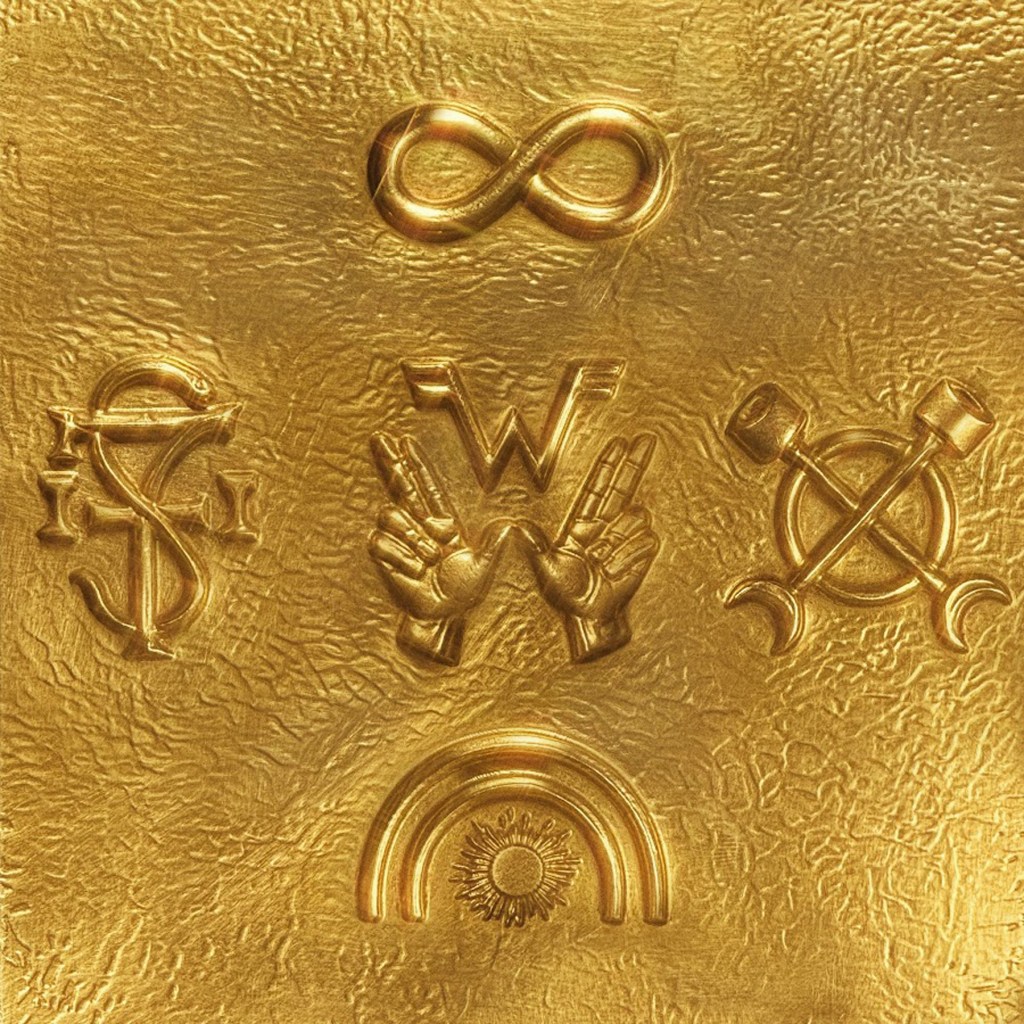
Weezer has always had a thing for concept records, whether they’re imagining “the Beach Boys gone bad†(2017’s Pacific Daydream), doing a set of beloved old radio hits (2019’s The Teal Album), getting in touch with their quasi-sensitive side (2021’s OK Human) or paying tribute to the Eighties metal greats (that same year’s Van Weezer). For their 20th LP, technically self-titled but also known as The Gold Album, the concept is at once highly ironic and gloriously straightforward: a Weezer record that sounds like a classic Weezer record. “There’s something special about your early shit,†Rivers Cuomo intones — simultaneously tongue-in-cheek and heart-on-sleeve — at the opening of “C.E.O.,†a highlight anthem that sounds unmistakably indebted to their own 1994 classic “Undone (The Sweater Song).†The sentiment set the table for a record that often suggests what might’ve happened if the band had released a transitional album in 1995, between their debut 1994 alt-rock smash The Blue Album and their 1996 emo-adjacent masterpiece Pinkerton. Weezer’s Gold is, in fact, Weezer gold.
The band described the organic process behind the album as “less talk, more rock.†You can hear the poker-faced detachment that often defines their music falling away on the album opener, “Say Yes,†which shares a title with a 1997 tune by indie-folk icon Elliott Smith. Cuomo starts off in a malaise of cynical self-doubt. “Everybody here’s gonna make me feel so afraid/So I only think about how my ass is getting paid,†as the rest of the band underscores his uncertainty with a drolly ominous lurch. But the song takes off into a chorus as catchy as great Weezer oldies like “Buddy Holly†or “The Good Life,†with lyrics about turning the ritual of cranking out yet another automatic alt-rock banger into an affirmation of joy.
That freewheeling feeling is all over The Gold Album. Working with producer Kenny Beats (whose credits include Rico Nasty, Vince Staples, and Geese’s Getting Killed), the band sounds more garage-rock-y than usual, often rooting its songs in thick, bottom-heavy guitars that are more desert-rock than power-pop. So when they switch from growling riff to golden chorus on “Don’t Make It Weird†or “Shine Again,†the visceral payoff hits deeper than it would on a more run-of-the-mill Weezer disc. On the feelings-first “We Might as Well Be Strangers,†the guitars burn and wail as Cuomo rhymes “debating Nietzsche†with “how much I need ya,†and shouts it out alongside ace belter Karly Hartzman of Wednesday, one of the bajillionty bands who grew up in Weezer’s long shadow.
Cuomo spends a lot of the album chewing over a middle-aged indecisiveness that mirrors the journey of his fans, adding a drolly poignant tinge to a warmly familiar sound. “Hoops†is an agro complaint that begins “Bought a toaster just to make some toast/First I had to scan a QR code.†Preach, brother. On “Nowhere,†Cuomo proffers the NIMBY protest “Why did they clear the trees just to put up some shitbox condo?†over a churning, fuzzbomb riff, coming up with one of the best Cali-rock combos of his vaunted career: the anti-sprawl spirit of Joni Mitchell’s “Big Yellow Taxi†set to the wide-open sludge of Kyus.
Naturally for a band that’s often made poker-faced self-awareness its emotional safe space, the album’s centerpiece moments are about how tapping their bedrock sound can trigger feelings about rock itself — does it still feel real? Are we just going through the motions? Does that difference even really matter? “C.E.O.†contrasts innocent images of tinkering with his guitar in his teenage bedroom with the honest reality of cranking out the same old Nineties tunes for his corporate paymasters, navigating the tension between his “mad professor†indulgences and the need to “keep the rocket in the sky.†(The everyday fan listening along at home is invited to insert “kids’ college fund†or “401(k)†for “rocket in the sky.â€) He’s not the first guy to make this observation, but the song’s gilded-grunge charm makes the sentiment stick.
The album-closing “The L.A. Sound†is The Gold Album’s nostalgic coup de grace. Written by guitarist Brian Bell, it’s a sweet remembrance of what it’s like to be a baby band grinding out long overnight van drives from crappy club to crappy club, winning over new fans one tiny little show at a time. “We came to melt your face/We’re gonna torch this place,†the band sings over the kind of candied alt-rock chug Weezer blew up with more than 30 years ago. This band has been putting its own sidelong spin on rock rituals since “In the Garage,†back in the Blue days, and they do it with real affection here too. Turns out, after all of these years, Weezer being Weezer is still a good look.
Matt Collyer knows Warped Tour is a festival like no other. For the Planet Smashers frontman, it is part summer camp, part punk rock boot camp, part family reunion, and part survival test. It’s also one of the reasons so many bands from the punk, ska, hardcore, and emo worlds were able to find each other, tour together, and build scenes that reached far beyond their own hometowns.
So as Warped Tour weekend returns, Collyer is going in with the right attitude. Not expecting it to be exactly what it was, but ready to feel that old energy again.
“I’m very excited,†he says. “I mean, it’s not the same Warped Tour. So if we go in thinking that it’s the same Warped Tour as it was 20 years ago when we did it. It changed through those years too.â€
Still, what made Warped special was never really the lineup, but the movement. The feeling of sprinting from one stage to another, catching only 15 minutes of a band before racing off to see someone else. It was discovering your new favorite group by accident, watching heroes and unknowns share the same parking lot, the same heat and chaos.
- YouTube www.youtube.com
The Planet Smashers’ first Warped experience was as DIY as it gets. Collyer remembers playing Québec City in the festival’s early days, before the band fully understood what they were walking into.
“We played on the flatbed of a truck,†he says. “And I was like, ‘This is different’. And then we had to do our own merch, but we didn’t know you were supposed to bring a tent. So we were that band in the sun with just a table, and the sun was just pounding down on us.â€
They had copies of their early releases, one Planet Smashers shirt design, and no real plan. The shirts sold out almost instantly. Then, an icon walked up. “I just remember Tim Armstrong walked up and I’m like, oh my gosh,†Collyer says. “And he stopped and goes, ‘Hey, are you guys that band that does that song ‘Pierce Me’? I’m like, ‘yes. How the fuck do you know?’â€
That, to Collyer, was the magic of Warped Tour. It flattened the hierarchy.
“There was equality throughout the tour, which was really cool,†he says. “Everyone got 30 minutes, no one got more time.â€
Nick Farkas, Senior Vice President of booking and events at evenko, who are co-producers of Warped Tour’s Montréal stop, also remembers his first Warped Tour. Back then, he was a young, DIY booker, having co-founded Greenland Productions in 1993. “It really takes me back to the beginning of my career. It was the first real festival we ever did, and we always had an amazing time,“ remembers Farkas. That first year, the festival was being held at the now-shuttered Blue Bonnets horse racing track. “We had sold 3000 tickets, but about 6000 people showed up without tickets, and we hadn't set up a different line for people without tickets. Security had to sort people and create different lines, we were walking around with change and selling tickets directly in the line.“
“That they chose Montréal over another Canadian or American market tells you how important punk rock is to Montréal,“ says Farkas, who is also behind some of Canada's biggest festivals, including Osheaga and Lasso.
Warped Tour also helped bands build real networks between local bands and international ones. Before social media made every scene feel connected, you had to meet people in person. “You met them at Warped Tour. And you just made friends,†Collyer says. “And suddenly you go, oh, I’ve got a friend in Atlanta now. Oh, I’ve got a friend in Charlotte. Oh, I’ve got a friend in Washington. Now you’ve got a tour.â€
Despite the fun, surviving Warped Tour as a band was not an easy feat. It was hot, exhausting, smelly, and chaotic. The glamour level was low. Collyer remembers vans, RVs, overnight drives, terrifying highway moments, and trying to find a usable shower only to discover that someone had ruined it for everyone. He also remembers losing his voice in Miami because of the heat and the culture of staying up late, yelling, laughing, and hanging out.
Matt Collyer of The Planet Smashers
So what is his advice for surviving the weekend?
First, the obvious one. “Hydrate. You’ve got to stay hydrated,†he says.
He means it. One year, water was hard to come by but energy drinks were everywhere. Their drummer Scott started drinking too much Monster and ended up with a painful inflamed heart sac that bothered him for months.
Second, sunscreen. It might feel basic, but Warped Tour is well-known to be a sunburn factory.
“Obviously, the sunscreen is going to be a lifesaver. I know it’s the end of the summer, but it’s going to get you eventually,†he says.
Third, do not gamble with the bathrooms.
“If you feel you need to go to the washroom, don’t wait,†he says. “Go as fast as you can, they can get pretty nasty very quickly.â€
Fourth, buy merch early. Bands, especially those traveling across the border, can only bring so much. If you wait until the end of the day, your size might be gone. “When it’s gone, it’s gone,†Collyer says.
Most importantly, pace yourself. The urge to see everything is part of the fun, but you need to survive long enough to enjoy it. “If you find a slot where there’s a band that you know, a time when there’s no one you’d want to see, take that moment,†he says. “Take a little nap and then go back and get them.â€
And if you see band members walking around, be cool. That is part of the point. Warped Tour was built on accessibility, community, and Kevin Lyman’s famous attitude that there is “no room for rock stars.â€
Warped Tour returns to Montréal starting tomorrow, featuring The Planet Smashers, Simple Plan, Sublime, and many more.