Jake Reiner Gives First TV Interview Since Parents’ Death: ‘I Will Never Understand Why This Happened’
Photo record
6 images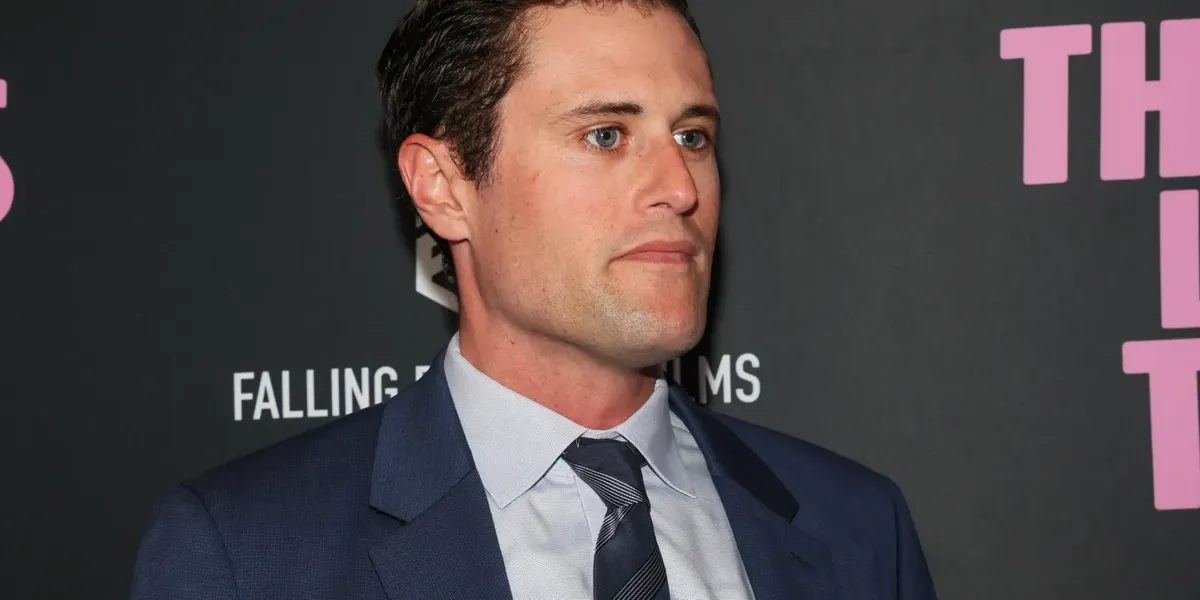

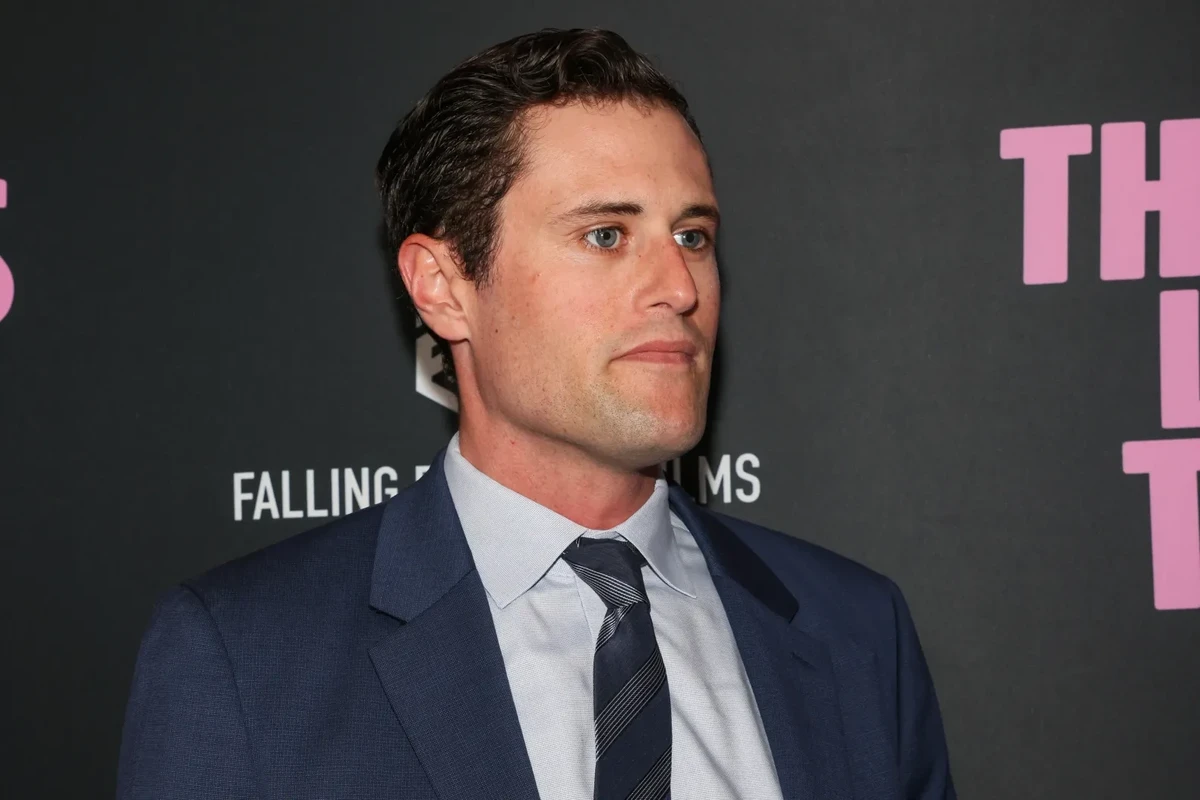
“It’s been eight months. It feels like eight years at the same time,” Rob and Michele Reiner's son told Good Morning America. “Because every moment that I wake up, I’m reminded of my reality”
Jake Reiner
Eight months after the murder of Rob and Michele Reiner, their son Jake Reiner has sat down for his first television interview since their December 2025 deaths.
“Nobody really understands what it’s like to go through something like that until you’re living it,” Jake Reiner told Good Morning America in an interview that aired today. “It’s been eight months. It feels like eight years at the same time. And it also feels like eight minutes. Because every moment that I wake up, I’m reminded of my reality.”
In the interview, Jake recalled the phone call from his sister, Romy, that first alerted him to what had happened with his parents. “Romy told me our dad was dead and then she said, ‘I can’t find mom,’” Jake Reiner said. “I immediately went into shock.”
Jake soon after found out that his brother Nick was the prime suspect in their parents’ murder. When asked if he was surprised by his brother’s alleged involvement in the deaths, Jake said he didn’t want to answer that question.
“[Nick]’s in jail. It’s like, I physically lost my parents, and then Nick was arrested. Now it’s just me and Romy, and we have to navigate this by ourselves essentially,” Jake said.
“For me, it manifests into anger. It manifests into rage, into how unfair this was, how I didn’t get a say in what happened. I didn’t get to stop it from happening. I had no choice in the matter. I just have to accept the reality of it. And to me, that is just one of the most infuriating parts of all of this.”
According to GMA, Jake Reiner declined to comment at all on his brother, including how he feels about Nick now as well as his brother’s attempts to use money from their family trust to pay for his legal defense; while Jake hasn’t attended his brother’s trial, he reportedly testified before the grand jury that indicted Nick.
“I’ll never understand. I don’t care how it’s explained to me. I don’t care what facts come out. I will never understand why this happened,” Jake said. “My parents had unconditional love for all three of us. I can tell you they never stopped wanting to help him. They never stopped helping him.”
Part of the reason Jake stepped forward is to bring awareness to the annual Cape & Gown Gala, an event that raises money for the Children’s Institute, an organization that Rob and Michele Reiner were heavily involved with; Rob Reiner MC’d the gala in the past, and Jake will attend the event this year in his parents’ place.
“I don’t necessarily know that I have this weight on my shoulders to carry on their legacy, but I do feel responsible for making sure people know them and they remember them,” he said.
Tim Curry, 1974
Tim Curry, the actor best known for playing the “sweet transvestite” Dr. Frank-N-Furter in The Rocky Horror Picture Show and Stephen King’s murderous clown Pennywise in It, died Tuesday night, as Variety reports. He was 80.
No cause of death has been disclosed. Curry had lived with various ailments following a 2012 stroke.
Curry’s charming swagger, golden voice, and perfect lipstick pout made him a cult-movie legend when The Rocky Horror Picture Show became a midnight-movie success in the mid-Seventies. It was a role that would follow him for the rest of his career. Nevertheless, he’d continue to play oddballs and underdogs — such as the butler Wadsworth in Clue and the Lord of Darkness in Legend (both in 1985) – before scaring the bejesus out of mainstream TV viewers as Pennywise. His deep baritone and British accent helped him find work as a voice actor in cartoons like FernGully: The Last Rainforest (1992) and Star Wars: The Clone Wars (early 2010s).
The actor was born Timothy James Curry in Grappenhall, England to a Royal Navy chaplain and a school secretary on April 19, 1946. At age six, he became a soprano in his church choir. By his teenage years, he discovered acting and went on to study literature and performing arts at a Birmingham university, according to his 2025 memoir, Vagabond. “At the time I wasn’t really sure whether I wanted to be an actor or a singer, so I talked my way into Hair and postponed the decision for another year or so,” Curry told The New York Times in 1990. He played Woof in Hair in London’s West End in 1968 and went on to appear in other theatrical productions and TV shows.
He landed the role of Dr. Frank-N-Further — an impish, Frankenstein-like doctor with a fetish for cross-dressing (“He’s the ultimate seducer,” Curry once said) – in 1973 in what was then known as The Rocky Horror Show, a campy sci-fi musical romp that was conceived by Richard O’Brien, who wrote the work’s score, lyrics, and book. Although the actor originally presented the mad scientist as a German, based on the name, he pivoted to doing it in a distinguished English accent after overhearing a conversation on a London bus. “I thought, ‘That’s it, he should sound like the Queen,'” Curry once recalled. When music producer Lou Adler saw the production, he decided to bring it to the Roxy Theatre in Los Angeles, and Curry came along with it.
When Rolling Stone asked Adler in 2015 what struck him about the London production, he answered, “Tim Curry’s legs to begin with. As much as he had a manly feel about him, it was seeing him dressed as Frank-N-Furter in heels. When it was playing at the Roxy, even if I didn’t go for the whole show, I always made sure I was there for the entrance.”
“It was one of the most blistering, shocking, sexy entrances that has ever been onstage,” Susan Sarandon once said.
Adler would eventually produce the film version of the work — The Rocky Horror Picture Show, featuring Sarandon, Barry Bostwick, and O’Brien as co-stars — which famously bombed when it came out in 1975 but soon became a midnight-movie sensation where fans would dress up as the characters on the screen, sing along and act out the action and throw props like rice and toast during key moments of dialogue. Its cult success made it one of the longest-running theatrical releases in history.
In an interview about the movie’s 40th anniversary in 2015, Curry said that the thing that still resonated with him about the film was the message of one of its songs. “The thing that resonated for me, more than anything, was ‘Don’t dream it, be it,’ which was a really good slogan,” he told Today.
He took that carpe-diem sentiment and launched a singing career after Rocky Horror, putting out three albums in the late Seventies and early Eighties; his debut, Read My Lips (helmed by Kiss, Pink Floyd, and Alice Cooper producer Bob Ezrin), improbably featured a roots-reggae version of the Beatles’ “I Will.” None of the LPs were massive hits. His biggest musical success was a sax-laden, speak-sung single called “I Do the Rock,” which made it to Number 91 on the Hot 100 in 1979.
Curry continued acting, earning a Tony in 1980 for originating the role of Wolfgang Mozart in Amadeus, a year after it opened on Broadway. He’d later get Tony nominations for his roles in My Favorite Year (1993) and Spamalot (2005).
“When I was playing Mozart, I really read very little about him, because I thought what was really important was to play not only Peter Shaffer’s Mozart but also the Mozart who’s seen through the eyes of his enemy Salieri,” Curry told the Times in 1990. “I think that if you get too close to the character, if you do too much historical research, you may find yourself defending your view of a character against the author’s view, and I think that’s terribly dangerous.'”
He spent much of the Eighties and Nineties drifting between film and television roles, appearing in Annie (1982), Clue (1985), Legend (1985), and the series Wiseguy (1989). In 1990, he made his unforgettable turn as the demon clown in the TV miniseries adaptation of Stephen King’s It. “I’m fascinated by movie villains,” he said in an interview around the time of his role as Pennywise. “I enjoyed Lon Chaney. In some ways, I think that horror movies have gotten a little too far from the mind. … I personally think that what is most horrifying is the moment of decision behind somebody’s eyes when they decide to kill somebody, rather than [seeing] a pint of blood.”
By the Nineties, he found himself being typecast as “butlers and villains” in U.S. films, but he said such roles were “irresistible to play since they’re much more fun.” He was able to find solace in voice work, lending his pipes to dozens of animated series and movies, from FernGully to the live-action cartoon Dinosaurs (1992 to 1994). His vocal portrayal of Captain Hook in Peter Pan and the Pirates (1991) won him a daytime Emmy. He’d play side roles in The Hunt for Red October (1990) and Charlie’s Angels (2000), and made appearances on series including Criminal Minds, Monk, and Will & Grace.
In 1990, Curry outlined what he felt was a “moral and political responsibility of the artist” that he took into account when he decided on roles. He carefully considered what a role said about the world before he took it on, asking himself whether or not he should take it on. “They’re the kind of questions any artist in the 20th century would be asking himself,” he told the Times. “Why am I doing this? Am I doing this for any kind of really valid reason? I think artists are driven by the engine of their own talent, but it’s a question of what use they put it to.”
In 2012, Curry suffered a stroke at his home in Los Angeles and was seen in a wheelchair in subsequent years. He generally retreated from public view, making a rare appearance as the criminologist in Fox’s TV remake of The Rocky Horror Picture Show in 2016. It was a full-circle moment for the actor who had spent much of the previous four decades distancing himself from Frank-N-Furter. “I finally sorted through that,” he told the Times in 2015 of his ambivalence toward Rocky Horror. “I realized I’d been lucky. I still feel lucky.”
Despite never becoming a leading star in a major film, the actor, who kept his private life under wraps, was happy to work in a niche later in his career, whether in voice work or in front of the camera, because it didn’t dominate his life. “I’ve been dealing with [fame] for quite a long time, and I’ve always been pretty slow to promote myself,” he said in 1997. “I’ve managed to work pretty steadily without having to throw myself at the public and say, ‘Here I am.'”
Criterion has spent decades curating some of the world's best movies and turning them into collector’s items. Now, the influential home-video label is putting down permanent roots in Canada.
The Criterion Collection will establish a physical presence in downtown Toronto in partnership with its Canadian distributor, Cinema Cellar. The store is scheduled to open during the 2026 Toronto International Film Festival, which runs September 10 to 20.
The location on John Street will sit close to TIFF Lightbox, placing it right in the middle of the action for the popular festival. Cinema Cellar will also stock releases from other labels. Up to now, Criterion maintained a largely online relationship with Canadian collectors. Cinema Cellar currently serves as the exclusive Canadian distributor for the Criterion Collection, offering its releases on 4K UHD, Blu-ray and DVD.
Criterion had previously tested the waters, having brought its Mobile Closet to TIFF last year, a truck which gave festivalgoers a chance to browse its catalogue of physical media in person. It also arrives at an interesting moment for physical media. As we can see in the music world, streaming has made also accessing movies easier than ever, but it has simultaneously created a new collector culture around discs, restorations, packaging and the preservation of works that can otherwise become difficult to find. Criterion has long occupied the centre of that culture, treating its releases as objects of film history as much as home entertainment.
Criterion has over the years released and restored many prominent and important Canadian films, but no word yet on whether Canadian movies would have a special place in this new physical store.
Sacha Baron Cohen in 'Ali G: Who Iz I?'
Sacha Baron Cohen brings Ali G into the TikTok era in the official trailer for his upcoming movie, Ali G: Who Iz I?
The new clip opens with Baron Cohen’s famous poser character reintroducing himself after 20 long years. “In that time the world went to crap,” he deadpans. “There was Covid. Wars. And Ed Sheeran. But I’s gonna get back on top with a brand new ting called a documentary.”
The clip is stuffed with exactly the kind of nonsense we’ve all come to expect from a Baron Cohen flick. In one scene, a guy walks in on Ali G taking a dump, and Ali convinces him to stick around while he finishes. In another, Ali confuses his partner’s positive pregnancy test for a vape, tries to hit it, and quips, “Taste of piss.”
It also finds Ali G updating his old interview shtick for age of viral videos and podcasts. In one TikTok-style clip, Ali interviews retired Army General C. Stewart Rodeheaver (yes, a real guy) about Iran while subjecting him to ASMR stunts like spraying shaving gel onto the microphones.
While Baron Cohen is famous for these kinds of mockumentary, prank-filled flicks — like with Borat and Bruno — this marks the first time he’s made such a movie as Ali G. The character previously anchored a 2002 film, Ali G Indahouse, but that was a rare scripted feature in which Ali G goes from a bumbling, wannabe gangster to a member of the British parliament. That said, the mockumentary style of Who Iz I? is plenty in line with Baron Cohen’s hit series, Da Ali G Show, which featured deranged interviews with unsuspecting subjects.
Ali G: Who Iz I? is set to hit theaters on Oct. 23. Baron Cohen teased the character’s return earlier this summer when he showed up to the Wimbledon finals in character, with the aim of selling as much weed as possible during the match.
Jonathan Daviss, Madelyn Cline, Drew Starkey, Chase Stokes, Madison Bailey, and Carlacia Grant (from left) in ‘Outer Banks’
Welcome to the Outer Banks — paradise on Earth.
For six years and five seasons, Netflix’s treasure-hunting drama Outer Banks has put its North Carolina teens through absolute hell just to keep viewers hooked. A familiar tale of class warfare, the series has followed the Pogues, Kildare Island’s poor residents — including truant John B. Rutledge (Chase Stokes) and his friends Kiara (Madison Bailey), Pope (Jonathan Daviss), and JJ (Rudy Pankow) — in an ongoing ideological battle against their rich counterparts, the Kooks. And this heated rivalry was immediately complicated by John B.’s sudden discovery of sunken treasure.
Outer Banks has always straddled the line between grounded stories of young love and the ridiculous idea of teenage treasure hunters who keep discovering (and losing) riches that have been missing for centuries. (If you’ve lost every single treasure you’ve ever found, can you still be called successful treasure hunters?) And while their exploits have taken them all over the globe, with its fifth and final season, the show calls back to its sepia-toned beginnings, with unbelievable feats of action and mystery that lead back to the island where it all began.
Season Five of Outer Banks picks up in Morocco, where John B., Cleo (Carlacia Grant), Pope, Rafe, and Kiara are stranded, mourning the loss of both JJ and the ancient Blue Crown he died for. With filicidal Chandler Groff (J. Anthony Crane) and mercenary leader Finch (Jason Alan Carvell) out of reach, they’ve got no choice but to return to the Outer Banks with no cash and awaiting criminal charges. But the island’s class divide isn’t just about dirt bike races for glory and bonfire fistfights anymore. Due to a combination of circling real estate developers and personal financial crises, the Pogues’ homes are under threat. When the group discovers that their past treasure-hunting adventures could help them find the lost Blue Crown, each member must decide what’s more important — getting revenge on the people who killed JJ or saving their homes.
Outer Banks’ success has always rested on an emotional depth that distracts from nonsense plot points and over-the-top escapades. Viewers don’t have to think so hard about how a group of American teenagers who look like a diversity advertisement for a state university slip past customs in every country, because they’re too busy reeling from the abrupt loss of John B’s father. Puzzled by the logistics of Kook princess Sarah (Madelyn Cline) surviving a gunshot wound to the gut, or Jamaican outlaw Cleo crashing a plane and swimming away without a scratch, or used-to-be villain Rafe (Drew Starkey) murdering a cop and getting off scot-free? Don’t be — instead weep at the devastating death of their best friend JJ and a long, difficult burial in a faraway land.
There are plenty of inconceivable exploits in the final season of Outer Banks, in ranging degrees of ridiculousness. The gang manages to cross at least three borders without any forms of identification. Kiara suddenly has the ability to jump out of cable cars and scale buildings with a CIA-operative level of precision. No one blinks at a pregnant Sarah constantly running through hails of gunfire — sans prenatal vitamins or a home. When Kiara is tied to an anchor and dropped into the middle of the ocean, her friends locate her using a phone flashlight and in plenty of time to keep her from drowning. Pope makes a homemade bomb by eyeballing every measurement, and no one dies. And of course, there’s the plot to retrieve the crown, with its historic potential to raise the dead. But the show uses each of these high-stakes and improbable stunts to reaffirm that the thing that matters most to the Pogues isn’t treasure — it’s their island.
It’s easy to imagine a world where Outer Banks never had its breakout moment. The show premiered on April 15, 2020, during the Covid-19 pandemic, a time where the only thing Americans felt like they had control over was what they pressed play on. If it had landed in the wasteland of streaming series at a different time, it’s unclear whether it would have had the same impact. But Outer Banks was an instant phenomenon and still represents a unique, uncomplicated capsule of the pandemic. It was a time when it felt reasonable to look at a melodramatic fight between Sarah and her Kook boyfriend and think to make an interpretative dance to its beats. “No You DON’T ToPPer!” people used to mouth as they swung their arms around their heads and bounced them at the waistline. “You love the idea of me. You love being seen by me. You don’t love me!” People colored their TikToks and Instagram posts OBX sepia and recreated the Rutledge cry “Bring it on home, John B.!” on makeshift bells. It was a phenomenon and maintained its essence of hot-teen Indiana Jones by continually upping the physical stakes — answering any wayward plotline or raised eyebrow with the beach-set equivalent of “Somehow, Palpatine returned.”
But while later seasons fully jumped the shark — or the sandbar, if you prefer — with arms dealers, ancient artifacts, and the teenage equivalent of international war crimes, Season Five points the Pogues back toward home. The show that built its name on impossible adventures gives its main characters an equally impossible ending by showing them reclaiming their first lost treasure: $400 million in ancient gold bars. This final victory builds them a life where Pope and Cleo can be together, Kiara has let go of JJ’s death, Rafe feels remorse for his crimes but gets to live out the rest of his life a free man, and John B. and Sarah are a safe and happy family. The series finale, “The Storm and What Came After,” sees the entire island wealthy, together, and celebrating John B. and Sarah’s wedding on newly restored Rutledge land — Kooks and Pogues hand in hand. Sometimes, the true treasure really is the friends we make along the way. Well, that and enough gold to make an island live forever.
Jaafar Jackson
Jaafar Jackson, Michael Jackson’s nephew who starred in the biopic about the King of Pop, has shared his thoughts on the Michael sequel and how he hopes the film will tackle the multiple child sexual abuse allegations against the singer.
While the script for the Michael sequel is still in development, Jaafar told GQ Middle East, “I think the second film will give even more insight from his point of view, because at the end of the day, [the allegations] are always from someone else’s.”
Jaafar Jackson added of the accusations of child sexual abuse against Michael, “It’s someone else’s story. It’s someone else’s idea of what it is, and it’s mainly driven by an agenda. And that’s really the issue we’ve been having as a family – not having Michael’s voice being heard. I think that’s very, very important, especially in the late years.”
Michael, which became the highest-grossing biopic ever at the box office despite the controversies surrounding the singer, ended with the release of Bad. The film initially touched on the 1993 allegations against the singer, but a binding legal clause in the $20 million settlement with one accuser forced producers to scrap the third act, rewrite the script, reshoot, and end the first film in 1987.
It’s unclear whether the sequel will sidestep the 1993 accusations and instead tackle some of the other allegations against Jackson — including those revealed in the documentary Leaving Neverland — or if the child sexual abuse allegations will be totally ignored, with the film instead just focusing on the latter third of Michael’s musical career.
“This first film focuses on Michael from his roots,” Jaafar Jackson added. “So you get that idea of who he was before he had all the success and became the icon that people are familiar with, you understand who he was as a human being first, because at the end of the day, that’s who he was in the ’90s until he passed. He never changed that purity, that sense of always wanting to find the good in other people. And no matter all the stuff he went through, how he was treated, what things were said about him, he never stopped treating people with kindness. He never stopped believing in and wanting to look for the good in people… even though he was broken, his heart still stayed the same… I hope that this is felt in the second movie.”
Jaafar continued, “There’s been so many stories told about Michael from so many different people. This is to tell Michael’s story finally from the point of view of himself. There’s so much more to Michael’s story. There’s so much to who Michael was and how he expressed himself.”