Duane ‘Keffe D’ Davis Found Guilty in Murder of Tupac Shakur
Photo record
6 images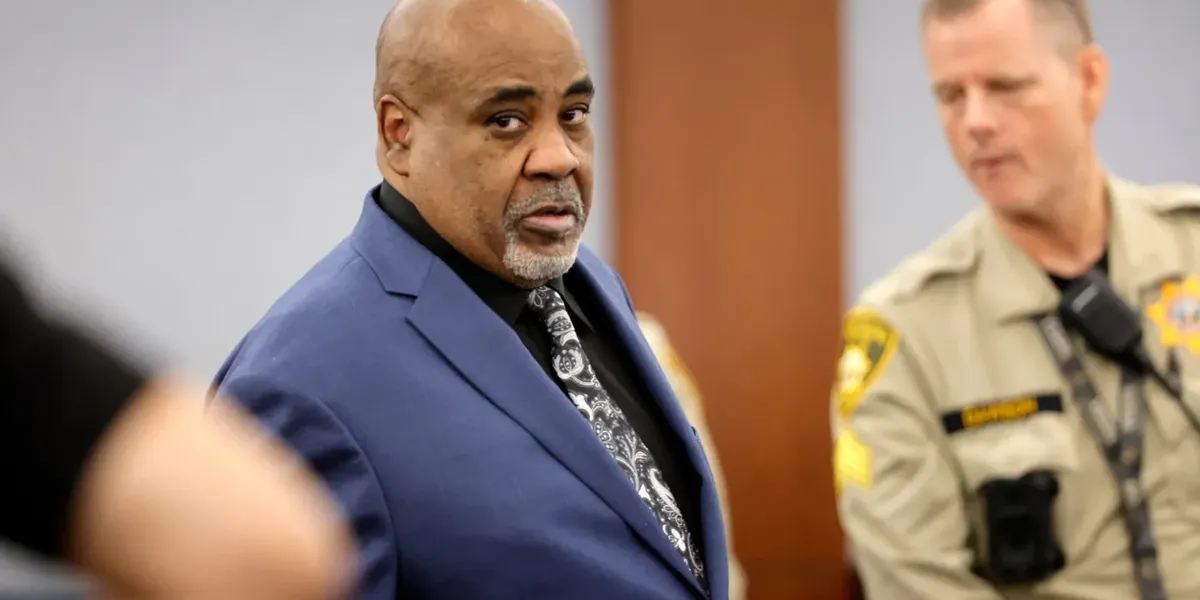

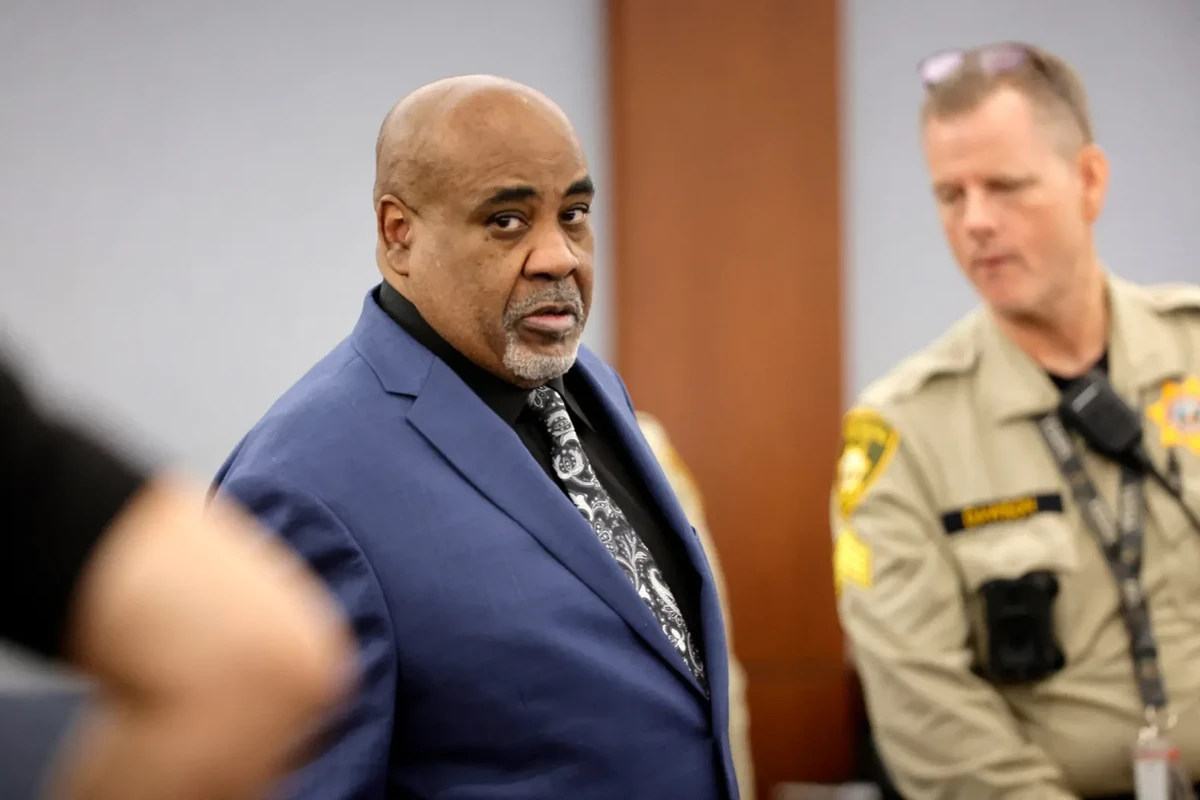
The jury in Nevada took only about three hours to return the verdict in the 30-year-old homicide. Davis will be sentenced in October
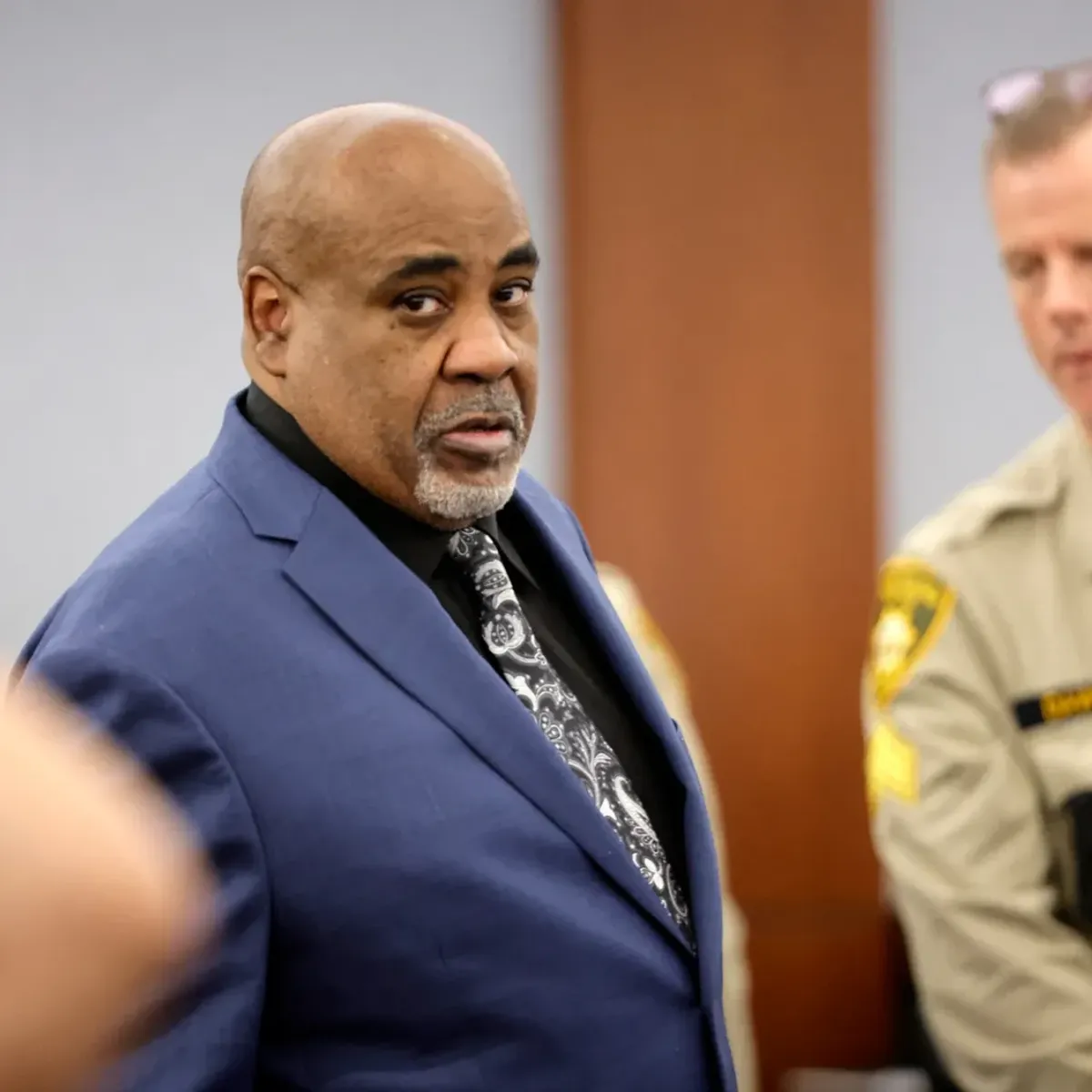
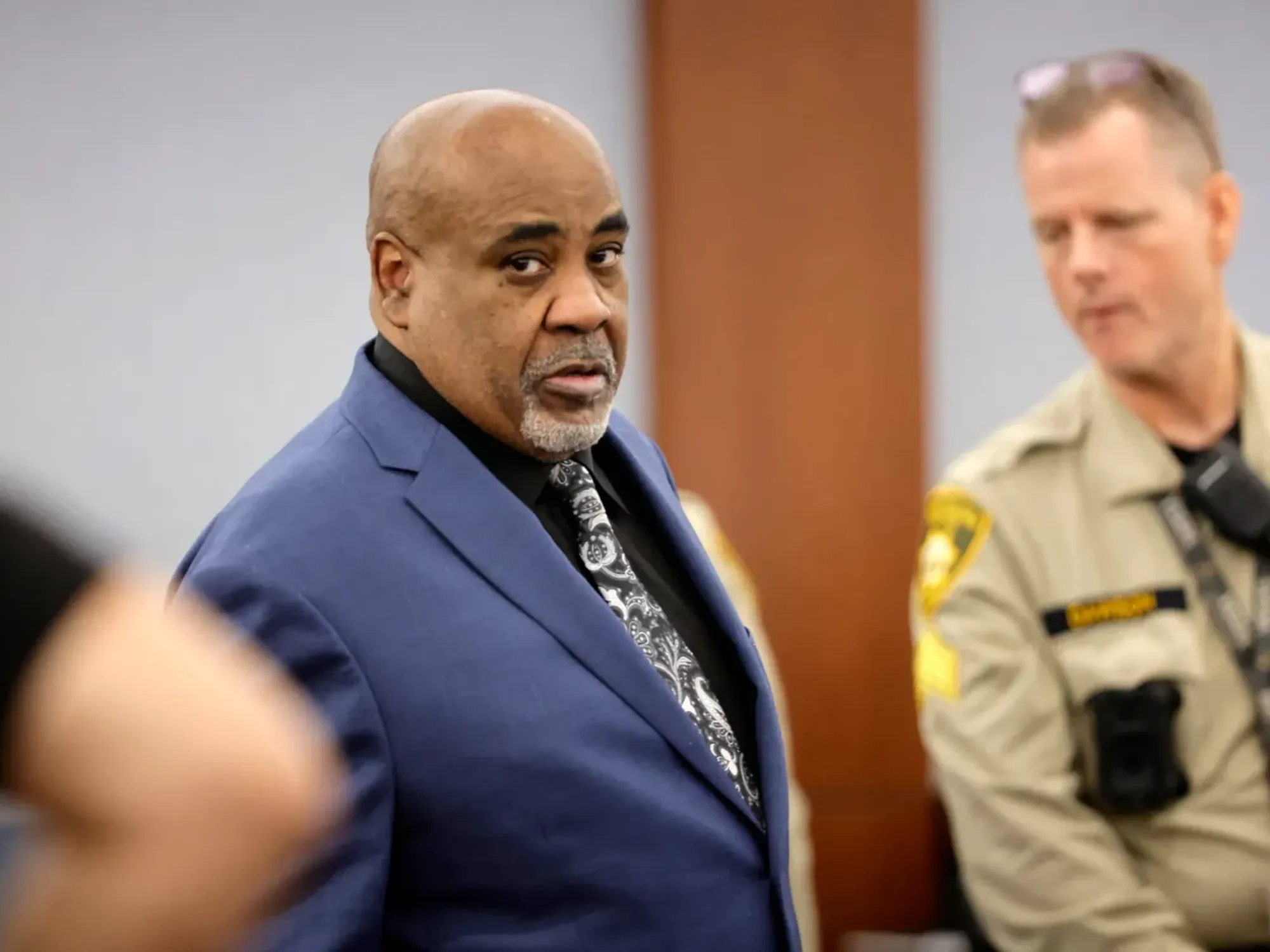
Duane "Keffe D" Davis at his trial in Las Vegas, Nevada, on August 27, 2026.
The former Compton gang leader charged with orchestrating the 1996 drive-by shooting of hip-hop legend Tupac Shakur was convicted of first-degree murder by a Las Vegas jury on Monday, marking a long-awaited reckoning in one of the most notorious unsolved killings in music history.
Jurors needed only about three hours to return their verdict against Duane “Keffe D†Davis in the nearly 30-year-old killing. Davis, who did not testify, is set to be sentenced on October 13 and faces up to life in prison without the possibility of parole. Shortly after hearing the verdict, Shakur’s sister, Sekyiwa, embraced a man seated behind her and wiped her eyes with a tissue, according to a live feed of the proceeding from The Associated Press.
Before court adjourned, Davis raised his hand and told the court he wanted his electronics back and planned to appeal. The judge said any appeal “happens after sentencing,†and she ordered him held without bail.
Davis, 63, had pleaded not guilty to one count of murder with use of a deadly weapon. His defense lawyer, Michael Sanft, argued the state’s case was built on “lies†that Davis first told prosecutors to avoid prison on narcotics charges and later repeated in interviews and in his memoir, Compton Street Legend, for profit. Davis was arrested in September 2023 and remained in custody through the trial.
In his closing argument, Clark County Chief Deputy District Attorney Binu Palal accused Davis of organizing the Sept. 7, 1996, shooting as “gang retaliation†for a beating that took place about two hours earlier inside the MGM Grand casino. He said Shakur, Death Row Records co-founder Marion “Suge†Knight, and others attacked Davis’ nephew, Orlando Anderson, after their Death Row associate Trevon Lane spotted Anderson in the casino following a Mike Tyson fight.
During the trial, jurors heard the confrontation grew out of an earlier gang dispute involving Davis’ and Anderson’s South Side Compton Crips and the rival Mob Piru Bloods, whose members included Lane and others associated with Death Row. They heard Lane had a run-in with Anderson and other Crips at a mall near Compton about two months before Shakur’s shooting, and that someone allegedly stole a chain bearing a Death Row medallion. Admitted Crips member Denvonta Lee testified under a court order and told jurors he was there when the mall brawl “broke out†and the chain “came off†Lane’s neck.
Palal said the alleged chain theft was viewed as “an ultimate sign of disrespect,†demanding retribution and culminating in the MGM Grand beating of Anderson captured on surveillance video.
The centerpiece of the prosecution’s case was the “secret†recorded interview Davis gave to police in 2008 in which he described his role in the shooting in extraordinary detail. Prosecutors characterized the account as a confession and said the fact that Davis was trying to gain leverage in an unrelated narcotics case didn’t diminish its significance.
In his dueling closing argument, Sanft disputed that characterization, saying Davis had fabricated the account and that his retellings over the years often conflicted with one another and, at times, with the evidence. He pointed, for example, to a passage in Davis’s book claiming that a Chrysler Sebring filled with women followed his Cadillac after the shooting and was struck by gunfire that shattered a window. A woman from the Sebring testified during the trial that the car was never hit and no glass was shattered.
“The state wants you to believe this was a confession,†Sanft said of his client’s account in the 2008 interview. “We’re presuming all this stuff. … We can’t put Orlando in the car. We can’t even put Davis in Las Vegas.â€
In the state’s final rebuttal before jurors began deliberating Monday afternoon, Clark County Chief Deputy District Attorney Marc DiGiacomo dismissed Sanft’s argument that inconsistencies in Davis’ accounts undermined the prosecution’s case.
“Do we honestly think a guy who was dumb enough to write a book could keep this story straight this many times?†DiGiacomo asked. He described Davis’s 2008 account as highly detailed and corroborated by other evidence.
DiGiacomo argued the 2008 proffer agreement was beyond the control of Las Vegas authorities, and Davis benefited from it for years. He said Davis later forfeited its protections by publicly repeating details because he was angry Los Angeles police detective Greg Kading wrote his own book about the case. Davis, he argued, couldn’t resist speaking up. The long delay before Davis was charged, DiGiacomo said, did not mean Las Vegas investigators doubted his culpability.
“We had to eat crow and allow a murderer to live in Henderson and not charge him because of the various things that happened in this case,†DiGiacomo said. He closed by pointing to a social media clip in which Davis boasted that he had “beat the streets,†“beat the Feds,†and “beat cancer.â€
“And now he’s trying to beat 12 of you,†DiGiacomo told the jury. “That’s what’s going on here.â€
Former Los Angeles police Detective Daryn Dupree testified on the third day of the trial, telling jurors Davis first volunteered his involvement in Shakur’s killing while investigators were questioning him about the 1997 slaying of Christopher Wallace, the rapper known as the Notorious B.I.G., or Biggie Smalls. Dupree said he and Kading confronted Davis at his home and told him they had evidence linking him to cocaine and PCP trafficking. They suggested Davis could help himself by cooperating.
Dupree said Davis denied any involvement in the Biggie shooting but then shocked them with the words, “We did the other one.†Davis later sat down for the recorded proffer interview with his lawyer.
“Don’t bullshit me, and I won’t bullshit y’all,†Davis said at the start of the Dec. 18, 2008, interview, which was played for jurors. Det. Kading assured him during the interview, “Nothing you say can be used against you.â€
Davis appeared skeptical but went on to say he was riding in the front passenger seat of the white Cadillac, with Anderson seated behind him, fellow South Side Compton Crips member DeAndre “Dre†Smith behind the driver, and Terrence “Bubble Up†Brown at the wheel. (All three of the other passengers are now dead.)
According to Davis’ account, the Cadillac pulled alongside a BMW driven by Knight, with Shakur in the passenger seat, near the intersection of Flamingo Road and Koval Lane just off the Las Vegas Strip. Davis said he did not have a clear shot, so he passed a loaded .40-caliber Glock to the back seat. Smith hesitated, Davis said, and Anderson grabbed the weapon and opened fire.
“He leaned over on the window. He rolled down the window, popped ’em,†Davis said on the recording. “If they drove on my side, I would have popped ’em.â€
Davis said Knight looked directly at him as the gunfire erupted. Knight was wounded but survived the attack, while Shakur was struck multiple times and died six days later at age 25.
“We did what we had to do,†Davis said of the shooting. He told investigators that after fleeing, the group returned to a hotel to “smoke weed and drink.â€
Sanft argued his client’s account was pure fiction, and that investigators failed to quickly and vigorously corroborate it for a reason. “It’s because they knew he was full of crap,†Sanft told jurors during his opening statement.
Prosecutors countered that Davis repeatedly told versions of the same story over and over, growing bolder by the year. They argued that by publicly repeating his claims from the proffer, Davis waived his protections against prosecution.
Dupree said he believed Davis was telling the truth during the 2008 proffer, in part because Davis implicated his own nephew. “I didn’t think Mr. Davis was lying because he put the gun in his nephew’s hand,†Dupree testified.
Anderson, who long had been considered a suspect in Shakur’s killing, denied involvement before his death in an unrelated Compton shooting in 1998 at age 23.
At Davis’ trial other witnesses described the early investigation and the atmosphere surrounding the shooting. Former Las Vegas police officer Garry Dale testified that he rode in the ambulance with the wounded Shakur and repeatedly asked him to identify his attacker. Dale said Shakur refused.
“No, we’ll take care of it,†Dale recalled the rapper saying.
Reggie Wright Jr., Knight’s testified about the escalating East Coast-West Coast rap industry war that pitted Knight’s label in California against Bad Boy Records and its CEO Sean Combs in New York. He recalled seeing Davis with members of Sean “Puffy†Combs’ Bad Boy Records entourage at the 1996 Soul Train Awards in Los Angeles, where a member of the Bad Boy entourage allegedly brandished a gun.
Jurors heard testimony that police tried to corroborate Davis’ claim that Combs had offered money for Knight’s killing. Dupree told them Davis became a confidential informant in 2009 and traveled with investigators to New York in an effort to reconnect with Eric “Zip†Martin, the man Davis identified as his link to Combs.
Combs supposedly had given money to Zip Martin to give to Mr. Davis for payment for the Tupac murder, Dupree testified. The effort failed when Martin, who was in poor health, did not meet with Davis as investigators had hoped.
Combs, now serving a 50-month prison term for his 2025 conviction on two counts of transportation to engage in prostitution, has vehemently denied any involvement in Shakur’s death
Drake is doing well on the charts this year, but it looks like he's going after 2026's biggest hit so far.
At an appearance at a Toronto club this weekend, Drake previewed what appears to be a remix of Ella Langley’s “Choosin’ Texas,†giving the country hit the Drizzy treament. In the brief clip circulating online, Drake can be heard crooning over the reworked production, following the melody of Langley’s original hook, though lyrics are hard to make out. Neither artist has announced a release date for the remix.
See on Instagram
Drake has been a vocal supporter of Langley's music, having first showed public interest in “Choosin’ Texas†earlier this year and playing the song during a Houston club set. In August, he responded to a video of Langley rapping along to his 2011 track “HYFR†by praising her songwriting, calling her pen “goated.â€
Then, on Aug. 22, Drake turned up at Langley’s sold-out concert in North Little Rock, Arkansas, where he was filmed singing and dancing along to “Choosin’ Texas.†The two were photographed together backstage afterward.
“Choosin’ Texas†has been the defining song of 2026, spending 19 weeks atop the Billboard Hot 100 and breaking record after record along the way. It is now tied for the longest-running No. 1 in the chart’s history among non-holiday songs.
Dolly Parton was laid to rest after a private funeral in Nashville, the country legend’s family said, days after her death at the age of 80.
The singer’s great-niece Lainey Parton — who referred to Dolly as “Aunt Granny†— posted on social media Saturday, “I wanted to wait until after my granny was laid to rest yesterday before I tried to put any of this into words From the time I was little, my granny always had a way of making me feel like I was enough. She never made my dreams feel too big or made me feel like I couldn’t do something. She believed in me before I even knew how to believe in myself.â€
See on Instagram
People reports that only immediate family attended the private funeral — “at Dolly’s request, a small, private service,†her reps previously said — at Nashville’s Woodlawn Memorial Park and Mausoleum, the same cemetery where Parton’s late husband Carl Dean was interred in a mausoleum in March 2025; the large plaque mounted on the mausoleum also had Parton’s name engraved on it before she died, as well as an engraving of her Sevier County, Tennessee home.
“A rhinestone life that shone bright enough for the world to see, Dolly will forever stand as an inspiration not only through her timeless music and prolific songwriting, but also her wit, warmth, and kindness that made us all feel like family,†Woodlawn Memorial Park and Mausoleum’s obituary said.
“Dolly Parton’s legacy is one of love, kindness, and resilience. With a seven-decade career, she inspired multiple generations of artists and fans with her music and an unwavering commitment to making the world a better place. Her songs will continue to resonate with people of all ages, and her philanthropic work will have a lasting impact.â€
Dolly Parton
The state of Tennessee has announced plans to rename the Nashville International Airport after Dolly Parton following the death of the country legend earlier this week.
Both Governor Bill Lee and the Metro Nashville Airport Authority (MNAA) are aligned on a proposal to rebrand the Music City hub (airport code BNA) in honor of Parton, with a September 17 meeting scheduled to plan the next steps.
“Dolly Parton’s extraordinary life is forever woven into the fabric of our state,†Gov. Lee said in a statement. “From her rural mountain home in East Tennessee to global stages, Dolly carried the Volunteer Spirit with her. At a place where Tennessee welcomes the world, it is fitting that Nashville International Airport would bear the name of our state’s favorite daughter and greet travelers with the enduring legacy of Dolly’s music, generosity, faith, and kindness.â€
“BNA is the front door to Music City, and with that comes a responsibility to reflect the very best of who we are as a community,†said Metropolitan Nashville Airport Authority president and CEO Doug Kreulen added.
“Dolly’s remarkable legacy reminds us that what makes Nashville special is our ability to welcome people from every walk of life. She understood that dignity, kindness and opportunity should never be defined by where you come from or your socioeconomic status… That spirit is what defines BNA and it is a fitting reflection of the values Dolly shared with Tennessee and the world.â€
If the name change happens, Parton would be only the second American musician — after Louis Armstrong in New Orleans — to have an airport named after them; the airport in Liverpool, England is named after John Lennon, while composers like Liszt, Mozart, and Chopin have airports in Budapest, Hungary, Salzburg, Austria, and Warsaw, Poland, respectively.
Parton would also become the first woman to have an American airport named after them. It’s unclear if Nashville’s airport code — BNA, a nod to the airport’s original name Berry Field plus Nashville Airport — will also change if its renamed to honor Parton.
Welcome to our weekly rundown of the best new music — featuring big singles, key tracks from our favorite albums, and more. This week, a Turnstile song gets the Elton John treatment, Erykah Badu and the Alchemist team up with Earl Sweatshirt for a soulful album highlight, and Natanael Cano gets the crowd on their feet with a corrido collab from his newest album. Plus, new songs from Billy Strings, Ice Spice, Olivia Rodrigo, Interpol, and Little Big Town.
Turnstile feat. Elton John, “Seein’ Stars: Elton John Version†(YouTube)
Natanael Cano, Gabito Ballesteros, Javier Rosas, “Nos Vamos De Dance†(YouTube)
Erykah Badu, The Alchemist, feat. Earl Sweatshirt “I Know That Man†(YouTube)
Billy Strings, “I Wish I Wanted To†(YouTube)
Ice Spice, Lil Yachty, “Out My Face (My Baby)†(YouTube)
Olivia Rodrigo, “Serena Joy†(YouTube)
AZ Chike feat. Tyler, the Creator, “Look Like My Mama†(YouTube)
Interpol, “Wings On Fire†(YouTube)
Alabama Shakes, “Time†(YouTube)
Sara Bareilles, “Just a Kid†(YouTube)
Prince, “Bestest Friend†(YouTube)
Flowerovlove “Debonair†(YouTube)
Little Big Town feat. Jason Isbell, “The Door†(YouTube)
Asher White, “White Castle Sad†(YouTube)
Ken Carson feat. Osamason, “Vamp City†(YouTube)
The Linda Lindas, “Everybody Told Me†(YouTube)
Mike D, “Make It Stop†(YouTube)
Alex Warren, “Wildchild†(YouTube)
ErisThePlanet feat. Rico Nasty, “8 Feet Tall†(YouTube)
Dahi feat. Kendrick Lamar, Amber Mark, “How to Pray†(YouTube)
Los Bitchos feat. Ambrose Kenny-Smith, “Holding Cell†(YouTube)
Liim, “Buttas On†(YouTube)
Todd Snider, “Solid Country Gold†(YouTube)
Imperial Teen, “All Over You†(YouTube)
Kam Franklin, “Pho For Breakfast†(YouTube)
Trim, “Get Hit†(YouTube)
Lex Walton, “Hipster Runoff†(YouTube)
Temper City, “Reverse Psychology†(YouTube)
The Olivia Tremor Control, “Advice From the Oceans†(YouTube)
The Prince Estate has released Timeless, a 10-track collection of rare and previously unreleased recordings that stretches from 1977 to 2016. Released Friday through The Prince Estate and Legacy Recordings, the compilation traces Prince’s career, with material rescued from his famously deep vault.
Timeless moves across almost the entirety of Prince’s recording career. The chronological tracklist begins with early material and travels through recordings from the ’80s, ’90s, 2000s and 2010s, ending with a live performance from 2016, the final year of his life.
The collection includes “Stone,†a previously unreleased track first unveiled in June. Written by Sandra St. Victor, Tom Hammer and Jules Van Even and recorded in 1995, the song offered an early glimpse of what was waiting inside the Vault.
Some of the other recordings reach much further back. “Tick Tick Bang†dates to 1981, while “Heaven†comes from 1985. The album also includes “The Guilty Ones,†recorded at Paisley Park in 2007 and now accompanied by an official video.
For longtime Prince fans, some of these recordings may sound familiar, as some portions of his expansive archive have circulated among collectors and bootleg traders for years. Timeless finally gives these songs an official release and, in many cases, a new place in the artist’s recorded legacy.