Sarah Davachi: The Will of Tongues
Photo record
15 images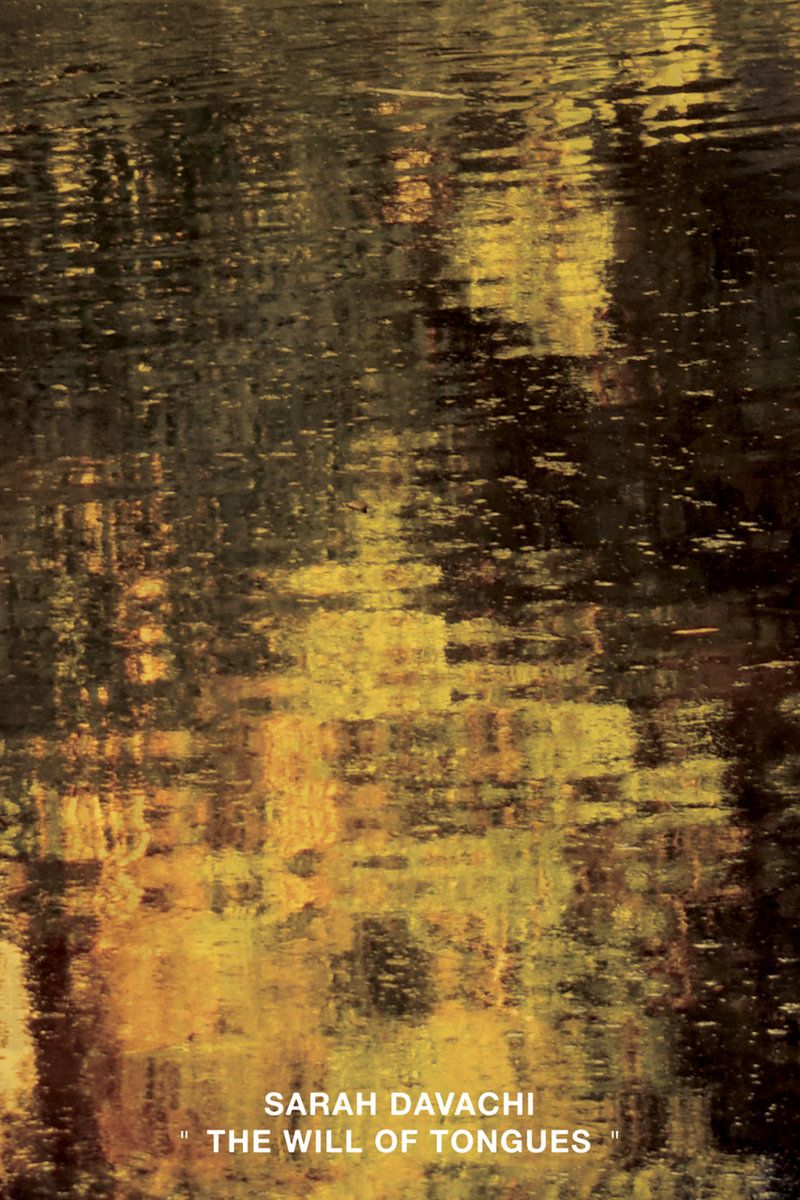
0.0
0.0
Reader Score
No score yet, be the first to add.
0.0
Genre:
Electronic
Label:
Late Music
Release Date:
2026
Sarah Davachi’s music is about taking the plunge. Her drones demand time, commitment and attunement to minute variations in timbre and texture, and they’re often composed in tuning systems that haven’t been mainstream since the Baroque era. She calls her approach “late music,” an echo of the scholarly term “early music,” but one thing it most certainly is not is easy music. The Canadian composer has built her entire career around challenging work that might fly over the heads of anyone not already sold on the virtues of minimalist music at its most austere. “I expect my audience, I suppose, to be able to listen in a way that goes beyond the surface level,” she told an interviewer. “Even if there’s one note happening, there’s so much that happens within that note.”
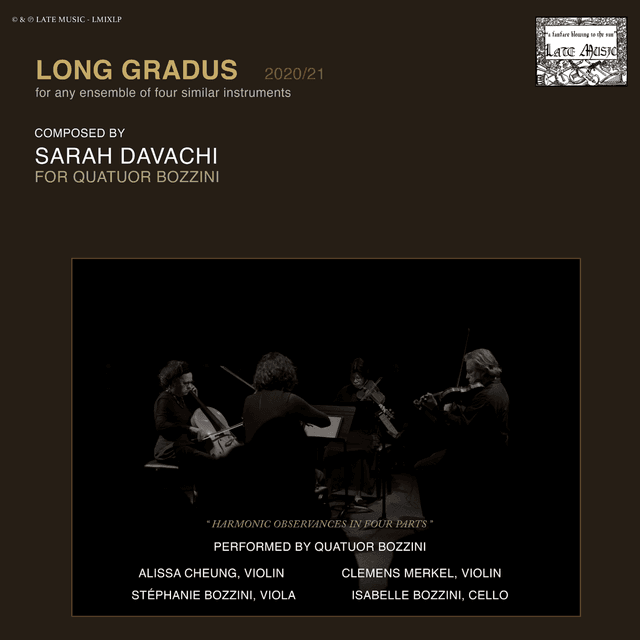
The Will of Tongues asks its audience to take that leap of faith for two and a half hours, to find the stasis of a sustained interval as pleasurable as a leaping melody or a string swell might sound in the hands of a more crowd-pleasing composer. It’s not Davachi’s longest release by any stretch; the 2020 live album Figures in Open Air runs almost three hours, while the full version of 2024’s Long Gradus features four arrangements of a single composition totaling four and a half hours. But it’s still striking to realize that the 46-minute “The Rose Dialogues,” a two-part commission from the Experimental Media Performing Arts Center in Troy, N.Y., accounts for just a third of this album’s runtime. Not that the passage of time even registers in the ideal mindstate for this music; paradoxically, Davachi’s music seems to simultaneously reward extreme attention and deep reverie.
No score yet, be the first to add.
0.0
The material here is largely drawn from Davachi’s commissions over the last few years, and with the exception of “Four Narrow Forms,” a 10-minute piece for pipe organ, they’re grouped into series. My favorite is the “Songs of the Smile’s Fig,” a three-part commission for Chamber Choir Ireland, which sounds so awestruck it might come as a surprise that they’re actually singing surrealist poetry. Davachi is one of a growing rank of composers whose work is influenced by Christian liturgical music but secular in content, a trend Pitchfork’s Marc Weidenbaum astutely recognized has taken place against a contemporary backdrop of deconsecrated churches being turned into cultural spaces. Her organ playing on The Will of Tongues album spans five historical instruments in three countries, including the Van Straten organ at Amsterdam’s Orgelpark, precisely the kind of ex-church that makes it possible for composers like Davachi to thrive.
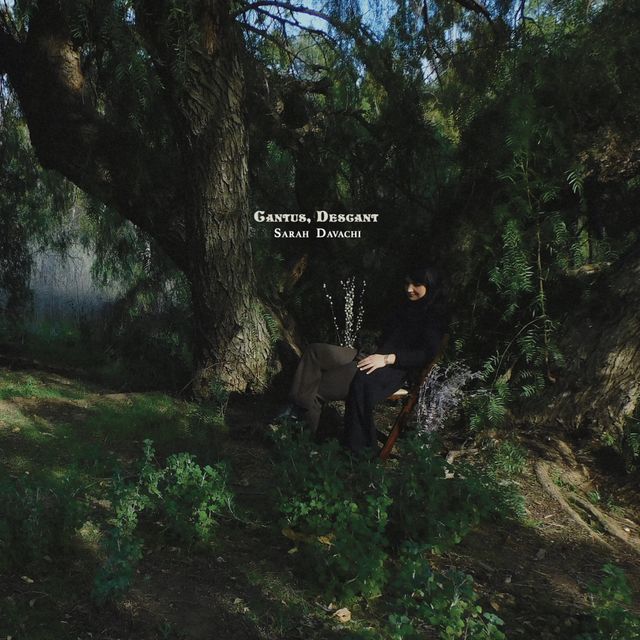
Among latter-day organ composers, Davachi’s closest analogue might be Kali Malone, whose 2019 album The Sacrificial Code became an unlikely crossover success despite being nearly as long and austere as The Will of Tongues. Yet it’s hard to imagine Davachi having a similar mainstream moment. Maybe that’s because she’s so willing to challenge her audience; maybe it’s because she doesn’t typically put her face on her album covers (there was something inspirational about Malone’s poker-faced “the organ life chose me” expression on the cover of The Sacrificial Code that I suspect had a lot to do with its success). But mostly, it’s because she puts out so much music. While Malone adopts the album-every-couple-years approach of an indie rocker, Davachi is restless, putting out new work almost every year across multiple channels.
The COVID-19 pandemic led to the destruction of many musicians’ livelihood during the early years of this decade, but Davachi—who was an early adopter of Bandcamp Friday, releasing a remarkable run of EPs in 2020—points to another detrimental effect in a recent interview with Bandcamp Daily. “It’s gotten so much worse, this need for immediacy and digestibility,” she said, explaining why her works this decade have grown longer. “I was naturally leaning in those directions, but since Covid, I’ve done it more intentionally.”
That might explain why she’s chosen to stitch all these recent commissions back to back rather than allowing pieces like “The Rose Dialogues” their own space to sprawl out. It’s hard to glean a logic to the sequencing—why all 46 minutes of “The Rose Dialogues” are stitched end to end but “Songs of the Smile’s Fig” is scattered throughout, why we get “Interlude I,” “Interlude V,” and “Interlude II” in that order with no sign of the other two.
The press notes call this her most ambitious album. That seems like a byword for “long,” and The Will of Tongues feels more like a compilation than a durational work in itself, the way her three-hour audiovisual project Music for a Bellowing Room with Dicky Bahto did. It’s hard to shake the sense that the hyper-alert, zoomed-in state of focus Davachi aims to facilitate with her music would be easier to attain in a concert setting than in a format that makes one yearn for simpler pleasures after a while.
But there’s another reason Davachi might be so eager to go long on this release, and it can be found in the text itself—“Nothing expresses us after death, and I cried out, ‘this is how the will of tongues is made.’” This is how the French lyrics of “Songs of the Smile’s Fig Pt. 3” translate, and though it’s credited to André Breton’s “The Spectral Attitudes,” you won’t find it in any available translations of that poem—in true Surrealist fashion, Davachi has reassembled the words for her own purposes. That purpose seems to reflect on her own legacy as an artist, and on how the human development of language is tied to our desire to be remembered, to live on in some way in a future we can’t see for ourselves. Seen from this angle, The Will of Tongues is like a time capsule, a package future generations can excavate to confirm that, yes, Sarah Davachi did it her way, and all the rest of the world could do was slow down to catch up.
0.0
0.0