D4vd Doesn’t Deserve Public Defender, Lawyer for Celeste Rivas Hernandez’s Family Claims
Photo record
6 images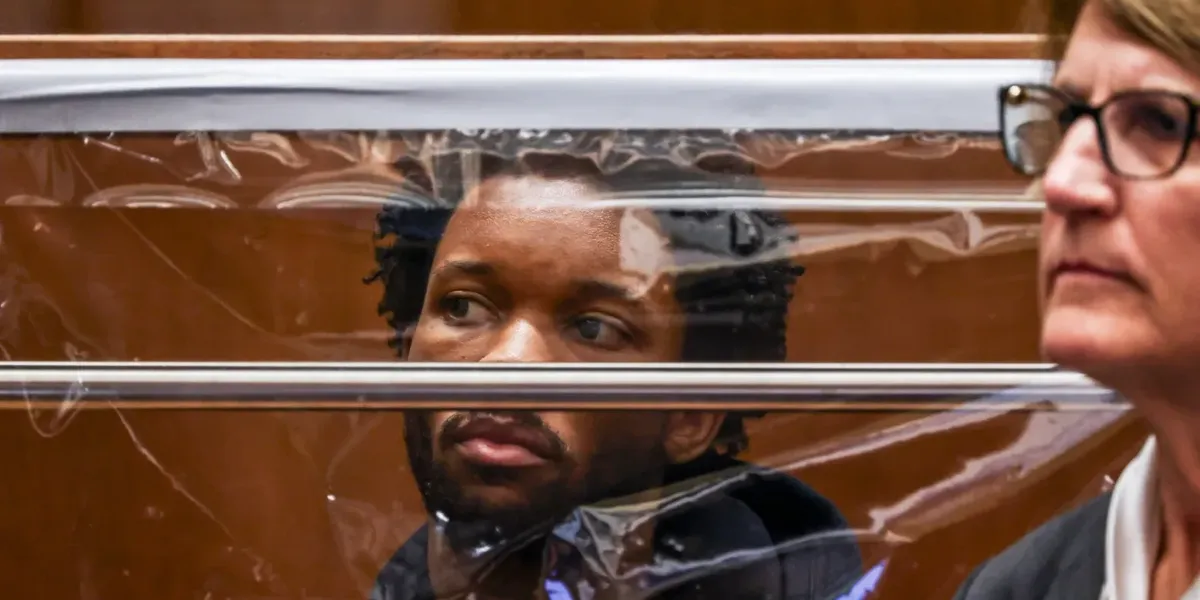
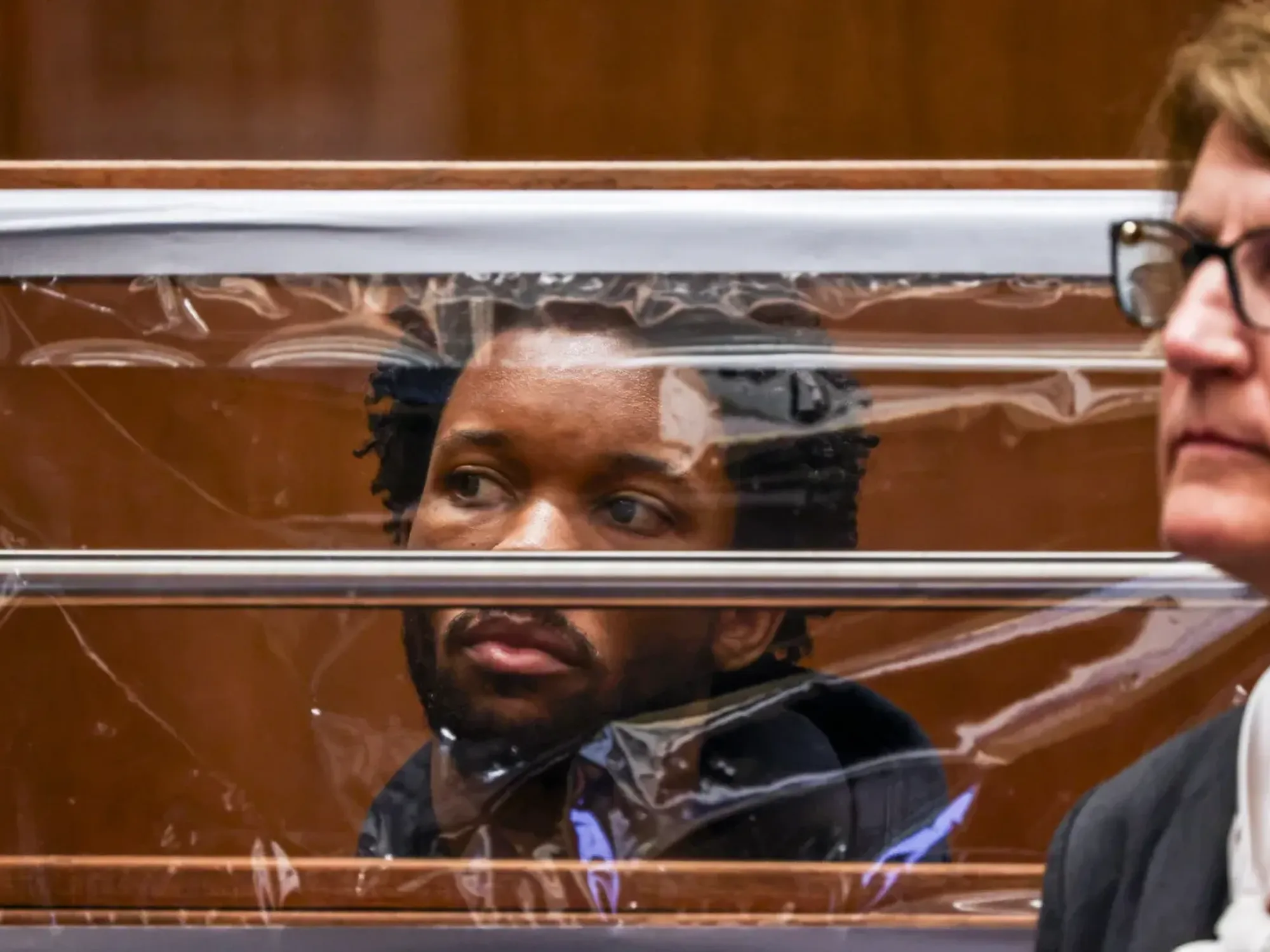
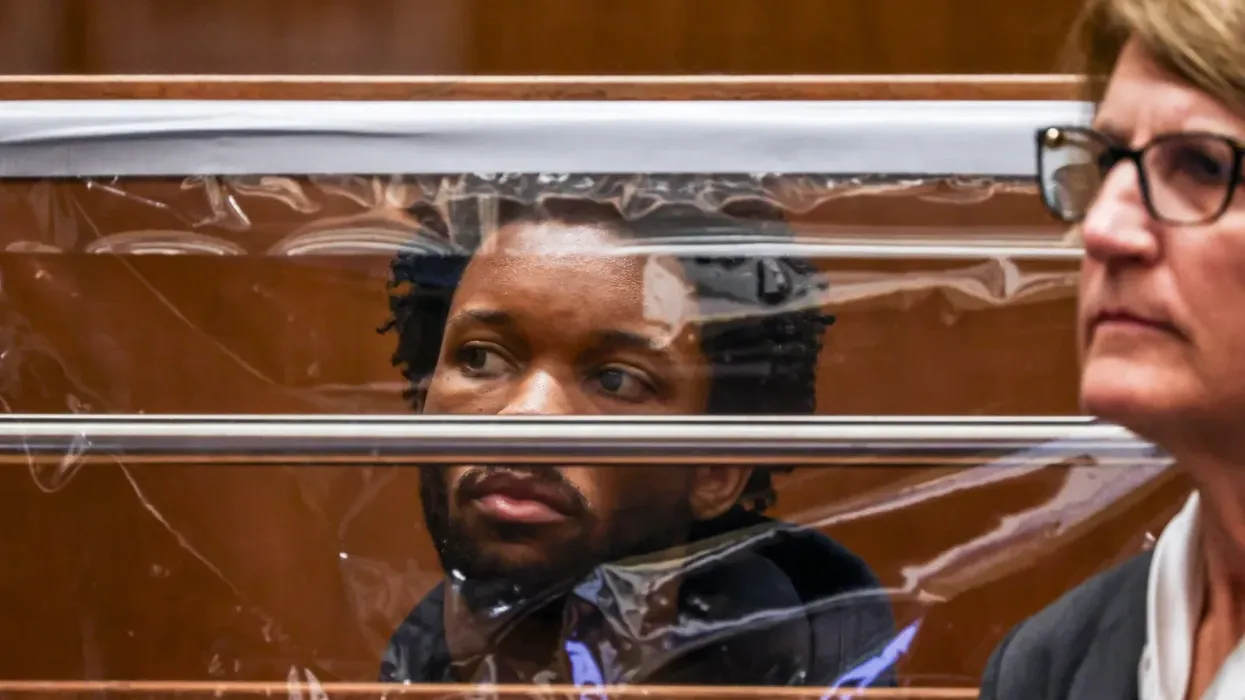

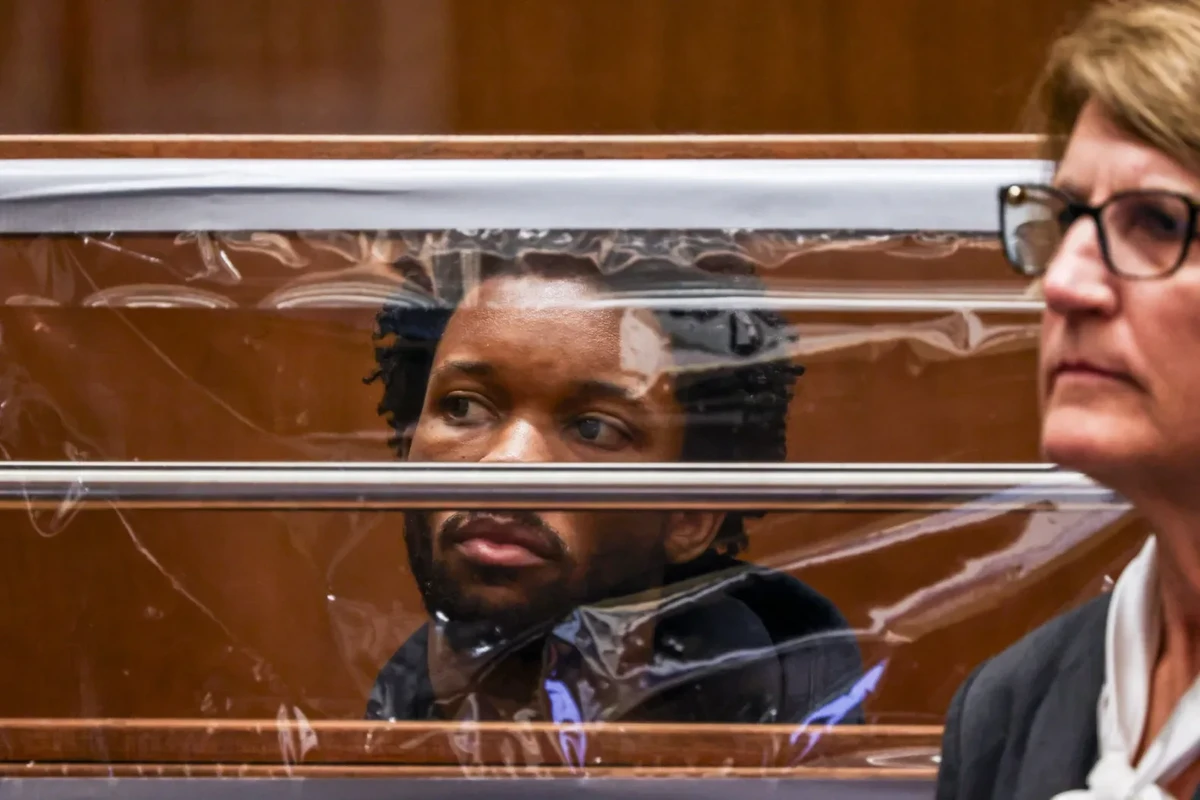
"The residents of Los Angeles County should be outraged because it will be the taxpayers that are picking [up] the tab to defend this millionaire," Patrick Steinfeld says
D4vd in Los Angeles County Superior Court.
Patrick Steinfeld, the lawyer representing the family of the 14-year-old girl D4vd is accused of sexually assaulting, murdering, and dismembering, is disputing the singer’s claim that he is indigent and entitled to a public defender.
In a statement obtained by Rolling Stone, the lawyer for the family of Celeste Rivas Hernandez alleges the singer, whose real name is David Anthony Burke, is concealing assets in companies he owns and through money he transferred to his mother, Colleen Burke. Steinfeld argues that the public should be angered that a platinum-selling artist is seeking publicly funded representation.
“It is unfathomable that our justice system qualifies David Anthony Burke as indigent when D4VD has 5+ billion streams with 16 million monthly listeners on a single streaming platform, and controls three corporations,†Steinfeld wrote in the statement. “The residents of Los Angeles County should be outraged because it will be the taxpayers that are picking [up] the tab to defend this millionaire on charges of murder, continuous sexual assault of a minor under 14 years of age, and unlawful mutilation of human remains.â€
Steinfeld quoted from testimony at Burke’s preliminary hearing, where Deputy District Attorney Beth Silverman questioned Benjamin Greger, a former financial manager at Burke’s management company, Mogul Vision. Greger testified that Burke took home roughly $10 million to $11.5 million in gross earnings through recording, merchandising, and music-publishing deals and that Greger discussed transferring Texas properties held in Burke’s name to his mother, Colleen Burke.
“Do you remember testifying that the reason you told her to do that was to protect his estate from any civil suit, so the victim’s family wouldn’t be able to…get…that money?†Silverman asked at the hearing in July.
“I do recall, yes,†Greger testified.
The Rivas Hernandez family attended each day of the preliminary hearing but did not speak to the media during the proceeding.
“We as a family only want justice for Celeste and for whoever is responsible to face the full force of the law. And we thank everyone for supporting our daughter in every way,†the family said in a new statement shared with Rolling Stone this week.
Burke, 21, was arrested in April and pleaded not guilty to his charges at a rearraignment on Monday. His lawyer, Los Angeles County Public Defender Walid Kandeel, began representing D4vd immediately Monday after Burke’s high-powered private legal team, including Blair Berk and Marilyn Bednarski, handed the case over to him.
At the hearing, Los Angeles County Superior Court Judge Charlaine Olmedo asked Kandeel if his office needed more time “to see if Mr. Burke qualifies†for a public defense. Kandeel said the office was “prepared†to move forward and was seeking appointment.
“We’re not at liberty to disclose financial information. Our office has done a thorough financial evaluation and determined that David Burke is eligible for representation by the Public Defender’s Office,†a spokesperson for the office said in a statement sent to Rolling Stone.
Judge Olmedo decided in July that there was enough evidence to send Burke to trial. Prosecutors say Burke sexually abused Rivas Hernandez for more than a year before killing her in April 2025 when she threatened to expose the alleged abuse. They claim he dismembered her in his garage using a chainsaw and hid her remains in the front trunk of his Tesla.
Céline Dion is heading back to the stage and anticipation is building. The Québec superstar arrived in Paris last week ahead of the first of 16 concerts at Paris La Défense Arena, beginning September 12. Ten additional performances are scheduled for May 2027, marking Dion’s first full concert run since stepping away from the stage amid her battle with stiff-person syndrome.
For Élisabeth Reynaud, the biographer behind the new book Céline Dion by Élisabeth Reynaud, there is little doubt about what is driving the singer as she prepares for her comeback. “She is in a state of total determination,†Reynaud told AFP.
This return to the stage comes with an intense rehearsal regimen, Reynaud says. Dion recently told fans outside her Paris hotel that she was conserving her energy to give them her best onstage, adding that she would not be spotted out and about in Paris in the coming weeks. For the singer, sightseeing can come later; the show comes first.
That work ethic has been central to Dion’s ascent from the Montréal suburb of Charlemagne to global superstardom. Reynaud describes her career as the product of extraordinary discipline rather than some effortless fairy tale.
Dion’s return comes with an obvious physical challenge, too. Stiff-person syndrome can cause muscle rigidity and spasms, forcing her to carefully manage her health while preparing for the demands of performing. She has continued with physical training and therapy as she works toward the concerts. Her last full concert was in March 2020. Since then, her only major live appearance came at the 2024 Paris Olympics, where she delivered a show-stopping rendition of Édith Piaf’s “Hymne à l’amour†from the Eiffel Tower.
Lionel Richie performs performing in Detroit in July 2026.
Lionel Richie is OK after being hospitalized in St. Louis over the weekend, a source close to the singer’s ongoing tour tells Rolling Stone.
On Saturday, Aug. 29, Richie performed at the Muny in St. Louis. Videos from the concert appear to show him in good form, though during set closer “All Night Long,†he did ask his team to bring him a stool so he could sit during the performance.
The news of Richie’s hospitalization comes just a few months after he ended a concert in St. Paul, Minnesota early after falling ill onstage. About 55 minutes into the performance, Richie, 77, announced an unexpected intermission. He told the crowd that he’d been feeling dizzy, which was why he had to sit down during his performance of “Dancing on the Ceiling.â€
“When you’re feeling dizzy, sit your ass down,†Richie said (per The Minnesota Star Tribune).
Around 40 minutes after Richie called for the intermission, his saxophonist, Dino Soldo, told the audience that Richie was “not feeling well†and that he would not be able to continue the show.
After ending the St. Paul gig early, Richie announced that he would postpone his next two gigs, which were part of an ongoing tour with Earth, Wind, and Fire. He returned to the stage on June 30, and was able to complete the rest of the tour without any other problems. (One more gig on the run was postponed, but that was after a member of Earth, Wind, and Fire suffered a medical emergency before a show in San Francisco.)
Richie’s show in St. Louis over the weekend was his first since his tour with Earth, Wind, and Fire ended. The two acts are set to reunite in September and early October to play their rescheduled shows in San Francisco, Chicago, and Columbus. Richie will then head to Las Vegas for a residency with dates in October and November.
Duane "Keffe D" Davis at his trial in Las Vegas, Nevada, on August 27, 2026.
The former Compton gang leader charged with orchestrating the 1996 drive-by shooting of hip-hop legend Tupac Shakur was convicted of first-degree murder by a Las Vegas jury on Monday, marking a long-awaited reckoning in one of the most notorious unsolved killings in music history.
Jurors needed only about three hours to return their verdict against Duane “Keffe D†Davis in the nearly 30-year-old killing. Davis, who did not testify, is set to be sentenced on October 13 and faces up to life in prison without the possibility of parole. Shortly after hearing the verdict, Shakur’s sister, Sekyiwa, embraced a man seated behind her and wiped her eyes with a tissue, according to a live feed of the proceeding from The Associated Press.
Before court adjourned, Davis raised his hand and told the court he wanted his electronics back and planned to appeal. The judge said any appeal “happens after sentencing,†and she ordered him held without bail.
Davis, 63, had pleaded not guilty to one count of murder with use of a deadly weapon. His defense lawyer, Michael Sanft, argued the state’s case was built on “lies†that Davis first told prosecutors to avoid prison on narcotics charges and later repeated in interviews and in his memoir, Compton Street Legend, for profit. Davis was arrested in September 2023 and remained in custody through the trial.
In his closing argument, Clark County Chief Deputy District Attorney Binu Palal accused Davis of organizing the Sept. 7, 1996, shooting as “gang retaliation†for a beating that took place about two hours earlier inside the MGM Grand casino. He said Shakur, Death Row Records co-founder Marion “Suge†Knight, and others attacked Davis’ nephew, Orlando Anderson, after their Death Row associate Trevon Lane spotted Anderson in the casino following a Mike Tyson fight.
During the trial, jurors heard the confrontation grew out of an earlier gang dispute involving Davis’ and Anderson’s South Side Compton Crips and the rival Mob Piru Bloods, whose members included Lane and others associated with Death Row. They heard Lane had a run-in with Anderson and other Crips at a mall near Compton about two months before Shakur’s shooting, and that someone allegedly stole a chain bearing a Death Row medallion. Admitted Crips member Denvonta Lee testified under a court order and told jurors he was there when the mall brawl “broke out†and the chain “came off†Lane’s neck.
Palal said the alleged chain theft was viewed as “an ultimate sign of disrespect,†demanding retribution and culminating in the MGM Grand beating of Anderson captured on surveillance video.
The centerpiece of the prosecution’s case was the “secret†recorded interview Davis gave to police in 2008 in which he described his role in the shooting in extraordinary detail. Prosecutors characterized the account as a confession and said the fact that Davis was trying to gain leverage in an unrelated narcotics case didn’t diminish its significance.
In his dueling closing argument, Sanft disputed that characterization, saying Davis had fabricated the account and that his retellings over the years often conflicted with one another and, at times, with the evidence. He pointed, for example, to a passage in Davis’s book claiming that a Chrysler Sebring filled with women followed his Cadillac after the shooting and was struck by gunfire that shattered a window. A woman from the Sebring testified during the trial that the car was never hit and no glass was shattered.
“The state wants you to believe this was a confession,†Sanft said of his client’s account in the 2008 interview. “We’re presuming all this stuff. … We can’t put Orlando in the car. We can’t even put Davis in Las Vegas.â€
In the state’s final rebuttal before jurors began deliberating Monday afternoon, Clark County Chief Deputy District Attorney Marc DiGiacomo dismissed Sanft’s argument that inconsistencies in Davis’ accounts undermined the prosecution’s case.
“Do we honestly think a guy who was dumb enough to write a book could keep this story straight this many times?†DiGiacomo asked. He described Davis’s 2008 account as highly detailed and corroborated by other evidence.
DiGiacomo argued the 2008 proffer agreement was beyond the control of Las Vegas authorities, and Davis benefited from it for years. He said Davis later forfeited its protections by publicly repeating details because he was angry Los Angeles police detective Greg Kading wrote his own book about the case. Davis, he argued, couldn’t resist speaking up. The long delay before Davis was charged, DiGiacomo said, did not mean Las Vegas investigators doubted his culpability.
“We had to eat crow and allow a murderer to live in Henderson and not charge him because of the various things that happened in this case,†DiGiacomo said. He closed by pointing to a social media clip in which Davis boasted that he had “beat the streets,†“beat the Feds,†and “beat cancer.â€
“And now he’s trying to beat 12 of you,†DiGiacomo told the jury. “That’s what’s going on here.â€
Former Los Angeles police Detective Daryn Dupree testified on the third day of the trial, telling jurors Davis first volunteered his involvement in Shakur’s killing while investigators were questioning him about the 1997 slaying of Christopher Wallace, the rapper known as the Notorious B.I.G., or Biggie Smalls. Dupree said he and Kading confronted Davis at his home and told him they had evidence linking him to cocaine and PCP trafficking. They suggested Davis could help himself by cooperating.
Dupree said Davis denied any involvement in the Biggie shooting but then shocked them with the words, “We did the other one.†Davis later sat down for the recorded proffer interview with his lawyer.
“Don’t bullshit me, and I won’t bullshit y’all,†Davis said at the start of the Dec. 18, 2008, interview, which was played for jurors. Det. Kading assured him during the interview, “Nothing you say can be used against you.â€
Davis appeared skeptical but went on to say he was riding in the front passenger seat of the white Cadillac, with Anderson seated behind him, fellow South Side Compton Crips member DeAndre “Dre†Smith behind the driver, and Terrence “Bubble Up†Brown at the wheel. (All three of the other passengers are now dead.)
According to Davis’ account, the Cadillac pulled alongside a BMW driven by Knight, with Shakur in the passenger seat, near the intersection of Flamingo Road and Koval Lane just off the Las Vegas Strip. Davis said he did not have a clear shot, so he passed a loaded .40-caliber Glock to the back seat. Smith hesitated, Davis said, and Anderson grabbed the weapon and opened fire.
“He leaned over on the window. He rolled down the window, popped ’em,†Davis said on the recording. “If they drove on my side, I would have popped ’em.â€
Davis said Knight looked directly at him as the gunfire erupted. Knight was wounded but survived the attack, while Shakur was struck multiple times and died six days later at age 25.
“We did what we had to do,†Davis said of the shooting. He told investigators that after fleeing, the group returned to a hotel to “smoke weed and drink.â€
Sanft argued his client’s account was pure fiction, and that investigators failed to quickly and vigorously corroborate it for a reason. “It’s because they knew he was full of crap,†Sanft told jurors during his opening statement.
Prosecutors countered that Davis repeatedly told versions of the same story over and over, growing bolder by the year. They argued that by publicly repeating his claims from the proffer, Davis waived his protections against prosecution.
Dupree said he believed Davis was telling the truth during the 2008 proffer, in part because Davis implicated his own nephew. “I didn’t think Mr. Davis was lying because he put the gun in his nephew’s hand,†Dupree testified.
Anderson, who long had been considered a suspect in Shakur’s killing, denied involvement before his death in an unrelated Compton shooting in 1998 at age 23.
At Davis’ trial other witnesses described the early investigation and the atmosphere surrounding the shooting. Former Las Vegas police officer Garry Dale testified that he rode in the ambulance with the wounded Shakur and repeatedly asked him to identify his attacker. Dale said Shakur refused.
“No, we’ll take care of it,†Dale recalled the rapper saying.
Reggie Wright Jr., Knight’s testified about the escalating East Coast-West Coast rap industry war that pitted Knight’s label in California against Bad Boy Records and its CEO Sean Combs in New York. He recalled seeing Davis with members of Sean “Puffy†Combs’ Bad Boy Records entourage at the 1996 Soul Train Awards in Los Angeles, where a member of the Bad Boy entourage allegedly brandished a gun.
Jurors heard testimony that police tried to corroborate Davis’ claim that Combs had offered money for Knight’s killing. Dupree told them Davis became a confidential informant in 2009 and traveled with investigators to New York in an effort to reconnect with Eric “Zip†Martin, the man Davis identified as his link to Combs.
Combs supposedly had given money to Zip Martin to give to Mr. Davis for payment for the Tupac murder, Dupree testified. The effort failed when Martin, who was in poor health, did not meet with Davis as investigators had hoped.
Combs, now serving a 50-month prison term for his 2025 conviction on two counts of transportation to engage in prostitution, has vehemently denied any involvement in Shakur’s death
Drake performing at Wireless Festival 2025 in London
Drake made a surprise appearance at Don Toliver‘s concert in Toronto last night, performing tracks off his recent LP, Iceman, live for the first time.
The rapper emerged on the stage at Scotiabank Arena for a mini-set midway through Toliver’s performance. He showcased three tracks off Iceman: “Shabang,†“Burning Bridges,†and “Janice STFU.â€
“I just wanna thank Don for having me out tonight,†Drake told the crowd. “This is my first time performing the album since it dropped, so thank you for being here. Look, I love this thing that we do so much in front of the city, I just want to thank you for keeping this shit alive.â€
See on Instagram
After the performance, Toliver told Drake, “I appreciate you for inspiring us all. You know damn well this shit wouldn’t be this shit if you ain’t do this shit. I appreciate you so much. You inspired me, and you inspired all of us. Thank you so much for pulling up on me.â€
Furthermore, Drake’s “Janice STFU†debuted at Number One on the Hot 100. This marked the rapper’s 14th Hot 100 chart-topper, allowing him to eke past Michael Jackson as the male solo artist with the most Number One singles in Hot 100 history.
Toliver’s Octane World Tour continues on Sept. 2 in University Park, Pennsylvania. It continues through November, when it wraps in London on Nov. 23.
Grammy-winning musician, songwriter and producer Finneas tied the knot with longtime partner Claudia Sulewski on Saturday, Aug. 29, in Montecito, California. The star-studded ceremony took place at San Ysidro Ranch, surrounded by family and friends.
Officiating the ceremony was none other than Finneas’ younger sister and creative collaborator, Billie Eilish.
See on Instagram
The wedding brought together a constellation of stars, as the guest list is rumoured to have included Justin and Hailey Bieber, Kristen Bell and Dax Shepard, Jason Sudeikis, Nina Dobrev, Emma Chamberlain and Rachel Sennott.
Sulewski, an actor, creator and entrepreneur, went all-in on the fashion side, wearing four custom looks from Oscar de la Renta. The couple first met in 2018 after connecting on a dating app. Their relationship has also found its way into FINNEAS’ music, including his 2019 song “Claudia,†which was inspired by Sulewski.