Great Outdoors Comedy Festival Postpones Mississauga Event With John Mulaney
Photo record
7 images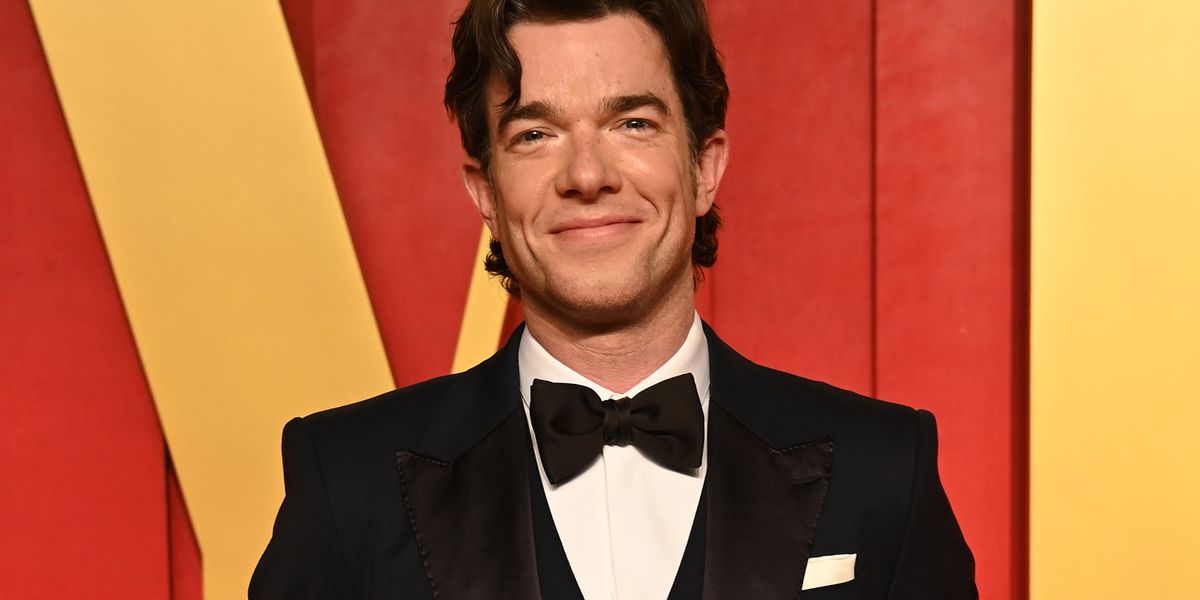

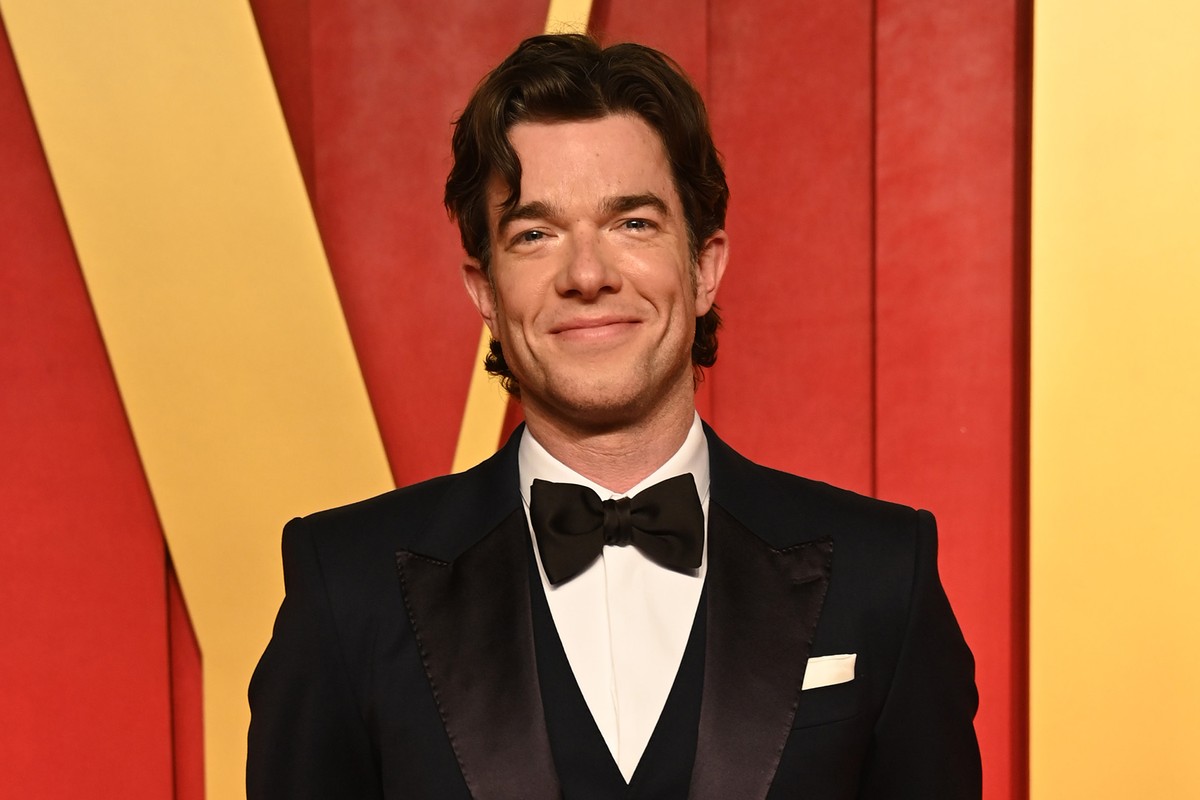
The three-day festival was set to debut at Erindale Park this weekend, but organizers have postponed the event without explaining why.
Billy Eff is the Content Director for Rolling Stone Canada. An award-winning journalist and columnist, he has previously contributed to outlets including VICE and Urbania. A passionate advocate for underground music and a musician himself, he has conducted several hundred interviews with artists and industry professionals across a wide range of styles and genres over the past 15 years. He is based in Montréal, Québec.
The Great Outdoors Comedy Festival has postponed its debut, just days before John Mulaney was scheduled to headline the Mississauga, Ontario event.
The festival was set to take over Erindale Park from September 11 to 13, with Mulaney, Hasan Minhaj, Ronny Chieng, Jeff Arcuri and many others on the bill. Instead, organizers announced yesterday that the entire weekend would be postponed, without providing a specific reason.
“After careful consideration,†the festival said, it decided postponing the event was the best way to deliver the “best possible festival.†Organizers say they are now exploring new dates and will contact ticket holders directly.
The announcement comes after a series of lineup changes in the weeks leading up to the festival. Nick Kroll and Mike Birbiglia were among the comedians originally scheduled to appear alongside Mulaney, while the festival’s published lineup was later revised.
See on Instagram
Mulaney, who has in the past had to cancel many shows in the GTHA, made clear Wednesday that the decision did not come from him. “It was not my decision,†he told Ontario fans, confirming that the festival producers had decided not to proceed with the weekend. He added that he intends to perform in the region soon.
The festival has not yet announced a reason for the postponing, replacement dates or a refund policy. For now, the Great Outdoors Comedy Festival is offering few answers beyond “stay tuned.â€
“When things fall apart, men isolate and withdraw from the world more,†says Ronson.
“This story crashed unannounced into my life,†Jon Ronson tells me. It’s a lazy summer afternoon in the hamlet where he lives in upstate New York, and the journalist and author of The Men Who Stare at Goats, So You’ve Been Publicly Shamed, and The Psychopath Test is explaining the genesis of his latest book. He describes a night, almost exactly three years ago, when he slept through a series of texts that came in from his adult son. The messages told a disconcerting story: His son’s friend, a woman, had connected with a man on Tinder, who invited her to come over to his castle in a rural part of Connecticut and bring some friends. According to his son’s description, Ronson says, the structure was a “vast, newly-built castle, ostentatious even by Gothic castle standards. Like, Count Dracula would think this is a bit much.†There were turrets, and a drawbridge, but in the grand ballroom, there was no sign of a party. “There’s a couple of other young people looking awkward and wondering what the hell is going on, but nobody knows what’s happening. Everyone’s confused.â€
When the middle-aged castle owner emerged, he introduced himself as Chris Mark. The assembled twentysomethings asked him what was going on, and he told them they were there to take part in his new reality show, 101 Princesses. “He said, ‘I’m the king. I’m looking for my queen, and I have 101 princesses to choose from.†He sent the women down to the basement, where they could find princess costumes to wear. “They went with it, I guess out of unease, awkwardness,†Ronson says. “A videographer appears. They start filming. It becomes pretty clear pretty quickly that this isn’t a real reality show. One reason being that the videographer kept cutting up [a slab of] meat for the castle owner. Just for him. No meat was offered to anyone else.â€
Ronson, who was also host of the hit porn-industry investigative audio project The Butterfly Effect, has made a career of letting his curiosity get the better of him. So, the next day, he went to the castle “to find out what the hell was going on,†he says. “And that’s how the book begins.â€
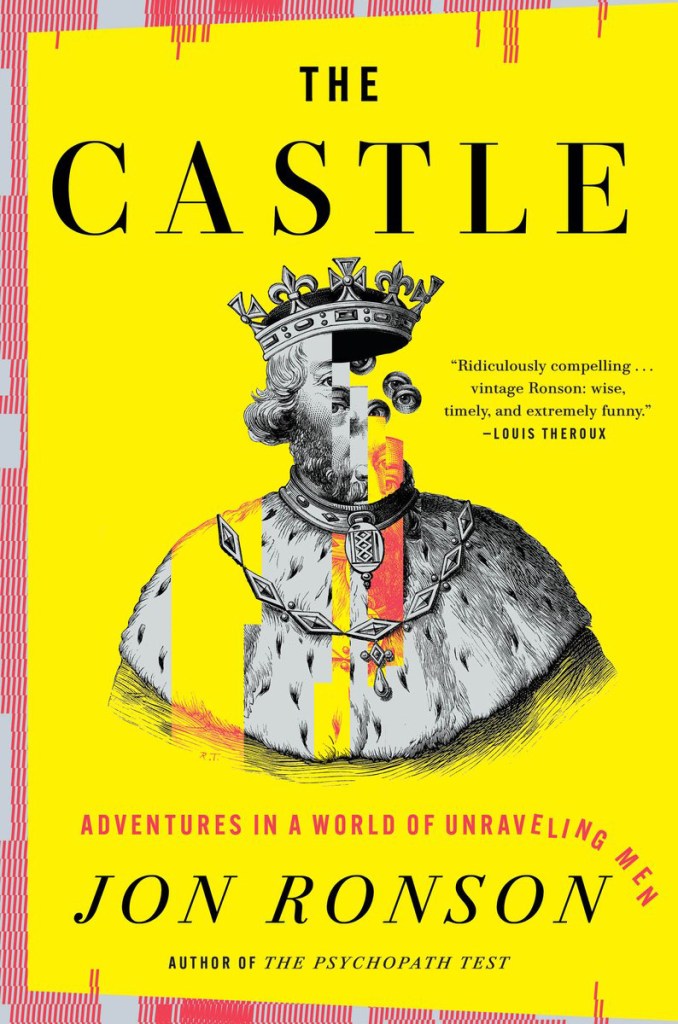
The Castle: Adventures in a World of Unraveling Men (out now from Riverhead Books), reads like an adventure story. Though much of it is framed around his interviews and interactions with Mark — the wealthy descendent of a Gilded Age baron — it opens up to a larger pursuit to understand the state of men, and how the breakdown of societal support, coupled with the rise of a technological state, has brought so many to the brink.
In the book, Ronson travels to the Midwest to visit a town built by Mark’s great grandfather in the 19th century, a recreation of a British village set under power plants and steel factories, where he talks to the man keeping its history alive. He charts the career path of an early YouTube star, Greg Chism, who went from being one of the first lawn-care influencers to chasing the algorithm by posting videos of his two young daughters. What starts as wholesome family content takes a left turn when he begins dressing up his daughters as babies, then donning a baby costume himself, before he’s ultimately all but run off the platform. Ronson includes chapters about Graham Linehan, the creator of huge British sitcoms like Father Ted and The IT Crowd, who became a prominent anti-transgender activist, and Armie Hammer, whose acting career crumbled after his cannibalism kink was revealed. Ultimately, Ronson develops descriptions of the different kinds of men who thrive online — the Vulnerable Man, the Doofus Man, the Manosphere Man, the Separatist Man, the Disinhibited Man — and what these modern archetypes communicate about the world we live in. And throughout it all, he comes back to his own unease about his place in the world. If a man doesn’t have purpose, what’s left?
Chris Mark is a fascinating character — he built this castle for his daughter, but then turned it into a sort of alternate-reality Playboy Mansion. At what point did you realize that his story was going to lead to your next book?The first thing I heard about the castle owner was that he was a big fan of Hugh Hefner. I thought, this is really funny. He’s trying to be Hugh Hefner at the worst moment in human history. I linked him with my feelings of unease, as well, about not having enough purpose. It felt like there were weird echoes there. I thought, this is a man out of time. He wants a world that’s no longer going to work for somebody like him, and maybe I should write a book about all these other things that men are no longer able to do that they used to be able to do.
One of the things you write about in the book is how people are reflexively dismissive of the problems of straight white men. What made you want to tackle this when you knew that there was going to be pushback?I think [of this] a little bit like my public-shaming book. People may not like the idea of the book, but then when they read it, they realize that their idea was wrong. Many times over my career, I’ve had this. Nobody wanted to read The Men Who Stare at Goats. The only book I’ve ever written which sold itself was The Psychopath Test — if you put “psychopath†in the title, you don’t have to do that much work. But what I do, I think, over and over again in my career, is look at how big changes that happen on high trickle down and impact the inner lives of people down here. But mostly, it was a book that crashed into my life, this big fucking castle that my son was lured to under false pretenses, and I just wanted to know what the hell was going on.
But let me add one more thing, and I think this applies equally to women as to men. One thing that I became really interested in is this: Structures and institutions collapse, and people feel cut adrift from society, and it does seem to be something that happens more to men than women. There’s more of a weakness in men, that when things fall apart, men isolate and withdraw from the world more. But I got really interested in that — like, what does a lack of purpose and structure do to people’s inner lives? And what’s filling the gap? And one thing that I found that’s filling the gap is content creation on YouTube.
Do you think, as these societal structures break down, the fact that men can’t live up to the preconceived notion of masculinity that they were fed as kids — being a provider, a protector — that’s part of what’s making them feel lonely?There’s a moment in the book when Greg Chism is the world’s greatest lawn-care influencer, but then his life spirals in the most bizarre ways. He starts to listen too much to the algorithms, and everything goes wrong. And it ends with him basically withdrawing from the world. But I ask him what his life’s like now, and he says, “Well, I wake up, I take my kids to school. I come home. I fall asleep. I wake up and I bring the kids back home from school.†I mean, what a terrible, depressing life. For me, it’s the erosion of structure which is causing so much horror in people’s lives.
So you think people are dealing with this by becoming content creators?It’s funny, I went to the cage fight at the White House [in July]. Everybody [in the press pool] was allowed to inspect the cage a couple of days earlier, so we all had to be at the White House at like half past five in the morning. Like 100 people were there, and we were all standing on the steps of the Eisenhower Building, and somebody from the UFC came up and yowled, “OK, everybody, content creators and videographers, step to the left, print journalists step to the right. And there was this vast exodus to the left. Like 98 percent of the people there were content creators, and the print line was like me [and a few other journalists]. And we were just laughing, like, “Oh, my God, we’re such redundant dinosaurs.†So that’s the kind of thing I’m talking about, like a huge shift from the old institutions that I grew up in, to the sort of post-institution era.
How do you think AI chatbot technology plays into accelerating this?It makes it so much worse. AI trawls the internet, sees how purposeless people feel, how lost, and comes in with a false idea of purpose. Like, “You’re the greatest mathematician on the planet,†or, “You’re creating the greatest reality show ever.†It’s so pernicious. It’s so evil. It’s like they’re swooping in to keep us engaged through sycophancy.
Going back to Greg Chism, the lawn-care influencer, one of the things that I found so stark in that story was how he kept changing his content to please the YouTube algorithm so he could get views. What did you find in reporting this book about people who are trying to contort themselves to the pleasure of the computer?His story has got to be one of the most extraordinary things that ever unfolded on YouTube. Like how he goes from lawn care through to all the stuff that happened after that, which is just nuts. Do you remember that novel, The Dice Man, by Luke Rhinehart? It’s about a character who decides to cede his life to the roll of a dice. Every decision he makes, he makes for the roll of a dice, and that’s what people are doing now on YouTube. If they give themselves over too much to the algorithm and the incentive structures, you end up doing more and more extreme things.
I think it’s partly because YouTube gained the reputation of being this wide-open country, like a post-institution utopia where men and women could thrive through grit and perseverance as an influencer, which is a very compelling idea. I grew up in a world of gatekeepers, and it was awful to have to beg people to give me a chance. It’s very compelling to have a world without that, that feels like it could be a true meritocracy where good people rise to the top. And good people do rise to the top. It’s not like it’s all an illusion. Greg Chism’s story and lots of other stories show that if you cede your life to the algorithm — and not just the algorithm, also what the viewers are encouraging you to do — it just leads to hell, and Greg’s story leads to hell in the most baroque and unexpected ways. But I think you could say the same thing about smaller stories, like anti-woke influencers, is a good example of another way that this manifests in sort of pernicious ways.
Another person you write about is your former friend, Graham Linehan, who went from being pretty universally beloved in Britain to becoming one of the country’s loudest anti-trans voices. He attacked you extensively online after you called him out for being a bully, too. Tell me about your decision to include such a personal story in this book.Well, it was very hard. I’ve been trying to write about Graham since 2020, and I’ve picked it up and put it down many times because I could just feel my stress levels rising. Because, you know, Graham’s story is, he became a gender-critical activist, and just made it his absolute identity. And he has his bêtes noires, and I’m one of them, and he’s posted about me thousands of times by now.
The Graham chapter was much longer, but it stressed me out so much. I cut it in half, but it’s like that scene in Poltergeist when you open the door in the bedroom and there’s all this furniture spinning violently around, and I think I’m a piece of furniture spinning violently around inside Graham’s head. I told him I thought he was acting like a bully back in 2019, and all these years later, he’s still going on about it. But I think there’s three or four reasons why I thought I should write about it. Firstly, the only reason to not write about it is fear, and I just don’t think, as journalists, we can be guided by fear.
Secondly, I’ve often thought about Graham. So Graham, for people who don’t know, was a huge figure in British cultural life, maybe a good equivalent would be like Judd Apatow. He was this showrunner of some of the most beloved comedies in British history, and then he fell into this new world in this extraordinary way. I hope this doesn’t sound glib, but I’ve always thought there was like an epic quality to Graham’s story. It was like if Harold Pinter or Tom Stoppard was writing a play about Graham, it would be an incredible play.
But the main reason [I wrote about him] is that I really wanted to do something about disinhibited men. What I discovered was that, when men feel cut out, cut adrift from society, some fold in on themselves. Some adapt. Some lash out. Graham is somebody, and you see it in a lot of different places, who basically decided to just be completely disinhibited, to basically rip off his face, and just allow his head to run wild. It’s as if he’s just decided nothing matters anymore. I thought that felt so extraordinary, but also so resonant to the world we’re living in now of disinhibition.
Tell me about Marktown, the town in Northwest Indiana that was built by Chris Mark’s great grandfather, and modeled after a British village. What did you find when you went there?I really wanted to do something after the castle mystery, you know, exploded into my life, and I decided I wanted to broaden it out into other men, feeling that life was passing them by, and then I thought, well, I’d love to do something about deindustrialization, but how? And also, men who are withdrawing from the world and becoming recluses, but how? And then I discovered, just incredibly fortuitously, that the castle owner’s great-grandfather was a Gilded Age steel tycoon. That’s how he got his money to build his castle, and he had built a utopian theme town in East Chicago, Indiana, for his steelworkers to live in. And over the years, this utopian town, which at the beginning looked great, has completely crumbled into a world of recluses and hoarders. Marktown’s designed to be this lovely English village, like a Miss Marple-type village where some kind of Agatha Christie adventure would happen, but it’s completely surrounded by heavy industry. So it’s like Miss Markle being like scrunched up and thrown into the middle of Wall-E. And when you look at an aerial photograph of Marktown, you just can’t believe it. It’s like nothing on Earth. So yes, so very fortuitously, I got to tell that story of deindustrialization in a way that’s completely relevant to the castle story.
Toward the end of the book, you write a little bit about an interview you did with Armie Hammer after his “cannibalism†scandal broke.So the story is, I got a call. He was filming in New Orleans, and I knew some of the people involved in the film [called Wounds], and they invited me to New Orleans to visit the set. We had dinner with Armie Hammer and his wife and the various movie people, and Armie talked a lot about meat, how much he liked meat, and he was utterly delightful and charming, and it was a great night.
So then a couple of years later, it all happens, the whole cannibal stuff, and then a couple of months after that he contacts me, and I fly to interview him. He says I’m the first person ever to interview him [since the scandal], and he tells me the whole story. But I sit on it. I don’t know what to do with it because there’s some things where he’s definitely right, but then there’s other things where he hasn’t behaved well. Like he would sweep women off their feet and take them to Ojai, and then give them the time of their life, and then come back and drop them off, and completely forget about them. And I thought, I need time. Like I just, you know, this is a story that needs a lot of time. And [eventually] he gave the story to someone else. I felt slightly like one of the women that you take to Ojai. But you know what? I can’t blame him. I was taking way too long. So I have no ill feelings, but this interview was sitting on my computer for the next couple of years, and so I included a little bit of it because there were moments in our conversation which I think shed light on some of the motivations of the castle owner, and privilege, and people not being told that they can’t do things. I cut it down to its absolute minimum, to shed light on other stories in the book.
You’ve got a stage show of the book you’re taking on tour in the States and the U.K. Can you tell us about that?It’s called Enter the Castle. I always do pretty elaborate stage shows. I still do a show called Psychopath Now, based on my Psychopath Test book, where I have mystery guests, and I’ve done shows where I have a band onstage, performing with me as I’m doing the speaking. This time around, I’m using a lot of audio and video clips, and bringing the book to life as a series, almost like a live documentary that I’m narrating onstage. So I always make it ambitious.
Lindsay Clancy attends her murder trial on July 29.
Lindsay Clancy’s triple murder trial ended in a mistrial Friday after jurors said they were hopelessly deadlocked and a higher court rejected a last-ditch defense bid to intervene in the deliberations.
“I’m going to declare that the jury is deadlocked, and I’m going to declare a mistrial,†Plymouth County Judge William Sullivan said from the bench Friday afternoon, according to a livestream of the trial by Channel 5 Boston. He then thanked jurors for their service during the heart-rending trial of the Massachusetts mother charged with killing her three young children during what defense lawyer Kevin Reddington described as a severe episode of postpartum psychosis.
The ruling capped a chaotic day in which Sullivan said in the morning that he intended to declare a mistrial, Reddington called the decision a “travesty,†and the judge gave him “one hour†to seek an emergency stay from a higher court.
The scramble followed a Friday morning note from the jury foreperson saying jurors could not reach a unanimous verdict. A day earlier, the jury had reported an 11-1 split, with a lone holdout preventing a verdict.
“It is with a heavy heart that we report we are unable to come to a unanimous decision and will not be able to,†the jury’s Friday note said.
Reddington disclosed in court that the holdout was a man and seized on the phrase “heavy heart,†arguing that it suggested jurors had reservations about a mistrial. Citing the foreperson’s Thursday note, he said the holdout had “made statements acknowledging doubt†but “will not apply reasonable doubt to the evidence to return a not guilty verdict.â€
Reddington had previously asked the judge either to remove the holdout and replace him with an alternate or to order the jury to continue deliberating. The judge denied both requests, saying that removing a juror during deliberations was an extremely fraught and “sensitive†step, and he did not believe there was sufficient cause to take it. The parties are due back in court Sept. 29 to discuss what happens next. In the meantime, the charges against Clancy remain in effect.
Plymouth County District Attorney Timothy Cruz told reporters outside the courthouse that his office had not yet decided whether to retry Clancy. She remains held without bail at Tewksbury Hospital, a state-run psychiatric and medical facility.
During the closely watched trial that became a viral phenomenon, prosecutors argued that Clancy was deeply troubled but understood that what she was doing was wrong when she strangled her children with exercise bands. They asked the jurors to convict her of three counts of first-degree murder.
The defense argued that Clancy should be found not criminally responsible due to improperly treated mental illness, a verdict that likely would have resulted in her indefinite commitment to a forensic psychiatric facility.
During the divisive seven-week trial, prosecutors claimed the killings were “meticulously†and rationally planned by a controlling mother who was depressed and exhausted but not psychotic when she decided to kill herself and take her children with her. They asked jurors to hold Clancy criminally responsible for killing Cora, 5, Dawson, 3, and Callan, 8 months, in the basement of the family’s home in a suburb of Boston on Jan. 24, 2023.
“This is not a public debate about women’s mental health and how the medical system treats women,†Plymouth County Assistant District Attorney Shanan Buckingham said in her opening statement on July 27. But the trial became exactly that.
Clancy’s defense centered on testimony that she was suffering a complete psychotic break and hallucinating a commanding male voice outside her body, telling her to kill the children so she could then kill herself. Following the strangulations, Clancy used a kitchen knife to slash her own throat and wrists before she “threw herself†out of the second-story window of her bedroom, shattering her cervical spine, Reddington said. (A former labor and delivery nurse at Massachusetts General Hospital, Clancy, 35, was paralyzed in the fall and sat through the trial in a wheelchair.)
Jurors heard that after Callan’s birth, Clancy struggled with debilitating depression, sleep deprivation, intense anxiety, psychotic symptoms of dissociation, and intrusive thoughts about harming herself and the kids. She was “spiraling down,†Reddington said, at times crying hysterically or appearing like a “zombie,†as she repeatedly begged for help. The homicides happened just two and a half weeks after she was discharged from a psychiatric hospital.
Clancy was prescribed more than a dozen psychiatric medications over roughly four months, jurors heard. Trial testimony revealed a fragmented course of care from a rotating cast of prescribers who didn’t seem to have the full picture of Clancy’s mental state and medical records. Online, many trial observers seized on those gaps, claiming Clancy was failed by a system that expected an unstable patient to carry her critical information from one provider to the next.
In his closing argument, Reddington accused prosecutors of being “manipulative†by calling a witness who floated the theory that Dr. Paul Zeizel, a defense psychologist, planted in Clancy’s head the idea that she heard a voice ordering her to kill the children. He pointed to testimony from Sheila Cavanaugh, a chaplain at Brigham and Women’s Hospital, who met with Clancy immediately after the January 2023 killings.
During the trial, Cavanaugh testified that Clancy described hearing a “persistent†voice that “told her that if she did not follow the command, neither she nor her children would be safe.†Reddington argued Cavanaugh was present when Clancy was extubated and around for eight days before Dr. Zeizel even knew “Lindsay exited.â€
“She told Sheila first that she heard voices, command hallucinations,†he argued before the case was handed to jurors for deliberations on Thursday, Aug. 27.
Shortly after the trial started, it quickly became a social media cause célèbre, with countless moms taking to Instagram, Facebook, and TikTok to say they saw echoes of their own postpartum struggles in Clancy’s private writings and Google searches. While postpartum psychosis is rare, affecting an estimated one to two people per 1,000 births, postpartum depression is much more common.
As the trial unfolded, supporters said they identified with Clancy’s notes about feeling overwhelmed and exhausted, and the crushing guilt she experienced over her choices related to breastfeeding, sleep-training, and how she divided her attention among her three kids. A medical expert for the defense testified that struggling mothers, such as Clancy, might minimize their psychiatric symptoms out of fear they could be reported to child protective services and lose custody of their children. The expert said Clancy also may have worried that disclosing her most severe symptoms could jeopardize her nursing license. (Prosecutors argued that Clancy’s decision to share her intrusive thoughts with her husband and mother, but not with her medical providers, was evidence of rational thinking because she understood that disclosing them to clinicians could have consequences.)
As public support for Clancy grew by the day, online sleuths went to work challenging the prosecution’s narrative, closely scrutinizing witnesses and criticizing authorities for not investigating certain details more aggressively. Some went further, circulating theories that questioned whether Lindsay Clancy had even killed the children at all. They argued that Clancy’s injuries, including her extremely low body temperature and damage to her thyroid gland and voice box cartilage documented at the hospital, were inconsistent with prosecutors’ account of what happened and raised the possibility of foul play.
Reddington, a veteran defense attorney, attracted a devoted following among trial watchers who praised how he held his client’s hand during difficult testimony and comforted her when she broke down in sobs. He was lauded online when he excoriated prosecutors for bringing a case that he said would “kill the soul†of a mentally ill mother who “loved those children up to the time of their death.â€
“She knows that she killed these children,†Reddington told the jury. “She’s living her own hell. She knows what happened with those kids, and she wanted to die.â€
Clancy’s former husband, Patrick Clancy, testified that he watched his wife’s condition steadily deteriorate from mid-October through December 2022. “She just kept getting worse and worse,†he testified.
As Clancy’s struggles deepened, her parents visited regularly from Connecticut to help out with the kids and support their daughter, he told jurors. “We didn’t have a diagnosis,†Patrick Clancy said. “We just didn’t really know what was wrong.â€
He testified that Clancy told him she worried about harm coming to the children, but she denied having a plan to do anything herself, he said. Her behavior at other times appeared ordinary, he testified.
“It was very confusing because a minute later she was making lunch or playing with them or getting them ready for bed or whatever it was,†he told the jury. “I never saw Lindsay harm the kids.â€
Describing the night of the killings, Patrick said he left the house to pick up some medication and takeout food for the family. When he returned, the house appeared eerily quiet. He went upstairs, found the door to the primary bedroom locked, managed to open it, and saw “blood everywhere,†with the window open, he said. When he ran outside, Clancy was on the ground with deep cuts to her wrists and a cut across her neck, he testified.
Clancy, who was in and out of consciousness, allegedly told him the children were in the basement of their Duxbury home, he said. Once paramedics arrived, he ran to the basement while still on the phone with a 911 operator. He found the children unresponsive, with exercise bands around their necks.
The two older children were pronounced dead at the hospital. The couple’s 8-month-old died several days later. As he testified about the horrific scene and losing all three children in one night, Patrick Clancy’s chin was quivering. Jurors and people in the courtroom heard his 911 call, but the judge did not allow it on the public livestream.
In his testimony, Patrick said his wife called him not long after the incident from the women’s hospital where she was being treated. “She didn’t talk about our kids. She talked about what she went through,†he told the jury. “She said she heard a man’s voice telling her that if she didn’t do it now, she would lose her chance.â€
Investigators said that before killing her kids, Clancy researched how long the trip to the restaurant and a pharmacy would take so she would know how much time she had alone with the children.
After the killings, Patrick said in a statement that he had forgiven his wife and urged others to do the same. “I wasn’t married to a monster,†he later told The New Yorker. “I was married to someone who got sick.â€
Both Lindsay and Patrick Clancy have filed separate lawsuits against her medical providers, alleging they failed to properly diagnose, treat, and monitor Clancy’s postpartum psychiatric condition.
“Lindsay Clancy did everything a mother in her situation could do,†her lawsuit says. “She recognized something was wrong with her. She sought medical treatment. She went to emergency rooms. She called crisis hotlines. She admitted herself to hospitals. She took the medication prescribed to her. She communicated her worsening symptoms to her providers. She told them the medications were making her worse.â€
Amelia Dimoldenberg on September 25, 2025 at “Chicken Shop Date: 10 Years Of An Idea†in London, England.
Chicken Shop Date has reached its expiration date, according to an Instagram post from the star of the popular YouTube series, Amelia Dimoldenberg. Since 2014, the series has shown the British hostess going on “dates†(read: cringy interviews) with Daniel Kaluuya, Ed Sheeran, Charli XCX, Phoebe Bridgers, Cher, Billie Eilish, Sabrina Carpenter, and many other celebrities. The upcoming season, which will begin on an as-yet-unannounced date, will be its last.
“I never thought I’d stop Chicken Shop Date,†she wrote. “I thought maybe it would be a part of me forever, and in some way it always will, but I feel like it’s now time to move on from this adventure and onto a new one.â€
In the post, she also reflected on the way the series matured with her. “When I was 17 I had a fantastic idea that I might meet the love of my life on a date in a chicken shop,†she wrote. “I’ve spent my entire 20s sitting across from the most incredible people, people I’d always dreamt of meeting. All of them charmed me (some more than others) and I definitely charmed them.
“To me, the show is my very own romcom and I have loved creating so many stories for you to watch,†she continued. “I am so grateful to everyone who has followed me on this journey and found some joy in these episodes.â€
The image that accompanied Dimoldenberg’s post was, of course, a photo of fried chicken. Accompanying it was a note on a checkered napkin: “All good dates must come to an end.†She did not specify what her next “adventure†would be, so one can only speculate on where she’ll look for love next: the aquarium? a halal cart? a petting zoo? a chippie? Whatever she ends up, it’s safe to assume her perfect celebrity match is out there somewhere (but probably not at any of these places, including chicken shops.)
See on Instagram
Gloria Steinem, pioneering feminist, founder of Ms. Magazine, and the unflagging force behind the Equal Rights Amendment, has died at the age of 92.
Steinem’s death was announced Thursday on social media. “Yesterday, Gloria Steinem passed away peacefully at her home in New York City, surrounded by some of the many who loved her. Gloria’s near-century on earth were years well-lived, and she continued working for equality until the very end,†her representatives wrote.
“Gloria’s greatest gift was her ability to listen to others, to make others feel seen and heard. Her words, actions, and example gave people permission to be their truest selves. Gloria lived true to her independent spirit, always with curiosity and a great sense of humor.†No cause of death was provided.
Her representatives asked her fans to light a candle in her honor and to donate to her charity, Gloria’s Foundation.
Steinem was at the forefront of second-wave feminism in the Sixties and Seventies, and throughout her Presidential Medal of Freedom-winning career, fought for issues like abortion rights, women’s rights, workplace gender equality, domestic violence prevention and more.
As a writer in 1963 — the year The Feminine Mystique and the Bell Jar were published — Steinem wrote “A Bunny’s Tale†an undercover expose about the daily humiliations the cocktail waitresses known as “bunnies†endured — including, for some reason, a pelvic exam — to get and keep a job at Hugh Hefner’s Playboy Club.
As Steinem liked to say, “The truth will set you free, but first it will piss you off."
In 1971, Steinem co-founded Ms. magazine. “For more than half a century, Steinem helped bring feminist ideas, voices and movements into the mainstream through journalism, organizing and activism—and helped build Ms. into what it remains today: not simply a magazine, but a movement. She continued working for equality until the end of her life,†the magazine wrote in its obituary to Steinem on Thursday.
“’At the time that first issue [of Ms.] was published, there were local feminist publications here and in some other countries, but there was no national voice for those of us who had the radical idea that women are people,’ Steinem wrote for Ms.’ 50th anniversary in 2022. ‘I didn’t know what the response would be, especially on newsstands, with no precedent or place for a women’s magazine that wasn’t about home, family and children. The response was shocking. … It sold out in eight days.’â€
Katie Couric wrote on social media Thursday, “For more than five decades, Gloria fought tirelessly for women’s equality and reproductive freedom, challenged gender inequality, and helped transform the feminist movement. As a journalist and activist, she brought women’s experiences into the mainstream, and inspired generations of women to find and use their own voices… I am so grateful to have known her and to have been the beneficiary of her wisdom, intellect, and insight.â€
Former First Lady Dr. Jill Biden wrote, “Gloria Steinem understood that women’s equality begins with the freedom to make decisions about our own bodies, health, and futures. For decades, she fought to make that freedom real for generations of women and girls. She spoke up when it was difficult, listened to those whose voices too often went unheard, and never stopped pushing our country forward.â€
Steinem spent her final years continuing to write, her representatives noted Thursday, including her forthcoming book An Unexpected Life. “I have now lived for more than fifty years in this brownstone, in rooms that have witnessed lives before mine, and will know others after I am gone,†she writes.
“This book, along with her commitment to her home becoming a center for social justice movements, are among the many gifts Gloria has given the world with the hope they have ripple effects for generations to come,†her family added. “Gloria often quoted the adage: ‘The flap of a butterfly’s wing can change the weather hundreds of miles away.'â€
Argentina will have to say goodbye to a legend, as Lionel Messi has announced his retirement from international football, closing the book on one of the most extraordinary careers in the history of the sport. After more than two decades wearing Argentina’s colours, Messi will no longer represent his country on the international stage.
The decision marks the end of a career that took Messi from a teenage prodigy to Argentina’s most important player and, ultimately, its captain and World Cup-winning icon. He leaves the national team as its all-time leading scorer and appearance-maker, having scored 125 goals in 207 appearances.
See on Instagram
His international career also came with a long period of frustrationm, during which Messi endured three major tournament final defeats with Argentina before finally winning the 2021 Copa América. That breakthrough was followed by the 2022 Finalissima victory over Italy and, most importantly, the 2022 FIFA World Cup in Qatar, where Messi finally lifted the trophy that had eluded him.
He added another Copa América title in 2024, further cementing his place in Argentine football history.
Messi’s announcement comes shortly after the 2026 World Cup, where Argentina reached the final before falling to Spain. He had already suggested that the tournament could be his last, but today’s announcement makes his departure official.
This is not the end of his football career, however. Messi's contract with Inter Miami ends in 2028, so there's still time to witness his greatness. Messi and his team were in Montréal over the weekend, where he scored four times and added an assist in Inter Miami’s 7-1 demolition of CF Montréal at Stade Saputo.