Art of Noise: In Visible Silence
Photo record
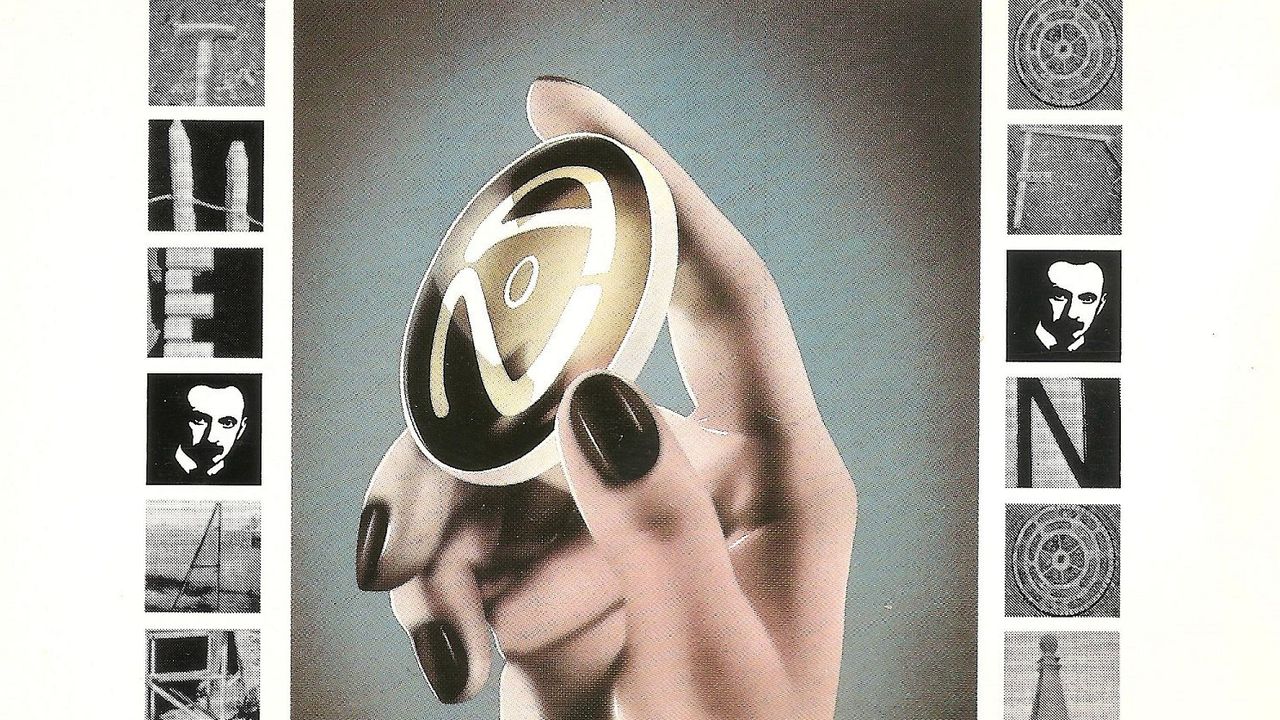
9 images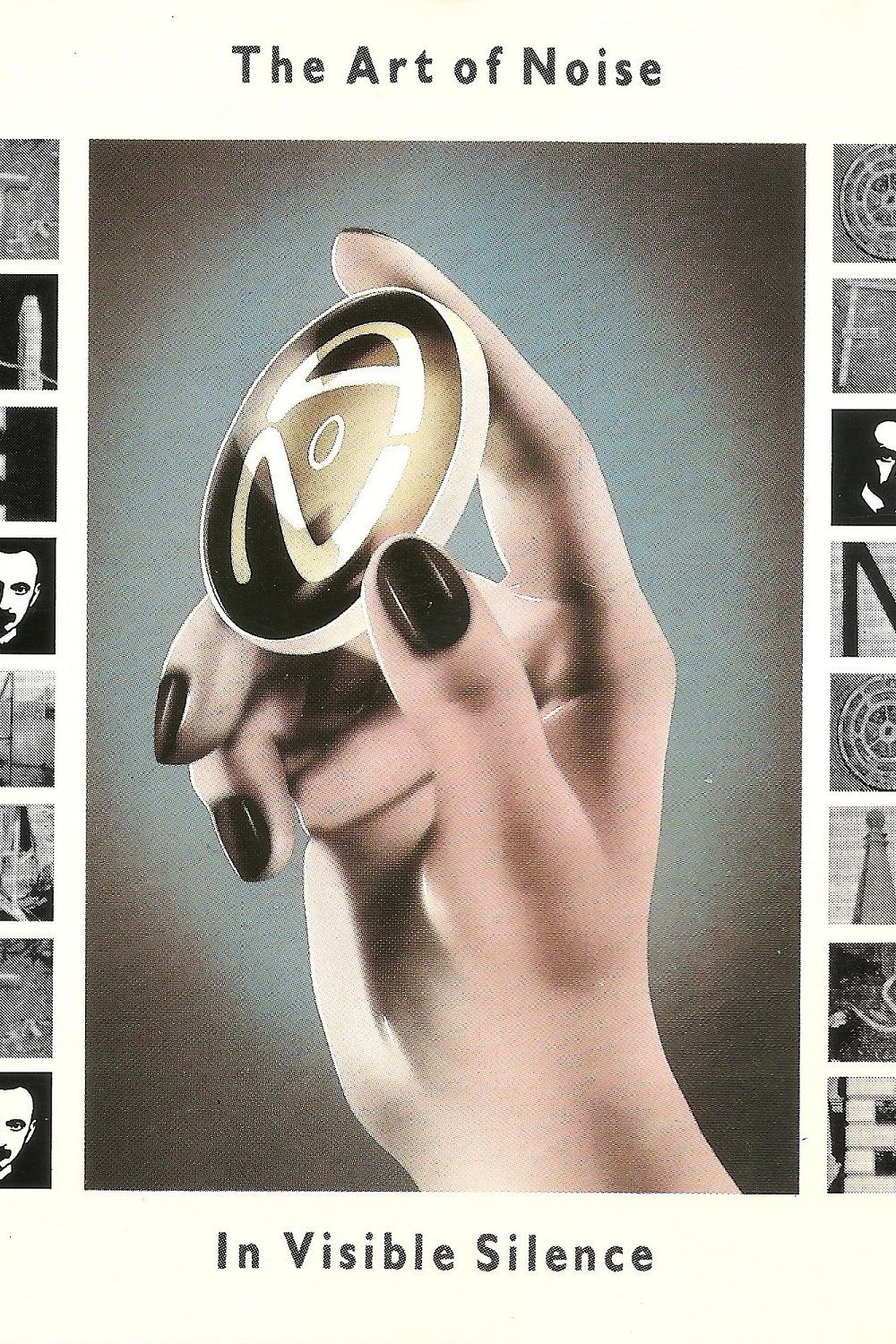
0.0
0.0
Reader Score
No score yet, be the first to add.
0.0
Genre:
Electronic / Experimental / Rock
Label:
China / Chrysalis
Release Date:
1986
In the beginning, Art of Noise were as much a provocation as a pop group. You could tell something was up just by looking at the list of personnel: a computer programmer, a composer and arranger, a recording engineer, a producer, and a journalist. The band—some of them, anyway—played instruments that looked like space-station command centers, collecting bits of audio from everyday life and arranging them into block-rocking beats, with fragmentary voices criss-crossing in digitally orchestrated counterpoint and car engines standing in for tambourines. The music was sly and funny in a postmodern way that had only recently been enabled by the emergence of digital sampling technology. It delighted in its own fakeness; drew melodies out of non-musical detritus and used traditional instruments as punchlines; approached recorded sound itself as both pigment and canvas. There was no singing, per se, unless it had been chopped up and rearranged at the command center. They hardly performed in public and wore eerie kabuki-like masks in photographs. Somehow, they had a Top 10 hit.
Paul Morley’s role in this startling enterprise was primarily a conceptual one: lore-enforcement agent, to use a title some troupe of cheeky youngsters really should nick for themselves, bestowed on him in a 1985 ZigZag magazine profile of ZTT Records, the swashbuckling avant-pop label for which Art of Noise served for a time as a sort of faceless avatar and house band. According to one Art of Noise member, interviewed about In Visible Silence, their strange, brilliant, and oft-overlooked second album, Morley’s only concrete contributions to the earlier releases were the names of the songs. It was just a few months after the ZigZag piece, but a schism within Art of Noise had transpired, one that the British press covered with a fervor it generally reserved for bands with lead singers. The lore-enforcement types were on one side and the people who made the records were on the other.
No score yet, be the first to add.
0.0
Morley was a former NME scribbler whose high-flying prose and messianic certitude could make a manifesto of a grocery list, to say nothing of an album review. In addition to Art of Noise’s track titles, he was responsible for the decision to frame them as a pop act in the first place, and for creating the conditions for listeners and the media to accept them as such. In NME’s 1980 year-end issue, he had published a piece bemoaning the stodginess of the post-punk scene and advocating for bright young musicians to disrupt the pop charts instead of toiling underground. It turned out to be the kind of culture-shifting essay that most critics can only dream about. “Rockist” entered the lexicon as a pejorative aimed at those stuck in a chauvinistic, guitar-centric past; the Human League cleaned off the Sheffield industrial grime of their early records and wrote “Don’t You Want Me.” British pop, for a few years, became the province of ambitious weirdos with art-school degrees.
Then, around the wizened age of 25, Morley co-founded ZTT Records, upon making a realization that may trouble certain contributors to this website: He was too old for music criticism. His label co-founder was Trevor Horn, a virtuosic producer who shared his drive to reclaim pop as a zone of joyous creativity and subversion. By the time of ZTT’s founding, Horn had fronted the Buggles, the new-wave duo responsible for the first video ever played on MTV; helped introduce the UK to hip-hop; and, through his production work with artists like Dollar and ABC, developed a blend of high-tech artifice and old-fashioned compositional knowhow that was both groundbreaking and irresistible to the record-buying public. ZTT, with Horn as musical director and Morley as conceptual ringleader, would be a new kind of label, a guerilla cell that would hijack pop and redirect its course toward a more interesting future. But before it did all that, it needed to sign its first artist.
This was Art of Noise, whose members included Horn and Morley themselves plus three people drawn from Horn’s production THeam, as he called the squadron of musicians and technical personnel who helped to execute his ideas. There was JJ Jeczalik, the computer programmer, one of the few people in the world at the time who really knew how to work the preposterously expensive early sampler known as the Fairlight CMI, the space-age instrument that was to Art of Noise as the electric guitar was to the Rolling Stones; Anne Dudley, a classically trained composer and pianist who had played with Horn in a nightclub cover band, and who the producer had recently brought in to arrange the strings on ABC’s sophisti-pop classic The Lexicon of Love; and Gary Langan, an engineer who’d worked extensively with Queen before hooking up with Horn, and was the one actually running the recording gear on many of his sessions.
Into Battle With the Art of Noise, the title of the debut EP by both band and label, emphasized the idea of a militant intervention on the music industry. But the truth was it all started as a goof. Horn and the THeam were working on “Owner of a Lonely Heart,” the singularly Fairlight-addled 1983 pop triumph by prog-rock giants Yes. One Friday night, after the band went home, Langan pulled up some snippets he’d recorded of drummer Alan White and asked Jeczalik if he wanted to plug them into the sampler and mess around for a while. They stayed up all night tinkering and trying to make each other laugh: adding a funky bass line and some chintzy orchestra hits from the Fairlight’s bank of presets; making recordings of themselves talking in silly voices, flipping them backwards, and tucking them in with the percussion. Perhaps they got a little stoned. They showed the results to Horn the next day and he suggested asking Dudley, the classically trained one, to do some overdubs, which might add a little sensuous musicality to this track that worked mainly in brute and prankish rhythm. When it was finished, with a magisterial Dudley keyboard coda, it was “Beat Box,” Art of Noise’s first single. Morley came up with the band name, drawing from an essay by Italian futurist Luigi Russolo called “Art of Noises.” Jeczalik suggested they cut the final s.
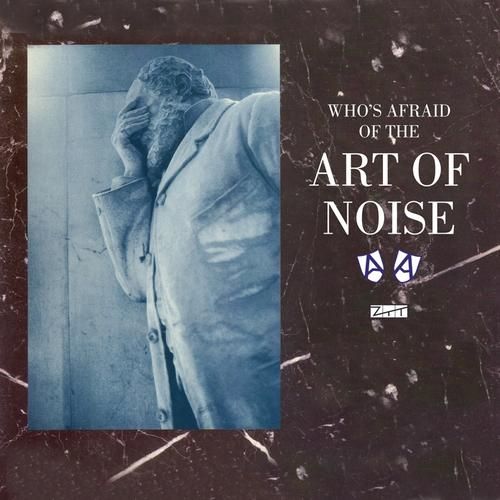
This was how it tended to go from there, according to the three Art of Noise members who ended up making In Visible Silence. Dudley, Jeczalik, and Langan would create the music; Horn would provide producerly suggestions about what was working and what might benefit from a tweak; and Morley would slap on a title. Much of Into Battle… and Who’s Afraid of the Art of Noise?, the full-length that followed, was in the same brash, percussive mode as “Beat Box.” (This sound, clearly inspired by hip-hop, would soon reciprocate the influence: “Beat Box” became a staple of breakdancing culture and has been sampled by everyone from Marley Marl to Lil’ Kim.) One major exception was “Moments in Love,” a 10-minute fantasia that spends most of its time cycling through the same three notes, a deceptively simple pattern that becomes more mysteriously beautiful each time it repeats.
Meanwhile, ZTT was racking up hits and Art of Noise were helping to make them, even when their name wasn’t on the spine. (According to Frankie Goes to Hollywood singer Holly Johnson, the only contribution the band’s instrumentalists made to their world-conquering ZTT single “Relax” was the sound of their splashing in a swimming pool, which Jeczalik recorded and sampled with the Fairlight.) But tension was mounting among the members. As Jeczalik put it in a 1986 interview with the Los Angeles Times: “In the early days we decided to be anonymous, and lo and behold somebody else got all the credit, namely Horn and Morley.” The press tended to assume that the two most famous men in Art of Noise were the masterminds, a notion that Horn and Morley did not go out of their way to dispel. Dudley, Langan, and Jeczalik—who were “responsible for 98.98% of the music,” according to the latter—left ZTT, and, after some legal squabbling, managed to bring their band name with them. In response, Morley distributed a statement to the press whose blind self-regard reads like parody: “Members of Art of Noise who aided on the musical side of Horn and Morley's swindling, mediating project, have now decided that they are competent enough to pursue a conventional rock career.”
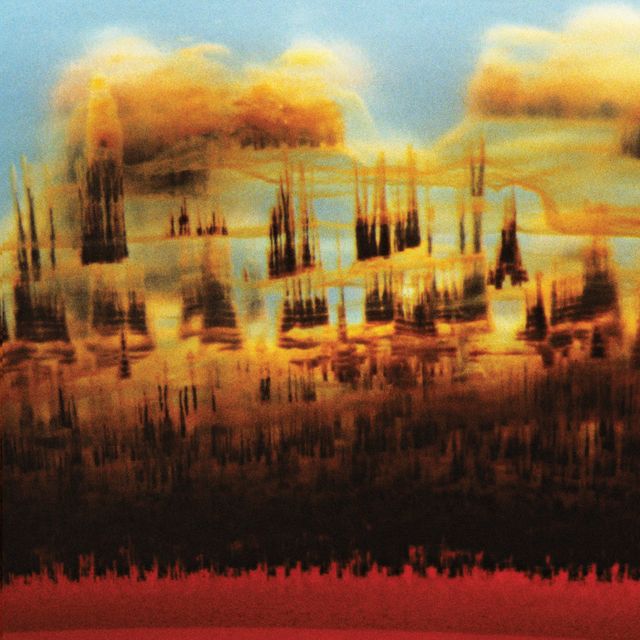
In Visible Silence, the second full-length by Art of Noise and first without Horn and Morley, makes clear that the 98 percent figure is not terribly exaggerated. All of the technical dazzle and textural strangeness of the canonical early tracks are still present. Some of the surreal humor and revolutionary posturing too, though the smash cuts have been softened; song forms that once reveled in harsh juxtaposition now glide along softer arcs of theme and variation, statement and recapitulation, tension and resolution. At its best, In Visible Silence fulfills the promise of “Moments in Love,” moving past the new technology’s capacity for garishness and novelty and exploring the shadows beyond.
Even “Legs,” the first single and track most indebted to the “Beat Box” approach, with drums like a giant set of pistons and a vocal sample that might have been taken from an overcaffeinated cheerleader, has a combination of suppleness and rigor that feels almost classical, generating excitement through the interleaving and development of a few simple themes rather than reaching for a new idea whenever boredom sets in. Tiny bits of speech fly through the mix, leaving trails of echo that fall just outside the lines of the rhythmic grid. Working with an arsenal of hardware, and lacking the ability to sync the tempo of each machine with the sort of precision that modern laptop producers take for granted, Langan programmed these echo effects by ear, aided sometimes by a stopwatch. Their not-quite-perfect time gives the music a lively sense of push and pull that contemporary gear would smooth over by default.
Hear the word sampler and you might picture an MPC60 or SP-404, instruments used in so much hip-hop production of the ’90s and beyond, whose playing interfaces are loosely modeled on drum sets: a grid of pads for you to hit, with each one triggering its own sample. The Fairlight and other early samplers like it are controlled instead by piano-like keyboards. Rather than presenting an array of entirely different samples at once, they focus on a single sound at a time, manipulating its pitch up and down the keyboard so that it can be played like a piano, and producing a number of weird digital distortions along the way. Much more than later sampling gear, they encouraged their players to think in terms of harmony and melody, which is why it made sense for a sample-based group to employ a classical arranger. Another aspect in which Art of Noise sound atavistic, or perhaps even out of time, to modern ears: Where later hip-hop and techno would keep chord changes to a bare minimum, or else follow James Brown’s lead and do away with them entirely, Dudley had the watercolor harmonic palette of the Oscar-winning film score composer she would go on to become.
This is how you end up with a track like the astonishing “Eye of the Needle,” a cyber-noir cool jazz number in which the soloists are disembodied voices and—are those singing cash register drawers? The final solo is the strangest and most resonant, built from a bit of vocal that seems lifted from a dusty recording of some prewar crooner, each melodic leap accompanied by a perceptible increase in the speed of his warble. Dudley was surely the orchestrator of these ghostly arias, her very real improvisational chops held at phantasmagorical distance by the Fairlight’s technological limits. Those limits, too, were a deliberate part of their approach. Jeczalik once recalled a session with Paul McCartney in which Macca seemed disappointed that a Fairlight loaded up with trombone samples didn’t actually sound like a horn section; that, Jeczalik patiently explained, was the whole point.
The human voice had always been important to Art of Noise, whether the backward speech at the margins of “Beat Box” or the digital facsimile of a chorus that gave “Moments in Love” its haunted-lullaby atmosphere. In Visible Silence brings it closer to the center, dialing down the variety of sound effects and offering mosaics of breath and chatter in their place. The most striking among them is “Paranoimia,” which piles on the voices in iridescent globs, all of them right down the middle of the uncanny valley between the fake and the real. Their syncopated interplay is funky, creepy, hilarious, seductive—it might have you doing some combination of Alonzo Mourning on the bench and Jay-Z at the Coldplay show. It also sounds like it could have been produced much later than the mid-’80s. Art of Noise often accented the second and fourth beats of each measure of their more uptempo tracks with a massive gated-reverb snare drum, much like what Run-DMC was using around the same time—part of what the B-Boys loved so much about “Beat Box,” and what can keep their music sounding so identifiably of its era even when other elements are zooming toward a future we still haven’t reached. “Paranoimia” keeps the beat to a stabbing kick drum, a tinkling triangle, and assorted pops and clicks, anticipating the sort of rhythmic minimalism the Neptunes would perfect with tracks like “What Happened to That Boy” and “Drop It Like It’s Hot” four decades later.
The album’s biggest hit was “Peter Gunn,” a cover of Henry Mancini’s 1959 instrumental theme for the private-eye TV show of the same name, a piece of music you know even if you think you don’t: Before both James Bond and Mission: Impossible, its slinky chromatic guitar riff and divebombing brass section helped to set the template for how spy music is supposed to sound. Art of Noise hired Duane Eddy, who had his own hit version of “Peter Gunn” while the show was still airing, to play guitar—a bit of stunt casting that lands on a conceptual rather than musical level. If not for Eddy’s credit as a featured performer, you’d probably make the reasonable assumption that what you’re hearing is just another sample. Art of Noise’s “Peter Gunn” rendition, with jibbering voices doing the brass parts and drum fills that sound flown in from an old jazz record, is forward-looking in its own way: prefiguring the crate-digging mashup aesthetic of the Dust Brothers and Fatboy Slim, as well as the ’90s hipster’s reclamation of midcentury easy-listening records into the canon of cool. It’s a killer single, but it feels tethered to an earlier version of Art of Noise, one that relied on the subversion of recognizable source material for its thrills rather than committing to an alien universe of its own. Coming after the orchestral solemnity of “Instruments of Darkness,” In Visible Silence’s most ambitious attempt at sample-collage-as-high-art, the entrance of Eddy’s famous baritone twang can’t help but feel like a poorly timed joke.
The British press, which had greeted the early Art of Noise releases with hosannas, was not kind to In Visible Silence. Maybe the critics thought its moves toward compositional subtlety over cut-and-paste wackiness were musically reactionary; maybe, when the original lineup split, they were inclined to side with the ex-NME writer Paul Morley as one of their own. Sounds scribe Jon Wilde reached for at least five different metaphors in a single mixed-up sentence of his takedown: “Realistically, The Art Of Noise had forever been cooking the fat of its own shifty-eyed brinkmanship….,” and so on. (The headline is better: “Noise Annoys.”) The NME’s Nick Coleman opened his equally mocking review by observing that, without Morley’s puppeteering, “The Art Of Noise are a slightly different proposition. Not so much a concrete-and-sheetmetal sturm-und-drang brutalistic feast as they are a breeze-block falling over on the sofa in your living room.”
The first half was true, even if the second was indecipherable. Art of Noise had been revolutionary on two different fronts: first, and most importantly, by constructing their work almost entirely out of samples, braiding up American hip-hop with French musique concrète and British drollness into something entirely new; second, in their presentation as a faceless and mysterious collective rather than a group of recognizable individuals, an approach that had precedents—Mandré, the Residents—but none that flirted so audaciously with genuine pop stardom. When Dudley, Jeczalik, and Langan split with Morley and Horn, they did away with the theater of anonymity: they gave interviews; started performing live with no masks and a team of backing musicians helping to reconstruct their tracks on a combination of electronic and traditional instruments. The Art of Noise were a slightly different proposition now, and perhaps even a more conventional one.
Their early quasi-anonymity (even on Into Battle, their names appeared in the songwriting credits) may have been intended to “fool the public entirely by not having an image at all, and that would make them concentrate on the music,” as Dudley once put it. But it soon turned into an image of its own—one that, if you believe Dudley and her compatriots, allowed the Art of Noise members with media instincts to elide the labor of the ones who made the records. In contrast to the ZTT camp’s histrionics about the split—one label press release accused the Dudley-Jeczalik-Langan trio of having “jettisoned themselves out into the pop arena where meaningless is a virtue”—the remaining Art of Noise members remained relatively businesslike about the whole affair. “None of us seek to deny the importance of Trevor and, to a lesser extent, Paul in our development,” Dudley and Jeczalik said in one joint interview. OK, maybe they were a little catty about Morley. But by unmasking and striking out on their own, all they were proposing was that the public’s attention be redirected back toward the music: that Art of Noise be accepted as a pop group, albeit one of the strangest ever, and not a mere provocation.
The critical response at home to In Visible Silence may have set the tone for its reputation in the long term. Heads know the singles, but as an album, like the rest of Art of Noise’s post-ZTT output, it is overshadowed almost completely by their early work. Blame chronology: In an alternate universe where the exact same set of music were released as the group’s first album instead of their second, it would surely be hailed as a visionary masterpiece in much the same way Who’s Afraid is now. Or maybe it arrived a couple of years early: Dropped in April ’88 instead of ’86, with the Second Summer of Love surging, “Legs” and “Paranoimia” could have been left-field rave classics. In our drab official timeline, In Visible Silence was doomed by a vindictive press and a public that was ready to move on from this weird, challenging, and exuberant music.
The joke was on them. In 1991, five whole years later, after the Summer of Love had come and gone, In Visible Silence cracked the pop charts once more with a remix by rave titans the Prodigy of “Instruments of Darkness,” the album’s weirdest and most challenging track. Truthfully, you could hear this new version without realizing it drew from Art of Noise at all, but if you paid attention, there it was: the tightly wound, minor-key melodic motif of the original, like a bit of Bach tucked in among the breakbeats, streamlined and supercharged for the new decade. As usual, Art of Noise were way ahead.
0.0
0.0