Fear and Delusion in Dallas: Inside Trump’s Midterm Convention Flop
Photo record
10 images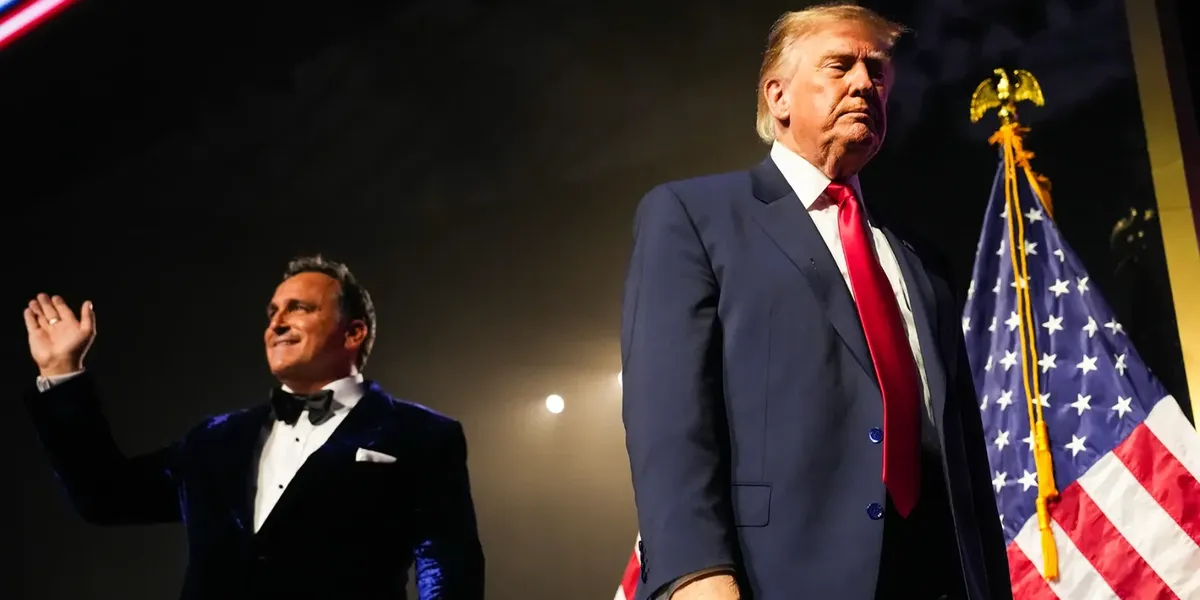

Republicans spent two days celebrating the president in Texas. It's unlikely to have helped the party's chances in November
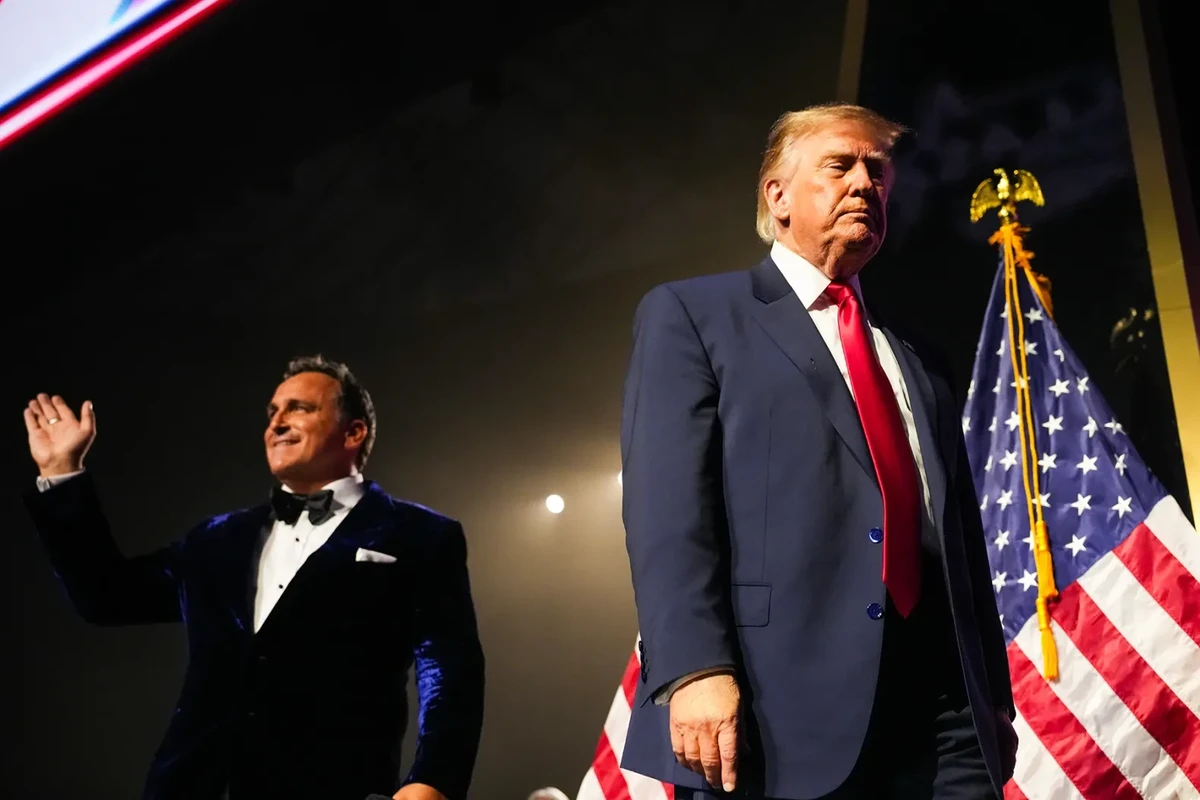
Donald Trump is joined by opera singer Christopher Macchio to conclude the Republican midterm convention, on Sept. 10, 2026 in Dallas.
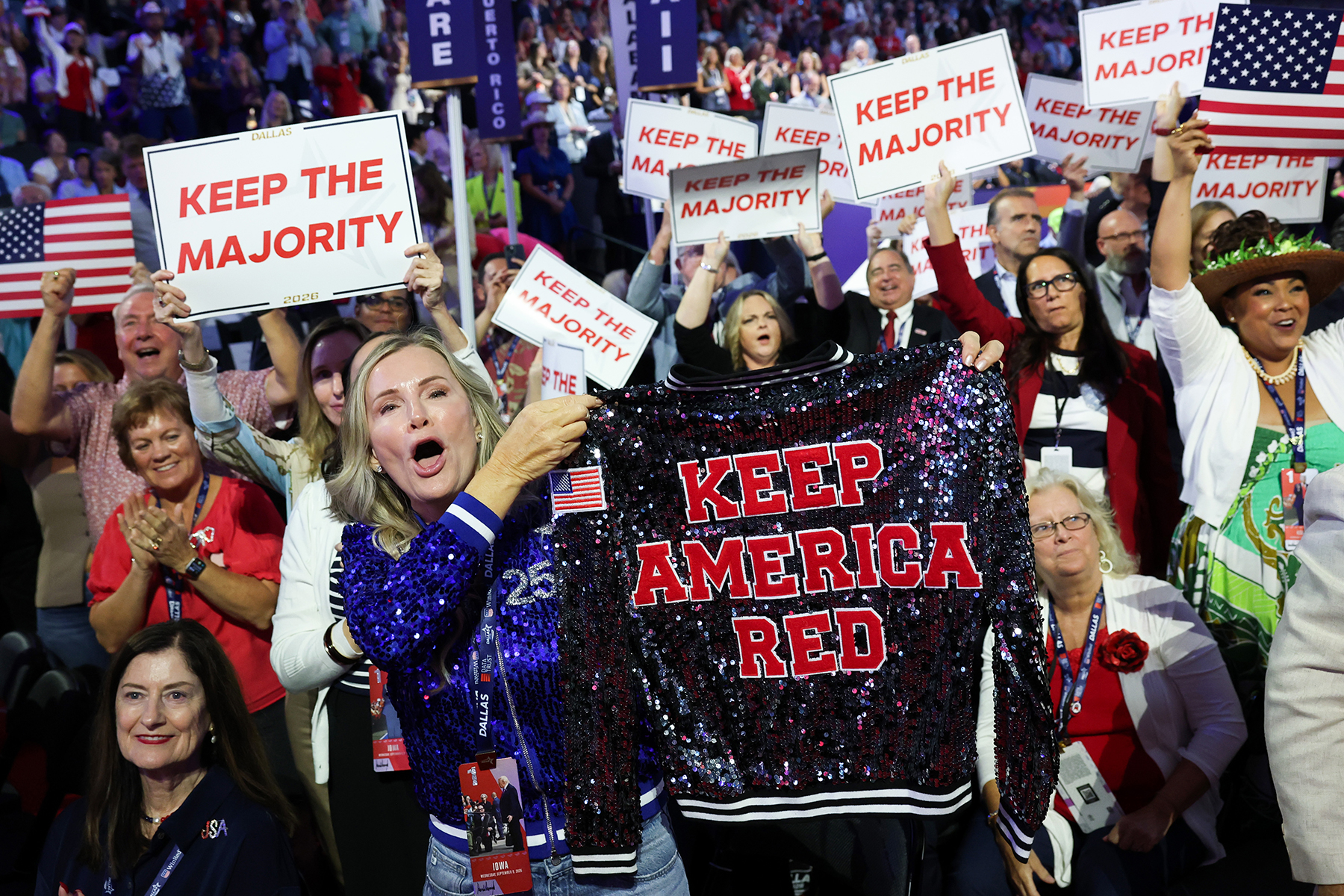
It’s 3:42 in the hot heart of Texas, and the floor of the American Airlines Center in Dallas is a blood-red miasma of dancing elephants. Under the moody crimson lights washing over the crowd at the first ever Republican (Midterm) National Convention, middle-aged peroxide blondes in sparkly American flag cowboy hats sway to the raspy belt of Bonnie Tyler’s “Holding Out for a Hero.†Men in suits and silver belt buckles and leather boots sheepishly bop the “KEEP THE MAJORITY†signs distributed by organizers. The stage is empty right now. Large, menacing images of Joe Biden, Nancy Pelosi, and Kamala Harris loom over the crowd. None of them are running this cycle.
If I look directly across the floor, toward the entrances to the still mostly empty box seats and nosebleeds, the bright white doorways catching the daylight of downtown Dallas are harsh and blinding. Outside the air-conditioned arena, there’s a fight raging. The GOP is at war with itself and its voters. The casualties of this political cycle — spiraling around Donald Trump’s war-ravaged, economically disastrous two years back in office — will likely touch every Republican state delegation.
But the president wants a party, and you can’t dance with the lights on.
Eighteen months ago Dallas would have been an auspicious location for this event. Trump, the keynote speaker for the first night of the two-day conference, made generational gains among Hispanics in 2024. Governor Greg Abbott promised to carve out five shiny new Republican House seats into the state’s electoral map. The Lone Star State had become the southern Mecca of the techno-conservative revolution looking to find roots outside of Silicon Valley. But the right’s gains among Hispanics have been erased, a Democrat is well-positioned to win a Texas Senate seat for the first time in decades, and one can’t help but notice the sense of panic permeating the GOP’s biggest party of the year.
It’s obvious what the president had in mind in pulling this party together. The scene feels like a pantomime of the 2024 nomination conference, held as Democrats scrambled to find their footing amid ever-intensifying concerns regarding Biden’s ability to govern, much less campaign, and just days after Trump narrowly survived an assassination attempt in Butler, Pennsylvania. This week, a large photo of the now-president and the bandage he was sporting over his ear during his nominating convention hangs conspicuously on one of the arena’s concourses. The one-year anniversary of the assassination of right-wing activist Charlie Kirk — which coincided with the second day of the convention — supplanted Trump’s close call with death as the avatar for leftist violence against persecuted conservatives. Republican after Republican trotted out the same lines of attack that propelled them to victory two years ago:
Killer migrants that rape and murder angelic young women. Leftist radicals looking to inflict police-free anarchy on American cities. The mutilation of children being subjected to horrific sex change surgeries. The threat of Sharia Law from Arab and Muslim Americans — like Zohran Mamdani, Abdul El-Sayed, and Hasan Piker — and the looming scourge of a communist, democratic-socialist takeover. Bread lines and authoritarianism are certain under Democratic rule, Donald Trump Jr. insisted. You may not be happy with us right now, but it could be so much worse.
“I’m not asking anybody to agree on every single policy of the administration; what I am asking you to do is to recognize the contrast with the radicals and recognize the achievements of the last 18 months,†Vice President JD Vance pleaded with the audience during his Thursday night keynote.
The president self soothes via adulation. Yet even in his own Wednesday night speech, Trump reluctantly acknowledged “it’s going to take a little bit longer than the midterms†to normalize the spike in energy prices caused by his ongoing war in Iran. He attempted to blame the ongoing affordability crisis on his predecessor and the Democratic Party. To his and the GOP’s frustration, voters — particularly independents — are not blaming it all on the opposition. They have handed Trump a historically low approval rating, and are tossing MAGA aligned Republicans out of Congress in primaries. The convention was nowhere near at capacity, despite local offers of free tickets and a lineup of MAGA favorites. In the absence of a clear argument for why voters should continue to trust the mercurial, impulsive, self-serving men dictating the direction of the party, Trump is turning to outright bribery.
“If the Republicans win, you win with us and you get $5,000. It will be called the Trump dividend. Congratulations,†Trump told the audience on Wednesday night. Vote Republican, you might get $5,000. It screams confidence in your prospects, does it not? Never mind that Republicans currently control both chambers of Congress, and that if this was about anything other than attempting to buy votes they could pass — or make a show of attempting to pass — the payments before the midterms. Never mind that Trump has repeatedly promised no-strings-attatched government checks that never materialize. Never mind that the tariffs that would supposedly fund the payments haven’t generated even a fifth of the revenue that would be required. Never mind that — as Senate candidate Ken Paxton was reminded in a live interview with Fox News’ Bret Baier — these people are supposed to be fiscal conservatives.
Even among the Trump-friendly crowd, there was a degree of skepticism. “I don’t think that a political promise should be made like that,†one woman told me. “The votes don’t come from being bought, so yeah, I’m a little disappointed.â€
Two young men — locals who said they attended the conference mostly out of curiosity — said the promise was the “stupidest thing†they’d heard from a politician.
The promise crystallized the rot at the core of the convention: the party’s total inability to respond to the concerns of the voters they need to retain from 2024, and insistence on filling the void with culture war dog whistles and cult-like devotion to Trump. Several high-profile candidates seem to realize this isn’t a recipe for success this November. Maine Senator Susan Collins — facing a tight reelection battle in Maine — was conspicuously absent, as was Alaska Senator Dan Sullivan. Several candidates in critical House races considered potential tossups also ditched the president’s festivities, including Reps. Brian Fitzpatrick (R-Pa.), Maria Elvira Salazar (R-Fla.), Rep. Zach Nunn (R-Iowa), and David Valadao (R-Calif.)..
Those who did make their way to Dallas played second fiddle to the president, vice president, and members of the administration. Paxton, a host candidate caught in an incredibly tight race to preserve the last three decades of Republican dominance in Texas, became a punchline in Trump’s monologuing.
“I don’t like the way Ken Paxton dresses. I don’t really like the way Ken talks. I don’t really like the way he looks. I don’t like it,†Trump said of the attorney general, who has been nothing but subservient and loyal to his agenda. Paxton, perpetually putty faced and on the spot, made a halfheated attempt at a forced smile. It was not reassuring. The party honored him and his service to the MAGA movement by putting him in a forgettable time slot where he delivered a forgettable speech in which he highlighted Trump’s record over his own and warned that his opponent James Talarico “wants to transition your kids.â€
Trump made fun of Paxton again while speaking on Thursday. “I said something yesterday, and I don’t know if he’ll ever talk to me again,†the president said before repeating the same insults.
Greg Abbott, who has governed the state for over a decade, promised to “fully ban Sharia Law in Texas,†a state with less than 500,000 Muslim residents within a population of 32 million. He promised to ban China, Iran, and Russia from buying land in the state — as if they were readily able to do so in the first place. “The Democrats running on the ticket in Texas, they’re gaslighting the public about affordability,†as if economic concerns and inflation aren’t the issues of top concern to Texas voters this cycle.
Republicans begged voters to preserve the Republican trifecta for just two more years. Just until 2028, then we can fight about who was at fault for the collapse of the economy, and the war in Iran, or the unraveling of our alliances. “Can we please, we’ve got to take care of business this November, then we’ll worry about what comes next,†Vance asked the audience at one point. His speech felt like the sort of address one would give once they won the nomination, the soft launch of ambitions beyond the vice presidency. But this is, and always has been, and for the foreseeable future will be, Trump’s party. No second in command will be permitted to outshine him.
Whatever glow Vance was basking in was quickly dimmed under the radioactive sun of the president. Who wrote himself into the second night of programming and — just to drive the point home — reiterated his first night demand that voters imagine that it’s him that’s on the ballot.
As Trump closed out the night, American tenor Christopher Macchio belted “Nessun Dorma†as a rain of red, white, blue, and gold balloons fell from the ceiling. The aria, performed in the third act of Giacomo Puccini’s opera Turandot, is a favorite of the president.
Trump smirked into the audience alongside Macchio as his voice arced towards its final crescendo. “Vincero, vincero, vincero.â€
“I will win, I will win, I will win.†A declaration by the prince Calaf that he will secure the hand of the princess Turandot, whether she wants it or not. The chorus surrounding his avowal is that of Turandot’s subjects, lamenting fate.
Trump was totally alone onstage as he listened.
I once had a conversation with Barack Obama about the nature of terrorism. This was during his second term, and he’d been going on for a few minutes about how Islamic terrorism wasn’t actually an existential threat to Americans, but rather a chronic and manageable risk. I was all too familiar with this argument, having conducted the interview with John Kerry in 2004, in which he said terrorism could be reduced to the level of a “nuisance†— a quote that blew up on him during the final weeks of the campaign. I found Kerry’s answer problematic then, and I had the same reaction when Obama said it. I asked him pointedly: What would have to happen for him to decide that terrorism was, in fact, existential? How about a suitcase nuke on a subway car? Then would he concede that terrorists were more than criminal gangs?
Obama didn’t hesitate. Terrorism would only reach the level of an existential threat, he told me, if Americans responded by abandoning their own values and turning on one another. There was nothing a bunch of homicidal zealots could do to destroy the most powerful country on Earth, but we could certainly destroy ourselves if we abandoned our constitutional protections in a fit of panic.
At the time, this struck me as something you might expect to hear from a constitutional-law professor, but not necessarily from the president of the United States. There was an intellectual fatalism about Obama I sometimes found disconcerting — a sense that he saw himself as a twig in the river of history, and it was up to the rest of us to change the current. I doubt he would dispute that assessment. But I thought often of that conversation a few years later, as the country careened into the Trump era. And as we pause now to reflect on the 25 years that have passed since the attacks of Sept. 11, I find myself thinking about it again.
Alternative histories are a tricky business, best left to novelists and sci-fi filmmakers. As a friend of mine in politics likes to say, mockingly, whenever such theories get floated: What if Hitler had won the Civil War? And yet, it’s hard not to see a direct line between the events of 2001 and where we are today — and to wonder how different the country might have looked had it never happened. On the eve of the devastating attacks on the World Trade Center and the Pentagon, George W. Bush’s young presidency seemed to be wobbling. Absent those attacks, he might well have been a one-term president, and he almost certainly would not have invaded Iraq. Nor would Democrats become backed into defending the entrenched war in Afghanistan as the “good war†— a way of differentiating their own response to 9/11 from Bush’s without sounding reflexively pacifist.
Without the economic shock of 2001, it’s unlikely that desperate policymakers would have looked the other way while lenders, underwritten by the government, turned the housing market into a casino, leading to the second massive blow of the decade: the market collapse of 2008. All of these things, in quick succession, destroyed what remained of the public’s faith in its governing establishment, leading directly to Obama’s stunning takeover of the Democratic Party and, later, to the election of Donald Trump.
The Trump I met in the late 1990s, while he was flirting with an independent run for president, held himself out as a centrist reformer, in the mold of Ross Perot. By 2015, when he started running as a Republican, Trump had fully embraced a reactionary, white-nationalist movement — a response to Obama, yes, but also to Bush, whose instinct in the months after 9/11 had been to speak out forcefully in defense of Muslim Americans, and whose support for liberalized immigration infuriated much of his party’s base. Trump’s core appeal then, as it is now, was rooted firmly in the nativist, anti-globalist backlash that emerged in 2001. (According to Pew Research, roughly 42 percent of Americans believe Muslims are having a negative impact on the country.) The animating idea of Trump’s second term is that white, English-speaking Americans are the only authentic Americans. It shouldn’t be controversial to say that he will twist or shred any page of the Constitution to enact this vision, since he really makes no effort to conceal it.
Nor is America’s hard turn away from pluralism and liberal democracy happening in a vacuum — far from it. In the past decade, similarly reactionary, anti-immigrant movements have rocked Britain and taken over Italy, and they now seem poised to wrest power in France and Germany. Maybe some of this would have happened without 9/11; the hollowing-out forces of globalization and automation were already fueling plenty of economic fury here and in Europe by the turn of the century, and the revolution in social media wasn’t far off. But there’s little doubt that the “War on Terror,†which became the first real foreign policy framework since the end of the Cold War, focused all of that anxiety toward an identifiable enemy, fracturing societies that had been held together by a 50-year consensus around personal liberties. If Obama were being honest, he’d probably say he told me so, and he’d be right.
IN THE MONTHS after 9/11 and before the invasion of Iraq, it was hard to get much perspective, and genuine patriotism mixed — as it always does — with a series of mindless gestures and clichés. Flag pins became mandatory even for reporters, peace songs were effectively banned, Republicans brought “freedom fries†and “freedom toast†into the lexicon to protest French misgivings about war. It became rote for politicians to say that the terrorists hated our way of life and we would never let them win. (To this day, when my dog snarls at some terrified Shiba Inu for no reason, I ask her why she hates freedom.)
Twenty-five years on, though, with the benefit of distance and experience, we can ask some questions we couldn’t ask then. And one of them is what the violent extremists who sent those suicide planes into our buildings really hoped to achieve. Did Osama bin Laden think he could win a holy war with America? Did we ultimately frustrate his script for the downfall of the West, or did we simply play our part?
Terrorism is, by its nature, asymmetrical. Whether it’s the Viet Minh under the French, or the IRA in Britain, or Al Qaeda, there’s an inherent understanding that the terrorist can’t win a conventional war against an obviously superior military force. What the terrorist seeks is destabilization of the status quo. His desperate act is an igniter in search of fuses; the goal is to set off a chain reaction inside the fortress that can’t be controlled, to disrupt order with chaos and see what shakes out. The terrorist knows this will likely cause his own people suffering in the short run, but that’s part of the point. He believes the occupier to be a soulless monster, and by reducing it to its basest instincts, he hopes to bare its nature to the world.
We’re seeing this play out, in real time, in Israel. The leaders of Hamas, their military options exhausted and their political goals slipping away, could not have been under any illusion that they would drive out the Israeli occupiers by savagely killing and mutilating more than a thousand innocent people. They must have hoped that Israel would react with blind fury and cruelty, resorting to the instinct for all-out annihilation that its leaders had long managed to suppress. Nearly three years later, Israel has tumbled from legitimatized power to international pariah, its politics riven by disunity, its moral authority in shambles. Do we think Hamas really cares that more than 70,000 of its own people have died in the carnage? Its repugnant leaders almost certainly consider that a cost worth paying in the broader context of history. What they have achieved, in political terms, has exceeded their most feverish dreams.
The Israelis should have looked across the Atlantic and learned something from our own experience. America on Sept. 10, 2001, was an unchallenged superpower at peace — vexed by social and economic divisions, yes, but still stable enough to survive a disputed election with its political consensus intact. A quarter century later, we find ourselves fighting a third unsuccessful war in the Middle East, our society more divided and our politics more poisoned than any time since the 1800s, a foundation of laws imperiled after 250 years of durability, immigrants hunted down like animals by masked agents, violence and extremism on the rise from both right and left, truth and intellectualism in retreat. This is not solely the fallout from Sept. 11, 2001, but it is the result of a series of events that, were you able to hit a rewind button and live it all again in reverse, would lead you directly back to that day. If bin Laden meant for his attack to be the first in a series of similarly epic crimes, then he was soundly defeated — no small achievement for American soldiers and spies. But if his goal was to destabilize America and bring out the worst of our nature, then he may have pulled off the most successful terrorist attack in history.
Over and over we told ourselves, in that agonizing moment, that the terrorists would never win. A quarter century later, it’s getting hard to argue they didn’t.
Donald Trump speaks on stage on the first day of the 2026 Republican National Convention at the American Airlines Center on Sept. 9, 2026 in Dallas, Texas.
Not a single ballot will be cast for Donald Trump in the 2026 election, but the president is top of mind for Republican candidates facing electoral tests in November. Day one of the 2026 Republican convention — the first ever held during a midterm election year — kicked off in Dallas on Wednesday. The event ostensibly serves to give Republicans the first word in the final sprint towards Election Day, where polls predict that despite coordinated attempts at gerrymandering, voter disenfranchisement, and intimidation, the party is expected to take on heavy losses as voters revolt against the last two years of Trump’s chaotic governance.
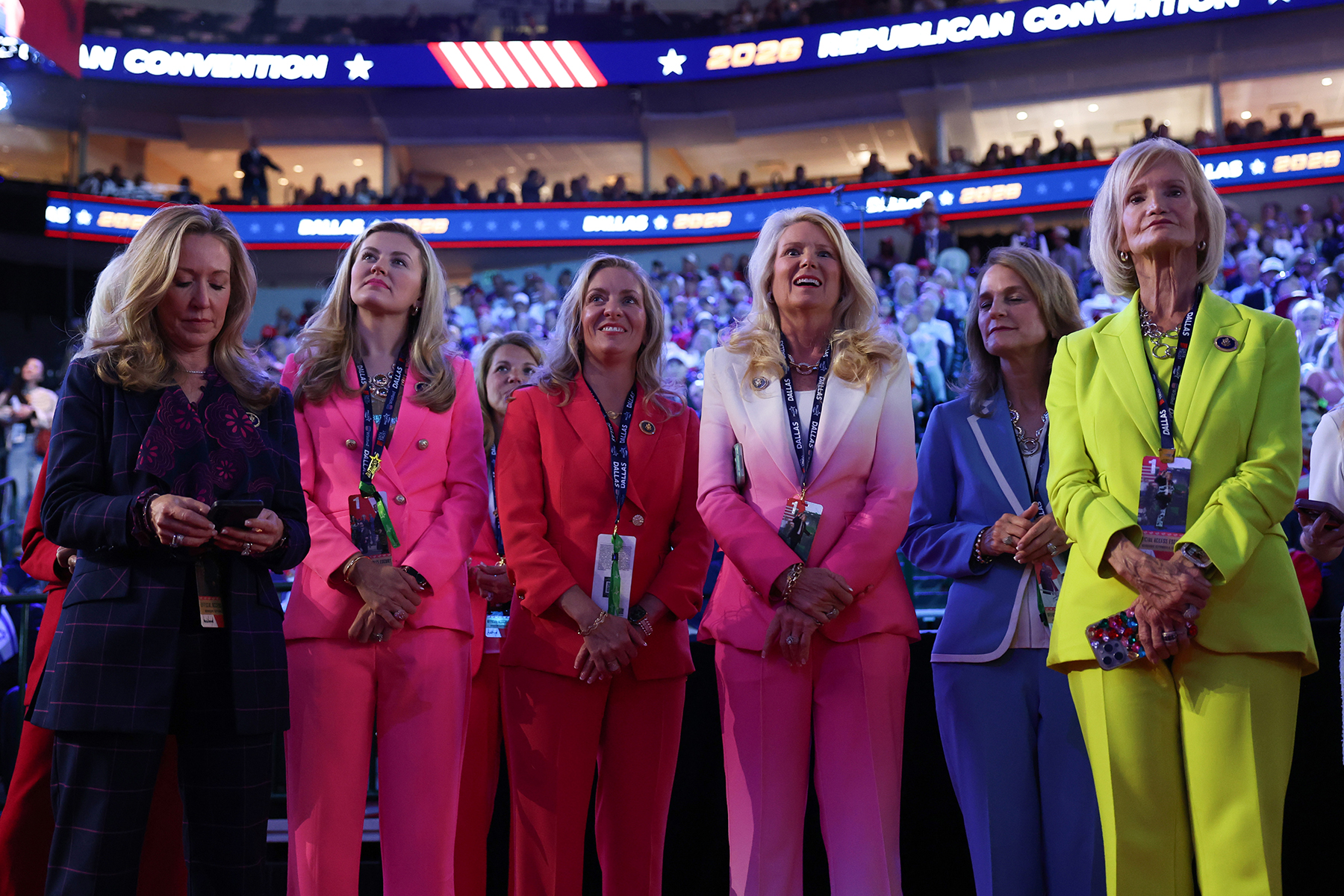
Under those rosy prospects, what could help more than a massive, televised production placing the historically unpopular president at the center of the party’s electoral strategy? Gallery images of Trump decorated the hallways along the suite and media levels. His face is plastered on every access badge. The official merch store was abundant in Trump’s signature MAGA hats, “Trump Was Right About Everything†hats, and large stacks of Eric Trump’s book Under Siege. Fox News set up a broadcast center facing the stage, where a revolving door of GOP notables sat for interviews and panels. And yet, as the hour of Trump’ s keynote address arrived, large swaths of the arena remained empty. American flags had been taped to seats in balcony sections, perhaps in an attempt to trick the eye into seeing occupancy where there was none.
The floor was grouped by state delegation despite there being no candidate to nominate. Attendees sang along with Lee Greenwood’s “God Bless the U.S.A.†as the president took the stage. Behind him, a large screen began to glitch out, ripping through hours of footage in milliseconds while chromatic neon blocks interpolated through the video. Someone eventually pulled the plug on the visual metaphor.
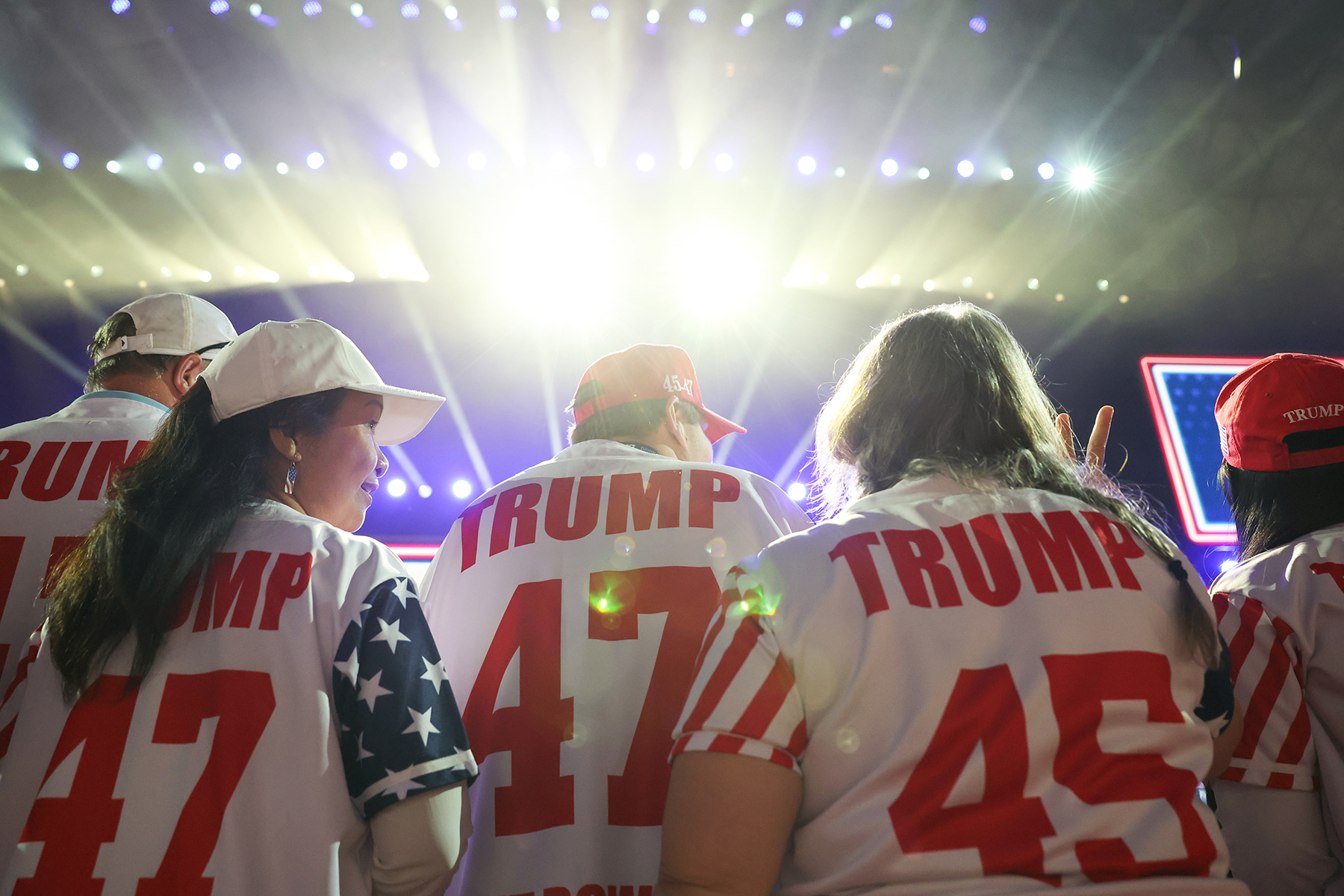
Those who attend a national party convention are usually devotees of their respective party. In this year 2026, devotees to the Republican Party tend also to be devotees to Trump. In the arena, no one gets louder cheers than the president, but even this cohort of attendees are nervous about the party’s prospects.
“I’m cautiously optimistic,†Ken Miller, an older gentleman in a MAGA hat, dress shirt, and vest who had accompanied his son to the conference, tells me as we chat in the main concourse. Miller had moved to Texas from Alaska just about a year ago, and was not exactly bursting with confidence over Attorney General Ken Paxton’s performance as the Republican Senate nominee. “Some people are better at messaging than others,†he explained, referencing Paxton’s Democratic opponent James Talarico, who has so far maintained a slight lead in the polls. “Some people are highly sophisticated in the new ways of messaging, and sometimes Republicans act a little bit like they’re behind.â€
“I think he’s basically a good attorney general,†Miller adds of Paxton, “but he’s got baggage†and “needs to be†a little more inspiring if he’s going to go the distance.
Paxton may not be oozing charisma, but effective messaging is a tall task for any MAGA Republican, considering Trump’s tanking approval numbers. Candidates are well aware of the difficulty, so much so that plenty of embattled Republicans facing narrow races skipped the event, seemingly fearful that too close of an association with the ever-unpolular president would become an anvil to their own prospects. Maine Senator Susan Collins, Alaska Senator Dan Sullivan, and Michigan Rep. Tom Barrett are just some of the notable names ditching Dallas.
Trump claimed earlier on Wednesday that the only reason Republicans in competitive races skipped the event was because there was “no room†for them. It was more likely related to the fact that his polling is hovering in the mid to low 30s, around “Nixon is about to resign†levels. Nevertheless, he thinks he’s the key to midterm success. “I’m asking you to pretend that I’m on the ballot. I’m on the ballot,†Trump implored attendees and viewers alike. He spoke for over 90 minutes. (The original schedule circulated by organizers estimated his remarks would only take 45.)The prospect of a midterm underperformance was very clearly on his mind.
“For some reason, when a president wins — even if he’s really a good president or a great president, there aren’t too many of them — they don’t win the midterms, and nobody quite knows why,†he mused. “A president, Democrat or Republican, almost never wins the midterms. We’ve got to change that because we have something going that’s so good we can’t let that string be broken.â€
In an attempt to stave off what feels like an almost inevitable electoral walloping, the president is re-upping his offer to pay Americans to keep him and his party in power. This time offering a $5,000 tariff “dividend†to every adult if Republicans manage to hold both the House and the Senate. He has previously offered payouts of $5,000 from the “savings†generated by DOGE (it cost more money than it saved), $2,000 tariff dividends (that never materialized), and other similar bonuses around the $1,000 mark.
It stinks of desperation, of a party that cannot agree on anything besides the need to appease a petulant president, even at the risk of their own electoral success. The midterm conference was not a carefully managed event curated to the tastes and concerns of the independents and moderates who have become skeptical of the party’s extremist policies, but a culture war bonanza intended to reignite the appetites of 2024’s electorate. The terrors of undocumented migrants, the threat of transgender ideology, the looming menace of sharia-law-Hasan-Piker-communism were the focus in Dallas, while the affordability crisis, which the president has deemed fake, was blamed on Biden or written off altogether.
“We’re concerned that they’re not listening to the common man,†Mary, a tall, graying woman from Tennessee told me in the convention merch shop. “Because when I have to go and [help] buy a house for my child, and both her and her husband are working, that’s bullshit. … It’s like we’re arguing about the curtains, the dishes, the furniture, and all the while our foundation is just crumbling.â€
Canadian Prime Minister Mark Carney speaks at a press conference in Ottawa, Ontario, on Aug. 22, 2026.
In Canadian Prime Minister Mark Carney, Donald Trump has finally met an adversary who truly understands the art of the deal — and it could threaten the entire premise of his presidency.
There have been many self-inflicted catalysts to Donald Trump’s ruination: epic corruption, inflation and the soaring price of gas, the ceaseless angry old man posts and memes, ICE’s assault on the rule of law, the Supreme Court’s mullah-like extremism, his vanity, self-pity, cruelty, and of course the unprovoked, catastrophic failed war on Iran. They are all derived from Trump’s delusional belief in his nonexistent superpowers. But the downfall of Trump will also be forever dated to a small, inexplicable and quixotic folly: his attack on Canada.
Despite the president’s incessant, bizarre claims that he can destroy Canada economically as he wages a trade war against America’s neighbor to the north, in the last few weeks Prime Minister Carney has quietly but effectively ended Trump’s ability to lead the free world in any way other than as an extortion racket and disorganized crime syndicate.
In a potlatch, in the tradition of indigenous peoples of the Pacific Northwest, a head man would display his tribe’s wealth and power by lighting their most precious possessions on fire. The destruction appeared pointless to European eyes, but First Nations peoples understood the significance of the rite: If the chieftain of the tribe could squander incredible riches, what possible hope did a rival have in waging war against such an overwhelmingly powerful enemy? The mindless waste of resources in a potlatch, as every Canadian schoolchild learns, was actually a finely tuned demonstration of dominance, and a way to avoid conflict.
Trump, the self-described big chief of America, has concocted a new and perverse version of the potlatch that better resembles setting himself on fire. By lawlessly declaring an unprovoked trade war on Canada, Trump has set alight the most valuable assets of the United States: international alliances, the Constitution, respect, friendship, trust, goodwill, the rule of law (hell, the whole idea of law). Instead of displaying his power, Trump has demonstrated his fundamental weakness and loosening grip on reality. In Trump’s form of chaotic destruction, with his historical illiteracy and rat-like cunning combined with his desire to humiliate his perceived enemies, he isn’t pursuing trade policy or a geopolitical strategy. For Trump, domination is the point. The absurdity of farmers and fishermen and auto workers on both sides of the Canadian border having their lives set ablaze in service of the president’s ego trip is the end in itself.
Measured in a simpleton’s economic terms, America appears to have the upper hand in a trade war with Canada. The economy of the United States is more than a dozen times as large as Canada’s, so a trade war that represents a national cataclysm north of the border will barely register in Trump’s America. Trump’s pretextual use of an alleged “trade deficit†to justify his trade wars is concocted according to his whims, urged on by fanatical anti-trade sycophants and enablers, the ever-changing metric a means of blackmail, the nonstop stream of insults and half-witted social media posts somehow managing to be simultaneously enraging and mind-numbingly boring to my fellow Canadians.
“Just watch,†Trump trolled last week as he promised to gratuitously punish Canada, like an old drunk sitting in his underwear yelling at his television set — only with the powers of the commander-in-chief. “All we have to do to cut our trade deficit with a country is not trade with them,†he said in the Oval Office over Labor Day weekend, adding that America will also stop trading with Europe, Mexico, and Switzerland, threatening in one unhinged rant to end trillions of dollars in commerce. As if to underscore his madness, he followed it up with a meme showing the American colors covering all of North America, as well as Greenland and Iceland. But for reasons known only to himself, he has focused his true menace on my home and native land: “If we don’t do any trading with Canada, if we just end all trade with Canada, we’d save ourselves $90 billion. Canada would be in a heap of trouble. I don’t think they’d exist. Because, again, they do 95 percent of their business with us.â€
If you don’t think this is the unhinged talk of a confused old fool showing signs of dementia, take a look at the bond market.
After Trump illegally breached America’s free trade agreement with Canada last year, imposing tariffs that were based on transparent lies about fentanyl crossing the border, he proceeded to gaslight America’s ally with a steady stream of infantile ALL CAPS derision.
Living inside a constant reality TV show, with fake deadlines and formulaic melodrama, Trump then imposed a 30-day timeline for a new accord, or he would unilaterally impose additional 50-percent tariffs relying on a never-before-used statutory justification — a preposterous gambit under America’s binding trade treaty with Canada. Confronted with the prospect of constantly changing trade terms in an increasingly lawless America, Prime Minister Carney didn’t take the bait, engaging in talks in good faith but with eyes wide open (and elbows up, as they say in Canada). Using one of the oldest tricks from an increasingly pathetic and obvious set of bullying tactics, Trump then prematurely announced that a deal with Canada had been reached when there was no such agreement — an attempt to box Carney in. But again, Carney didn’t cave like so many other world leaders.
Like the many con men I’ve written about over the years, Trump is convinced of his own genius, certain that the world is a ship of fools and that he — and he alone — can see through the tissue of lies and deceptions. The problem, inevitably, is that grifters are never as smart as they think they are, a fatal flaw compounded when they start to believe their own lies — and then encounter someone who can see through their act.
As his second term has illustrated, Trump is certain that everyone will cow in the face of his “Hulk Smashâ€: the Supreme Court, television networks, Ivy League universities, white shoe law firms, the abject former UK Prime Minister Keir Starmer chasing after the president’s windblown papers like a schoolboy — an image that quickened his downfall. Changing the basic terms of the proposed agreement at the last moment is a classic power play in any negotiation. So it was with Canada this summer. At the last minute before Trump’s invented time limit expired, as the clock ticked towards midnight, Trump’s minions attacked Canada’s profoundly important French culture — ridiculing the notion that there is such a thing as a distinct Canadian nation at all. He slapped tariffs on the automobile industry, lumber, steel, aluminum, and for kicks and giggles, hockey sticks to shove his version of reality directly up the ass of the milquetoast Canadians.
Under the new terms Trump purported to impose, the United States (which is to say Trump) would have control over any other Canadian trade agreements. Trump then reserved the right to change the deal at any time in the future, for any reason, with no notice — meaning the deal wouldn’t be worth the pencil it was written in, as Carney noted.
Lake Ontario, that’s now Lake America, and your prime minister is a governor, and you’re going to wish that you were the 51st state by the time I get through with you.
But then something bizarre happened to Trump’s bonfire of the vanities. In Carney, the president discovered that he had encountered a man who was not looking for a fight — but who equally wasn’t afraid of him. For all the bluster and menace and braggadocio, Trump didn’t realize that he had walked into a trap. By agreeing for negotiations to happen this summer, a year ahead of the larger deal for the renewal of the North American treaty, Carney had picked the time and place for the inevitable looming confrontation; with Trump vulnerable in the coming election, the canny Carney had managed to create real leverage. Carney then cleverly enlarged the dispute and raised the stakes by accurately calling America’s attack a declaration of war, surprising the flat-footed American negotiators who apparently didn’t take Trump’s threats seriously themselves — adding another layer of leverage to Canada’s supposedly weak hand.
In Carney, it turned out, Trump has met a leader of real strength, the understated but steely and confident kind reflecting Canada’s national character. The irony is that Carney was elected last year almost entirely as a result of Trump’s Kafkaesque trade war, defeating a weak-kneed conservative who very likely would have meekly submitted to America’s neocolonialist threats. Another irony is that the politically inexperienced Carney turns out to have genius-level instincts. The whippet-thin banker is an unassuming figure, the opposite of Trump, but every bit as ruthless in his way. He is a self-made man and intellectual with degrees from Harvard and Oxford, who epitomizes the meritocracy. The child of schoolteachers in the far north Alberta, raised in a home that prized education and social responsibility, Carney earned his way to the absolute heights of global finance through his intelligence and diligence. His resume is almost a parody of accomplishment, with stints as the head of the banks of both Canada and England, as well as years with Goldman Sachs and working for the likeminded businessman-turned-politician Michael Bloomberg. Faced with the global financial crisis of 2008 and then Brexit, Carney witnessed the idiocies of economic self-destruction in the 21st century, preparing him with a unique set of experiences to confront Trump’s lawless trade war — to Canada’s great good fortune.
In truth, Carney was elected specifically to deal with such a crisis, and Canada has had decades to prepare for this conflagration. Living next to an elephant requires a certain amount of caution and awareness, so Canadians understand American politics down to the last looney. Knowing your enemy is the greatest asset in war, as the ancient Chinese philosopher Sun Tzu said, and Carney’s deeply intimate awareness of America gives him the ability to exploit Trump’s obvious weaknesses: a thin skin, hubris, impulse control, arrogance
Plan beats no plan is a truism of all crisis management, an acknowledgement that any executive, sports coach, or sentient human being understands. If you want to shape events and succeed, do the work to anticipate and understand what lies ahead so you don’t live in a state of constant surprise, chaos, and disarray. Planning is also the ultimate expression of Carney’s life force, the guiding principle of his meticulously accumulated achievements and triumphs. While Trump, like so many fools throughout time, doesn’t read or listen to contrary opinions or care to prepare, trusting his gut and native intelligence, Carney is a careful student of power dynamics and the deep lessons of history. Control what you can control, Carney explains to Canadians as he describes the need to diversify and de-risk the relationship with a declining United States. Europe might seem distant geographically, but Russia’s attack on Ukraine and self-inflicted withdrawal of its resources from Europe present an opportunity for a resource-rich nation like Canada. Membership of the European Union seems fanciful now, perhaps, but there is no question that Canadian distrust of America is hardening into real anger and dismay. The same logic applies to the countless opportunities in Asia, with Carney traveling the world signing new free trade agreements as Canada pursues a strategy to end its dependence on the undependable Americans. There is also no turning back the clock as Canada duly notes how few friends it really has in the political and media classes of the United States.
Given Trump’s use of Manhattan real estate brute force strong-arm tactics, imagine Carney’s eyes lighting up when he realized that American negotiators were attempting to attack the French-speaking peoples of Canada and the entire notion of a national culture. There was obviously no way the Canadian people were going to accept such humiliation and subjugation at the hands of an amoral gangster. As Trump’s designated thug Howard Lutnick piled on the bad faith, last-minute demands, it became evident that Carney had no choice but to walk away — despite the awful short term pain America could inflict.
Thus Carney’s plan has been put in action, with the backing of a nation unified in outrage at America’s belligerence. Trump can harm Canada, but that street runs two ways. By standing up to Trump, Carney has lured him on to the economic battlefield at the precise moment when his presidency is collapsing, with the calamitous midterm elections looming. Tight races are being run in many states that are heavily dependent on trade with Canada — Ohio, Maine, New Hampshire, Michigan, Wisconsin, Pennsylvania, Alaska — the exact jurisdictions Canada will target with long-planned tariffs aimed at specific economically sensitive economic sectors, in order to increase the pressure on the ill-prepared president.
Apart from cheap shots and idiotic put downs, Trump has no history of seeking compromise and no real plan in response, as usual, apart from lashing out like a cornered animal. Trump also has vanishingly little popular support in America for his personal grudge match with Canada, an obsession that looks weirder with each passing insult. The struggling North American car industry has been jerked around by Trump’s vengeful destruction of the electric vehicle, losing billions in the process. and taxes described as tariffs will make life even more unaffordable for working American consumers. Uncertainty and unpredictability are lethal to any investment strategy, as actual business people and union leaders understand. Across the rust-belt industries Trump proclaims he is protecting, his tariff-taxes are disrupting and distorting markets and driving up costs for no purpose other than his insistence on harming America’s neighbor and ally, an enemy only in the president’s fevered imagination.
But to what end? It’s a question with no sensible answer.
Many Americans like to think foreigners draw a distinction between Donald Trump and themselves. But this self-serving piece of evasion is rapidly disappearing for Canadians, as the United States wages a war of aggression to impoverish a friendly nation, and heedlessly attack its history and sense of place and purpose. When Trump threatens the Canadian dollar, implicitly saying that he will do all he can to make the country economically uncompetitive, the statement is front page news in Canada, while it barely rates a mention in the American press. The American politicians who register tepid defenses of Canada are remarkable not so much for standing up for their neighbor or the rule of law, but for how few and far between they are — and how feckless.
As the trade war escalates this week — or evaporates into another TACO (Trump Always Chickens Out) — the damage done to America’s reputation will be lasting. Once American arrogance is seen in broad daylight, it suddenly is everywhere, in Secretary of Treasury Scott Besant likening Canada to a “yipping dog,†or in former President Barack Obama distractedly turning up to a speaking engagement in Toronto carrying his cardboard coffee cup as if he can’t wait to collect his fee and return to Chicago to gaze admiringly at the shrine he has built to himself.
Damnatio Memoriae is the Latin term for the ancient Roman ritualistic destruction of all memorials to a tyrant, a kind of reverse branding deal with posterity that Trump is furiously trying to counteract with his White House bunker and ballroom and sad sack victory arch that memorializes no victory — structures very likely to be torn down or repurposed when Trump’s presidency expires.
With a mid-term election tsunami gathering force, Trump has already become a lame duck in the eyes of the world, albeit a particularly dangerous one facing richly deserved corruption investigations and possible impeachment. But the damage to the nation’s brand as ugly Americans and wannabe neocolonialist hegemon will be impossible to erase. As the trade conflict intensifies and Canada retaliates in a measured defensive way, taxing golf clubs to counter Trump’s childish hockey stick impost, Trump’s impulsive provocations will only reveal his inability to formulate anything like the concept of a winning strategy. When reality descends and he leaves office or is forced to finally end his mindless war and inevitably declare himself the winner, as his fragile manhood requires, Trump will further diminish himself and his country in the eyes of the world. Under Trump, America risks ending up like the president: alone, lost, friendless.
Despite Trump’s flailing efforts at waging a mutually destructive internecine war, foreign investment is growing in Canada, with a summit taking place this month for investors representing a trillion dollars to extol the virtues in backing a reliable, trustworthy country governed by the rule of law. Holding Canada’s main weapons in reserve, in accordance with Carney’s disciplined plan, if necessary Canadians can fight back with damaging export taxes on oil, gas, electricity, potash for America’s farmers — truly damaging countermeasures that will be employed only as a last resort. But Canada is already showing the world that it is possible to defy Trump, even when the country has so much to lose. Bullies like Trump can’t survive defiance because it reveals their true nature. In that sense, Mark Carney has become the new leader of the free world, fighting on behalf of nations too afraid to confront the American despot. As a result, incredibly, under Carney’s leadership Canada is becoming a kind of law-abiding underdog badass outlaw nation, in its understated but determined way — a reality I could palpably sense when I was in London in recent days and my 15-year-old English cousin expressed awe at my homeland’s willingness to stare down the bully-boy president.
“I would kill to be a Canadian,†he said.
Lindsay Clancy and her defense attorney, Kevin Reddington.
Lindsay Clancy’s lawyer asked President Donald Trump to consider pardoning the Massachusetts mother whose murder trial for the deaths of her three children recently ended in a mistrial.
Kevin Reddington, Clancy’s defense attorney, addressed Trump at the end of an interview on Good Morning America Tuesday, Sept. 8. Asked what was next for Clancy, Reddington mentioned Trump and the comments he made about the case last week after the jury was unable to reach a unanimous verdict and the mistrial was declared.
“I’d like to say that, perhaps, Donald Trump, who felt compelled to speak out about this case, may very well,†Reddington began, before stopping himself and stating plainly: “Mr. President, I hope that you would consider this young lady, the type of person she is, what she’s been through, and consider a pardon.â€
When Trump was asked about the trial last week, he admitted to following the case because “it’s on television so much.†He went on to say Clancy “did a horrible, horrible thing,†and, “There’ll be a price. It’s going to be mental institution or jail or something, but I guess they’re going to go through another trial. It’s too bad.†(When reached for comment, the White House referred back to Trump’s previous statement.)
During the highly watched trial, prosecutors accused Clancy of “meticulously†planning the murders of her three children, Cora, five, Dawson, three, and Callan, eight months, after growing unhappy with her life. Her defense, however, argued that Clancy killed her children after suffering a postpartum psychotic break. They claimed Clancy heard a commanding male voice in her head when she strangled her children with exercise bands, then tried slashing her own throat and wrists before jumping out a second-story window of her home. (The fall left Clancy paralyzed from the waist down.)
The jury spent a week deliberating the case but ultimately told the judge they could not reach a unanimous verdict, with one holdout. On GMA, Redding said he believed that 11 jurors were in favor of delivering a verdict of “not guilty by reason of insanity,†and he reiterated his frustration with the lone holdout juror for not applying “the law of reasonable doubt as presented by the judge.â€
While Reddington made his pardon appeal to Trump, he also spoke about the possibility of striking a plea deal with prosecutor Timothy Cruz. “I’m willing to listen to Tim,†Reddington said, adding: “I hope, however, that after seeing through this trial, and seeing the evidence that was presented from the government, as well as from the defense, that he would revisit that reissue and hopefully we’d be able to work something out that would be acceptable to both sides.â€
Trump has escalated his conflict with one of the USA's staunchest allies.
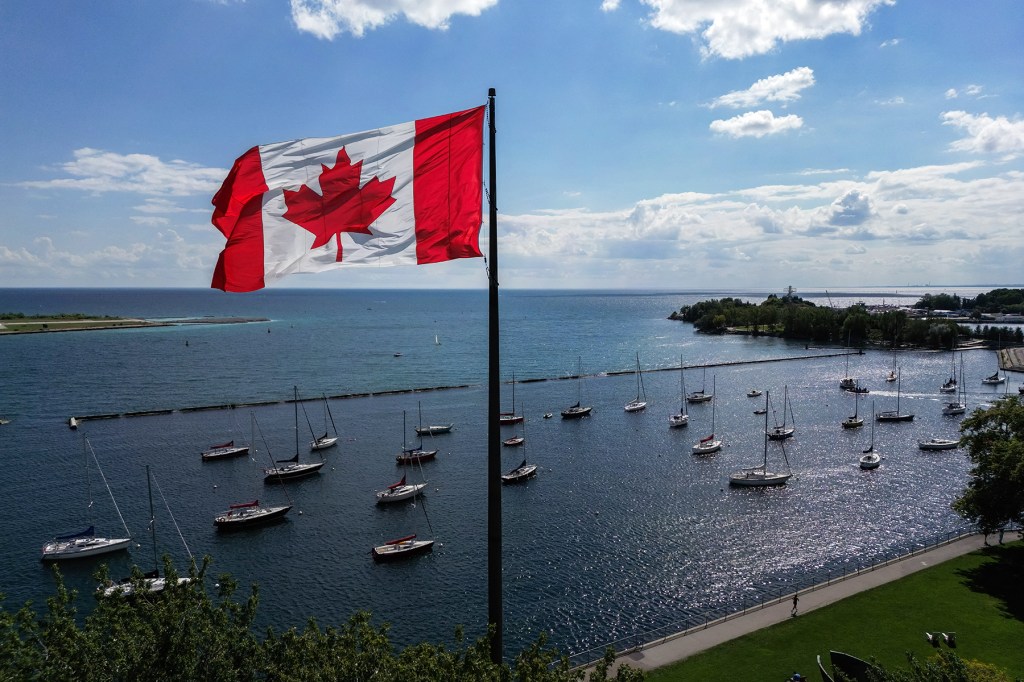
Lake Ontario has a new name, at least in the eyes of the American President.
Donald Trump signed an executive order earlier this afternoon directing the U.S. government to call the Great Lake “Lake America,†int he latest, bizarre chapter to the increasingly strange relationship between Canada and its southern neighbour.
The change applies to the U.S. federal government, meaning American maps, documents and geographic databases will be updated. It does not, however, give Trump the power to tell Canada what to call a lake that has been sitting between Ontario and New York for thousands of years. The name 'Ontario' comes from an Indigenous Iroquoian term for the lake, recorded by French explorers in the 1640s and later adapted into its present form. The name eventually gave its name to the province of Ontario, when it joined Confederation in 1867.
The (very petty) renaming comes in the middle of an escalating trade war between Ottawa and Washington, with Trump having repeatedly turned his attention toward Canada and its relationship with the United States. Earlier this week, Canadian Prime Minister Mark Carney announced new retaliatory tariffs as Trump and Republicans continue to threaten Canadian businesses and the country’s sovereignty (though he stressed he ‘loves French-Canadians’). He also seems particularly mad at Ontario Prime Minister Doug Ford, who has repeatedly lashed out at Trump. Ford has already dismissed the idea of the renaming, while federal officials have made clear that Canada will continue using the name Lake Ontario.
The White House says the new name recognizes the lake’s importance to American history, commerce and national interests. The fact that the lake is shared with Canada appears to have been left out of the equation.
This isn’t the first time Trump has made geographic renaming part of his political tactics. Earlier this year, he ordered the U.S. government to use “Gulf of America†in place of the Gulf of Mexico. That decision similarly applied to U.S. federal usage, but has failed to persuade Mexico, or the rest of the world, to adopt it.