The Internet Is Tearing Stella Lefty Apart. Nashville Sees Her Success Differently
Photo record
10 images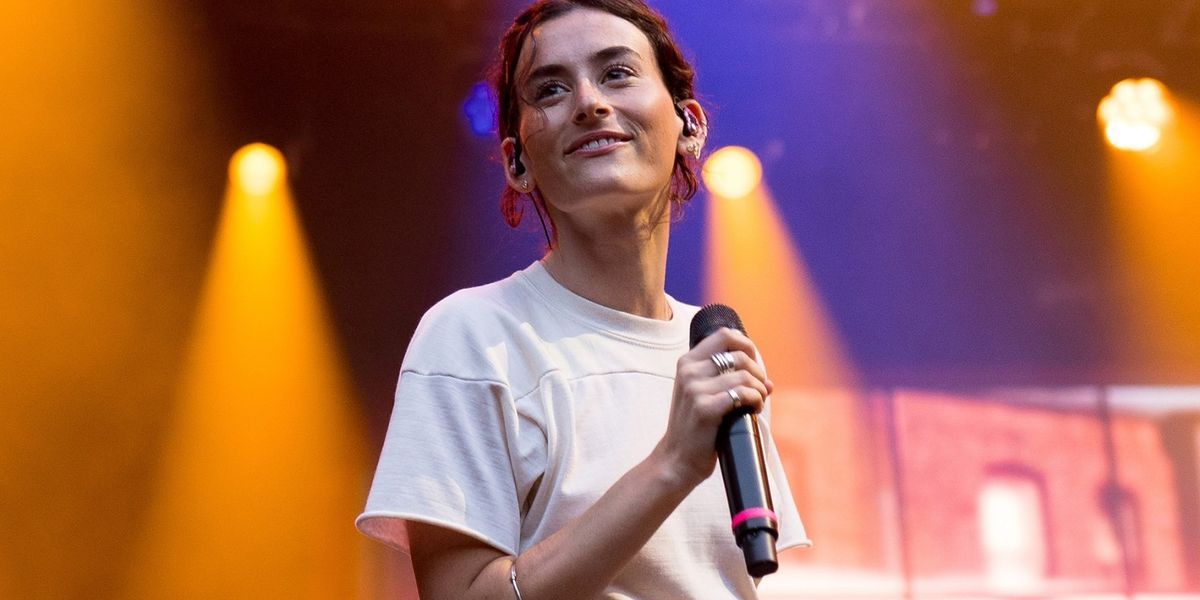

As allegations of song-poaching surround the "Boston" singer, some insiders say the blowback is out of proportion: "How many sounds has Nashville begun mass producing once the original becomes popular?"
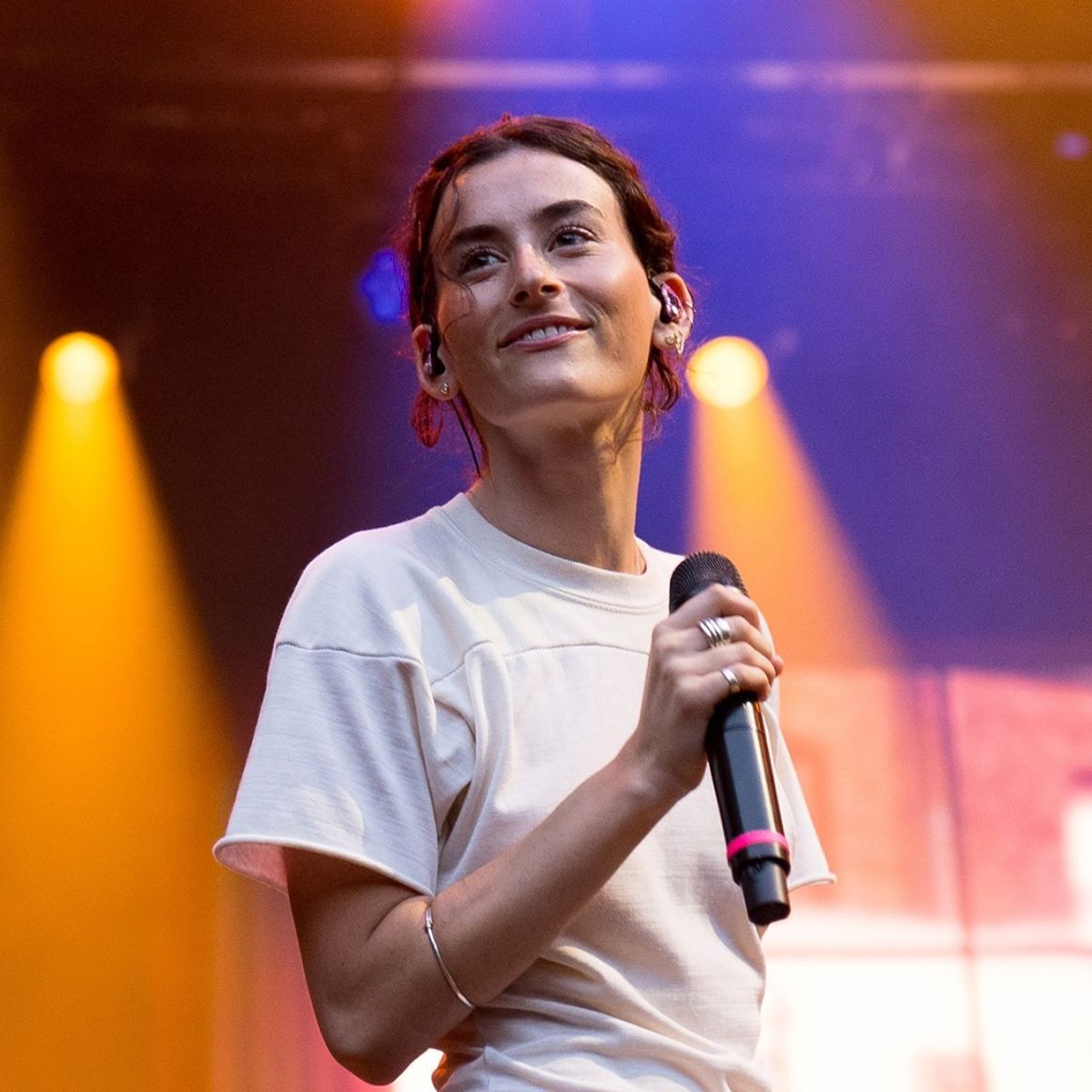
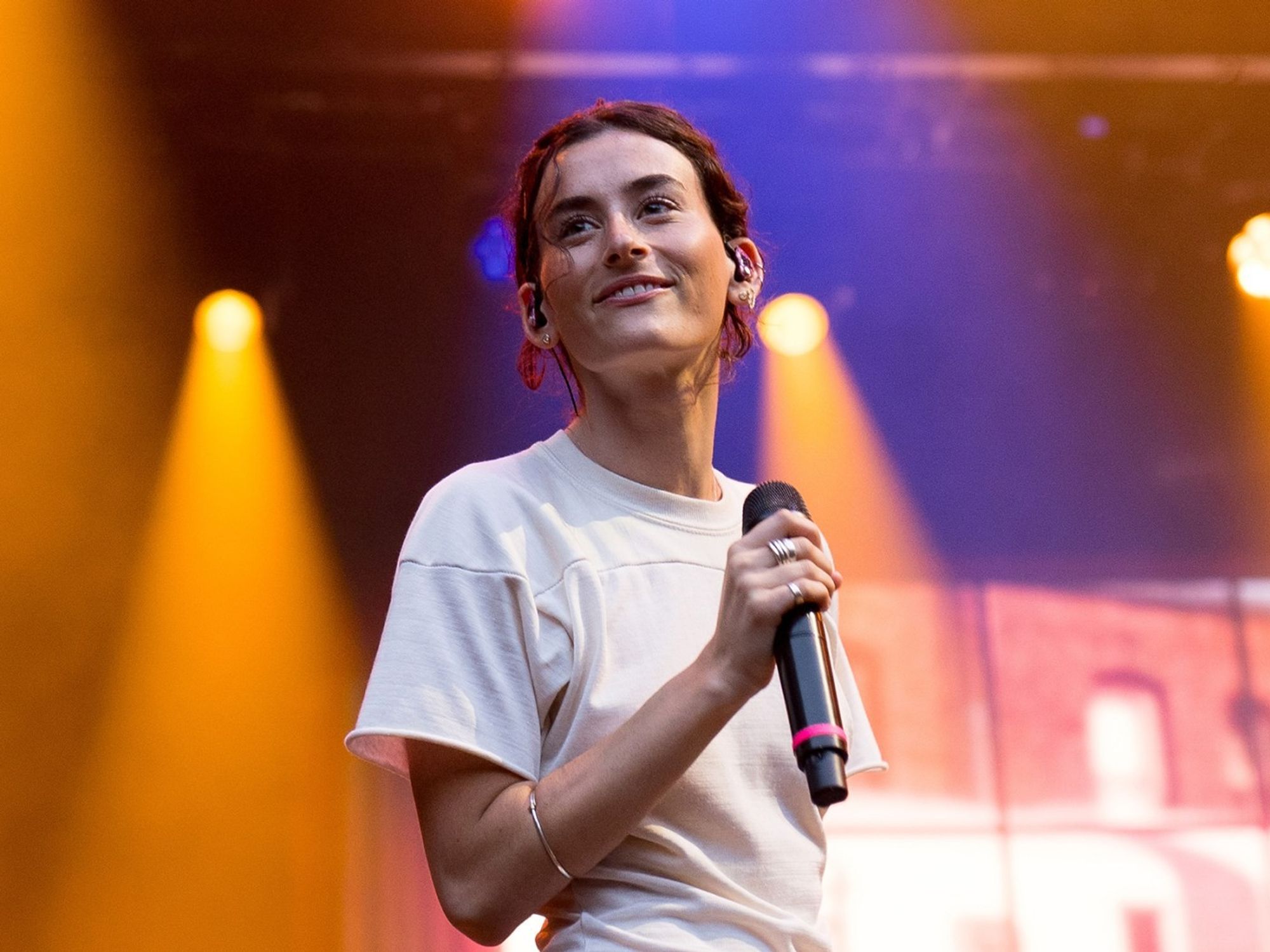
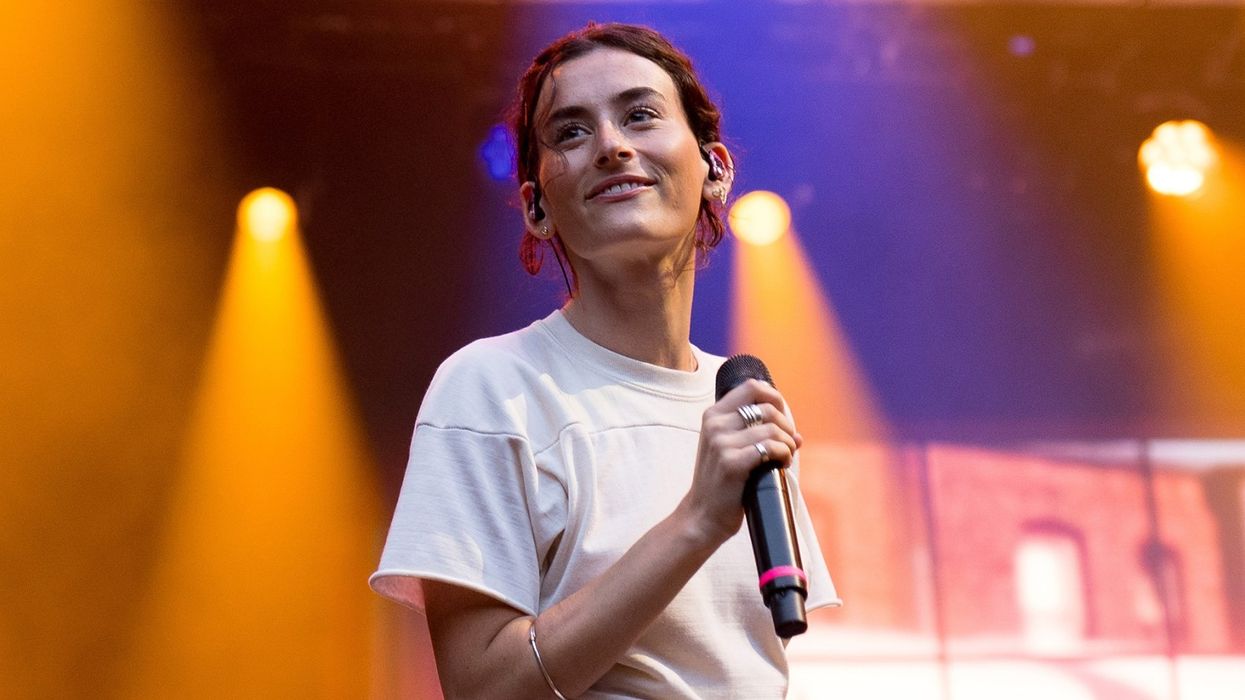
Stella Lefty onstage at Lollapalooza in Chicago. She'll play the country festival Stagecoach next year.
In May of 2026, an unusual thing happened. A single by an artist that few had yet heard of in Nashville debuted on the Billboard Country Airplay charts. The singer was named Stella Lefty and the song was titled “Boston,” which, for a genre that doesn’t have many songs about northern cities, was already a unique occurrence. It was also by a woman, another anomaly in the heavily male-skewed world of country radio.
What wasn’t unusual, however, was that “Boston” sounded familiar: It held enough melodic similarity to Noah Kahan’s “Stick Season” that the Vermont songwriter eventually had his name added to the writing credits as an approved interpolation. But on Music Row? Familiarity works. No one batted an eye.
“Country music,” as RJ Curtis, executive director of Country Radio Broadcasters, Inc., puts it, “has always borrowed from itself.”
Lefty kept rising. “Boston” flew up the charts and currently sits at Number Three on Country Airplay and Number Two on the Hot 100. By the time Nashville’s mecca of country music, CMA Fest, rolled around in June, Lefty was playing to a capacity crowd, and her tour dates started selling out one after another. Though a vocal part of the internet was lobbing allegations at Lefty of being a “nepo baby” or an “industry plant” because she is the daughter of Groupon founder and billionaire Eric Lefkofsky, the audience at her shows told a much different story. Young girls sung every word, and country fans hounded her to sign their “Lefty” hats, which she did diligently. For all the anger online, the people who went to see her sing live seemed to be having a pretty good time.
Two months later, a lot has changed. Lefty has been accused of multiple instances of plagiarism, with “Stella Thefty” memes popping up all over the internet. Beyond “Boston” and Kahan, music fans noticed a similarity between her song “Summer You Were Mine,” from Lefty’s debut LP Long Way Home, and the Chicks’ 1998 hit “There’s Your Trouble.” According to a representative for Atlantic Records, Lefty’s label, a streaming platform mistakenly left off the names of Tia Sillers and Mark Selby, the songwriters behind “There’s Your Trouble.” (Both now appear in the credits for “Summer You Were Mine.”)
Then, as Rolling Stone detailed, there was a series of other claims. Her 2025 track “Why Wouldn’t We” apparently mirrors Blake Shelton’s 2017 song “I’ll Name the Dogs,” while her song “Seven Eleven” sounds similar to Wheatus’ “Teenage Dirtbag.” Most recently, “Misery” from Lefty’s Tragic, Really EP, is being compared to “A Million Dreams” from the 2017 musical movie The Greatest Showman. Perhaps the most outlandish comparison is one asserting that “Summer You Were Mine” sounds like the theme song to Full House, a show that aired before Lefty was born. None of the writers of those songs have been credited or addressed by Lefty’s team thus far, nor is it clear if they need to be. (A rep for Lefty did not immediately respond to Rolling Stone‘s request for comment.)
Further accusations have ranged from reasonable to the irrational, with some claiming that Lefty is part of an AI experiment launched by her father — who runs a healthcare company that leverages AI to help cure cancer, which he started after his wife, and Lefty’s mother, was diagnosed with the disease. When Lefty performed at the Grand Ole Opry last month, some seized the opportunity to complain about Lefty’s appearance at the country institution in the comments of a video of her singing for kids in active treatment at St. Jude’s Children Research Hospital. There’s also been online chatter leaning toward the antisemitic (Lefty is Jewish), and other comments painting her as a thieving mastermind knowingly ripping off songs.
In Nashville, though, many are shaking their heads. While few would argue that an artist should use another’s material without credit, some industry insiders think that the degree of vitriol being directed at Lefty is unfounded — especially since country radio, and Top 40 as well, is often dominated by songs that sound very much alike. So much alike, that a YouTube account called Sir Mashalot once put together a mashup of six country songs, from male artists like Blake Shelton, Luke Bryan, and Cole Swindell, that all flowed into one another so seamlessly that it was nearly impossible to discern them.
Bro-country, the prevailing country trend of the 2010s, was defined by songs that were interchangeable, using the familiar signifiers of trucks, tailgates, and ladies in jean shorts, usually set to the same mid-tempo beat. And by 2023, rewriting old songs had become its own trend among country’s male contingent as “interpolation songs” dominated the charts. Swindell’s “She Had Me at Heads Carolina” re-created a portion of Jo Dee Messina’s 1996 hit “Heads Carolina, Tails California” — and won Song of the Year at the ACM Awards. Jake Owen redid Willie Nelson’s “On the Road Again” to “On the Boat Again.” Dustin Lynch and Jelly Roll turned Dobie Gray’s 1973’s hit “Drift Away” into “Chevrolet.” To be clear, these songs all credited the original writers, but they also lifted entire melodies and sonic patterns, with the artists transparently coopting the familiarity of the source-material songs to try and score easy airwaves success. But even without direct interpretations, country music has always borrowed, with male artists allowed to succeed under this model with little scrutiny.
“Let’s be honest, that’s been going on for years in this town,” Curtis says. “How many sounds and artists has Nashville begun mass producing once the original becomes popular?” Curtis points to the way new artists and songwriters come of age, “with access to an almost limitless musical universe,” he says. “Country. Rock. Pop. Hip-hop. R&B. Americana. Indie. EDM. Music from generations before them and music released halfway around the world yesterday. So when someone in a writing room says, ‘I want something that feels like that,’ ‘that’ could be almost anything.”
When you mature as an artist covering songs on TikTok — as Lefty has — that becomes even more prominent. The inspiration base isn’t a set of five or six CDs that an artist played while growing up, but rather an infinite scroll of melodies that come through their phone in 30-second blasts.
That applies to listeners too. Curtis points out that fans having limitless music available to stream makes them their own amateur musicologists. “We’ve probably never had more listeners capable of instantly recognizing, and pointing out, where they think they’ve heard something before,” he says. “There’s still a fine line line between influence and copying. There always has been.”
Ed Sheeran, who went to court in 2024 on claims that his hit “Thinking Out Loud” copied from Marvin Gaye’s “Let’s Get It On,” once explained it this way: “There’s only so many notes and very few chords used in pop music. Coincidence is bound to happen if 60,000 songs are being released every day on Spotify.” Sheeran ended up winning his case.
Nashville has come to Lefty’s defense more often than not. Kelsea Ballerini backed her up, and so has Luke Combs’ manager, Chris Kappy. Lefty played a number of shows at CMA Fest, and on Monday was announced as one of the performers at Stagecoach 2027, with her name on the same line of the poster as Shaboozey and outlaw-country songwriter Cody Jinks. She also continues to stream globally, with tens of millions weekly.
Leslie Fram, a country music executive who leads the artist-development company FemCo, finds the “intensity” of the backlash to be out of proportion. “Country and pop-country have always worked with a fairly limited palette of chords and melodies. Similar progressions, familiar hooks, and shared lyrical DNA show up across decades of hits,” Fram says. “Plenty of songs have echoed older ones without anyone rushing to file claims. Sometimes it’s pure coincidence. Other times an artist absorbs something they’ve played or covered so many times that it surfaces without them even realizing it. When a clear similarity is noticed, the professional path is straightforward: clear the interpolation and give the proper credits. That’s exactly what happened with the Chicks and Noah Kahn references.”
To her credit, Lefty did act swiftly to rectify the publishing credits when it came to “Boston” and “Summer You Were Mine,” but comments she made to Vanity Fair in which she claimed to not be thinking about Kahan while writing didn’t do her any favors. Dr. Jada Watson, a musicologist, does see some similarities in the other songs Lefty is accused of copying, but says that once a pattern is established, it’s easy to start questioning a writer’s practice.
“One accusation of this nature leads to fishing expeditions,” Watson says. “Unfortunately, the similarities are there to find. There are legitimate reasons for scrutiny in each of these cases. But misogyny can shape the intensity and character of that scrutiny: women, especially young women, are more likely to become the subject of the kind of listening expedition where finding the next similarity becomes a game.”
Watson thinks the conversation should not just be about Lefty’s practice, but also about the larger issues at play. Namely, who gets to inherit traditions in country music. “Lefty makes several forms of inheritance unusually visible at once: extraordinary financial resources, access to the institutional machinery that can protect and sustain a career, entry into a genre whose ideas of authenticity and belonging have historically been shaped by race, gender, and class, and, quite literally, access to the music that came before her,” she says. “The point isn’t that any one of those things makes her undeserving. It’s that not everyone gets to inherit — or to make use of what they inherit — on equal terms.”
Fram warns against dismissing an artist’s career because of song soundalikes. “Throwing out an entire catalog because a few tracks share DNA with older records treats familiarity as a fatal flaw. Follow that logic far enough and a huge amount of popular music disappears,” she says, chalking up much of the vitriol directed at Lefty to “class resentment.”
To be sure, having a billionaire father in an age where financial inequality is more stark than ever opens Lefty’s career up to scrutiny. And her family’s extreme wealth should make it easy for her to navigate any number of legal complications that may come, while also affording her the luxury to make music without day-to-day worries. What it doesn’t mean, though, is that Lefty is able to buy fans. Money isn’t putting people in concert seats; the songs are. (As manager and music publisher Tracy Gershon puts it, “Good is good.”) But because the fans in those seats are primarily young women, it’s often easy for the public to dismiss their taste in an artist as invalid.
“I manage artists,” Comb’s manager Kappy wrote on Instagram. “I have become very successful and have money. Success isn’t based on money, or every act I manage would be in arenas and stadiums because I would just buy it. That’s the problem with all of your arguments and stupid comments. Yes, they are stupid, you need to hear the truth. No amount of money buys success, it’s the music.”
Curtis, however, is deflated that all of this talk around Lefty’s alleged song-poaching is taking away from what he sees as a defining highlight of 2026. “Isn’t it disappointing that this Stella blowback is even a story, in the midst of an historic year for female artists in country music, and a week where females dominated the CMA nominations?” he says. “For me, that is the real story.”
Drake onstage in Toronto last year
Not to be dramatic or anything, but not too long ago, listening to people talk about Drake, you’d think he would never top the charts again. But here we are: With Iceman, he’s broken his own record, earning a 13th week atop Billboard’s Top R&B/Hip-Hop Albums chart on Sept. 5, surpassing Take Care’s 12-week run more than a decade ago. The achievement comes after the great rap civil war of 2024, which was framed as everything from a referendum on Drake’s character as a human being to a cleansing of what popular radio host Ebro would describe, in February 2025, as “a sickness in the game.”
Again, not trying to be dramatic, but even if you were skeptical of the discourse circa 2024, it is a bit shocking to hear the public’s recent re-embrace of Drake. Consider how far the frenzy around the most salacious allegations on Kendrick Lamar‘s “Not Like Us” extended. There was Christopher Alvarez, a disabled journalist, being dragged into conspiracy theories. There was the woman from the resurfaced concert footage, now 31, having to publicly dispute the creepy significance strangers had assigned to an onstage kiss from when she was 17. Drake said in his lawsuit against UMG that the threats had forced him to pull his seven-year-old son out of school.
What now feels like the absurdity of the moment registered as something deathly serious at the time. By September 2024, Lamar was releasing the ominous “Watch the Party Die,” just days after his Super Bowl halftime performance was announced. Oh, also, a major talking point in American culture a year and a half ago was whether one of the biggest superstars in the world would be publicly branded a pedophile during the Super Bowl.
In what world would any celebrity recover from that?
Except, with time, the online frenzy surrounding the Drake and Lamar feud reads more like a mass-psychosis event than a cultural reckoning. The music, oddly enough, often seemed secondary to the certainty of everyone discussing it. “Not Like Us” was a veritable hit, absolutely. But its cultural dominance became bound up in a widespread vilification of Drake that curdled online, where the most damning interpretation of anything could quickly become the accepted one. For a while, even putting on a Drake song could feel like something you had to explain, as if listening amounted to taking a position on the allegations.
That this all happened in 2024 is meaningful. This was right in the peak of Elon Musk’s reconstruction of Twitter, privileging rage bait and engagement tactics that helped misinformation disseminate like fact. It was also the beginning of AI tools becoming sophisticated enough to produce convincing-sounding tracks. Even before Drake released his first response, “Push Ups,” AI-generated response tracks were circulating across social media. And so, in many ways, the well of public opinion was already poisoned.
Listeners’ recent embrace of Drake feels settled in a broader cultural shift brewing since 2024. The beef, in hindsight, feels like a dying vestige of whatever people want to call “Woke 1.0”: a particular faith that exposing the right person could amount to a cultural transformation. For a moment, defeating Drake seemed to promise something about the future of hip-hop, about who would belong in it and what it would tolerate.
There were obvious holes in the argument, namely who exactly these arbiters of culture were and why they were uniquely qualified to speak for the entirety of Black people, questions that Drake pokes at on “Ran to Atlanta” from Iceman. Still, these were never even supposed to be binding philosophical truths in the first place. To hear levelheaded commentators discuss it, this was all simply entertainment — two of the genre’s greats duking it out. Even one of the beef’s catalysts, Metro Boomin, echoed the sentiment, lamenting how online fans had turned the battle into something sinister. Hell, even Jay-Z said something similar before himself tossing a few jabs at Drizzy in a freestyle at the Roots Picnic this year. But the artists themselves supplied the allegations. The ability to raise those stakes and then retreat into “simply entertainment” was part of the dynamic, too.
Even so, how it all devolved into a pseudocultural reckoning says more about the environment fans exist in today than it does about either Drake or Lamar. In the years around the beef, shocking revelations about Diddy as well as the global elite’s ties to Jeffrey Epstein have become folded into the background, alongside a sense that accountability remains selective. This atmosphere of collective powerlessness offers one explanation for the conspiratorial thinking at the heart of Lamar versus Drake. A frustration with an increasingly degraded world and dwindling resources to change it means outrage can mobilize an enormous number of people very quickly, with little holding them together once the moment passes.
The language of exploitation and cultural extraction gave the battle a purpose that seemed to extend well beyond either rapper. But even if you took the least charitable opinion imaginable of our Canadian hitmaker, what was supposed to happen after Drake was defeated? The industry whose supposed wickedness Drake allegedly embodied carried on selling the spectacle itself.
What everyone was caught up in was an appetite with a longer history than the social media platforms now feeding it. Lance Oppenheim’s new film, Primetime, returns to Chris Hansen and To Catch a Predator, a television format that made public humiliation feel like a public service. The connection is in the experience offered to the audience. The viewer could enjoy the confrontation with the reassuring sense that watching served some larger good. Never mind if anything that was unfolding on screen amounted to justice.
In the historian Anton Jäger’s book-length essay Hyperpolitics, published earlier this year in English, he describes how the past decade’s surge of political feeling has coincided with a continuing withdrawal from communal life. More isolated digital environments can fuel extraordinary mobilization without the actual community organizations that might turn it into something tangible. Negating Drake, then, became a gesture in itself. A means of signaling a broader dissatisfaction with the direction of hip-hop culture. Where the problems extend to technology and the demoralizing margins of streaming music, for a while it felt good for people to just wrap it all up in one word: Drake.
But on Iceman, it’s hard to take the idea of Drake as an evil force within hip-hop very seriously, even as he himself makes an effort to lean into the role of the villain. Drake’s music is most potent when it’s aimed at the masses, even if he swears his nice-guy days are over. This is the Degrassi kid turned global superstar rivaling Taylor Swift, after all.
Now, with Fear of Missing Out, Drake’s cryptically announced project slated for release this week, we’ve entered a second kind of Drake Renaissance. However delusional it seems, there was a moment when it felt somehow wrong to play Drake. His return to the top of the charts suggests a good deal of people were eager to get back to listening.
Oasis
After teasing fans on social media and in interviews for the past few months, Oasis have officially announced a 2027 tour. The trek, dubbed Oasis Live ‘27, will see the Manchester band play 38 live shows in the U.S., U.K., and Europe. Richard Ashcroft will open all dates.
The U.S. tour dates include three nights each at Boston’s Gillette Stadium and Las Vegas’ Allegiant Stadium in August. The band’s highly anticipated 2025 reunion tour, which kicked off in Cardiff, Wales, included several dates in North America, including stops in Toronto, Chicago, and Los Angeles, but this will be their first reunion shows in either city. A press release notes that “with the exception of homecoming shows in Manchester, the tour will see the band perform in a completely new set of locations from the Oasis Live ‘25 tour.”
The tour opens in Glasgow with five nights at Celtic Park in May and wraps in September with a return to U.K. venue Knebworth Park, where Oasis will perform four shows. The band notably played Knebworth Park in 1996 as part of Knebworth Festival, a set that was memorialized in Jake Scott’s 2021 documentary.
Oasis announced the tour with a short trailer that starts out atmospheric and nostalgic with a mix of footage from the band’s heyday and reunion tour. With hype properly built, the clip shifts gears as their classic tune “Morning Glory?” kicks in and the dates are revealed.
“START THE CELEBRATIONS!!!!” the band said in a statement. “After a period of reflection ‘The Most Damaging Pop Cultural Force In Recent British History’ has declared itself fit for purpose and will once again return to lift the spirits of the people. Come witness the fitness. It shall be a sight to behold.”
Tickets for Oasis Live ‘27 will be available only to fans who have registered in advance via the band’s website. Fans must register before Thursday, September 17 at 11 a.m. ET. Fans who are successful will be sent a unique, non-transferable code to access an allocated on-sale window. U.S. on-sale windows will vary by city and will take place on Friday, Sept. 25.
We review the best portable speakers under $200, from Marshall to Bose, that wirelessly pair with Bluetooth to stream music and more.
Oasis recently released a new documentary, Don’t Look Back in Anger, which documents their reunion. It was created by Peaky Blinders’ Steven Knight, and directed by Dylan Southern and Will Lovelace.
Oasis Live ‘27 Tour DatesMay 21, 23, 25, 28, 29 – Glasgow, Celtic ParkJune 4, 6, 8, 11, 12, 15, 18, 19, 22, 25, 26 – Manchester, Etihad StadiumJuly 2, 3 – Munich, Allianz ArenaJuly 10, 11 Barcelona, Estadi Olímpic Lluís CompanysJuly 16, 17 – Amsterdam, Johan Cruijff ArenaJuly 23, 24 – Paris, Stade de FranceJuly 29, 30 – Rome, Stadio OlimpicoAugust 10, 13, 14 – Boston, Gillette StadiumAugust 20, 21, 24 – Las Vegas, Allegiant StadiumSeptember 4, 5 – Slane Castle, IrelandSeptember 11, 12, 18, 19 – Knebworth, UK
Macklemore performing in France in August
Macklemore has been removed from the rest of Ed Sheeran’s stadium tour after several venues allegedly told the trek’s promoter that they would not allow the rapper to perform. The news came after Macklemore made several onstage statements in support of Palestinians in Gaza and the West Bank and called for a “free Palestine.”
In an exclusive statement shared with Rolling Stone, Messina Touring Group, promoter of the U.S. leg of Sheeran’s Loop Tour, said: “As the concert promoter for Ed Sheeran’s U.S. Loop Tour, we have been notified by venues on the upcoming U.S. tour dates that they will not allow a concert to take place with Macklemore on the lineup, which would result in the cancellation of the tour and impact hundreds of thousands of fans. After discussions with stakeholders, Macklemore will not be performing on the remaining support dates.”
Macklemore was slated to appear at eight of the 10 shows left on the U.S. leg of Sheeran’s tour, which is set to resume this Friday, Sept. 19, in Philadelphia. The venues that allegedly objected to the rapper include: Lincoln Financial Field in Philadelphia; Gillette Stadium in Foxborough, Massachusetts; Mercedes-Benz Stadium in Atlanta; Lucas Oil Stadium in Indianapolis; Bank of America Stadium in Charlotte, North Carolina; AT&T Stadium in Arlington, Texas; and Raymond James Stadium in Tampa, Florida.
Reps for Sheeran, Macklemore, and most of the venues did not immediately reply to requests for comment.
Macklemore — who’s been an outspoken supporter of Palestinians and those in Gaza for several years — joined the Loop Tour earlier this month, performing two shows at MetLife Stadium outside of New York City, on Sept. 4 and 5. At the first show, the Seattle rapper yelled “Free Palestine” onstage and expressed solidarity with people in Gaza and the occupied West Bank. He also showed images from the devastation in Gaza and performed his protest song, “Hind’s Hall,” about pro-Palestine demonstrators at Columbia, who occupied a building and named it after Hind Raja, a six-year-old killed by the Israeli military.
“A big part of the reason why I wanted to do this tour in the first place is so I could stand up in stadiums like this and say two words that are very near and dear to my heart: ‘Free Palestine,’” he said during the first MetLife show. “I said, ‘Free Palestine!’ I want those words to be loud and clear, so that people all the way in Gaza to the occupied West Bank know that we have not forgotten about them.”
This spurred much criticism and backlash from pro-Israel groups. StopAntisemitism accused the rapper of ambushing fans with “anti-Israel propaganda” in an Instagram post, which the pop singer Pink amplified.
Pink later explained that she did not object to Macklemore’s calls for a “Free Palestine,” but said, “I have never asked for another artist to be silenced and I’m not asking now. I don’t need anyone fired, and I don’t need a refund. What I need is to be able to say, as a Jewish mom, ‘that scared me, and it scared people I love,’ without being told our fear is just propaganda, and without being told I’m somehow cool with genocide because I noticed?”
Additionally, the Israeli American Council launched a petition demanding Sheeran remove Macklemore from the rest of the tour, claiming his actions raised questions over “where the line should be drawn when an opening act uses a global concert platform to advance a one-sided political agenda.”
At the second MetLife show, Macklemore reiterated his calls for a “Free Palestine” and addressed Jewish members of the audience, saying, “Criticism of Israel, criticism of apartheid, being against genocide in no way is a criticism of you. My message is for peace; love for all human beings to be treated with dignity, respect, and equality.” (Humanitarian groups and a United Nations commission have said Israel’s actions in Gaza constitute a genocide. Israel and its allies, including the United States, have denied this.)
The stadiums that allegedly would not allow a Macklemore show did not immediately return requests for comments either, including for explanations as to why they objected to the rapper performing at their venue. While two of those stadiums are privately owned — Bank of America Stadium in Charlotte and Gillette Stadium in Foxborough — the rest are owned and, in many cases, operated by cities, states, or other government entities, potentially raising First Amendment issues if the venues barred Macklemore over his statements.
The last stop on Sheeran’s Loop Tour, for instance, is Raymond James Stadium in Tampa, which found itself in a similar spot earlier this summer after booking two Kanye West concerts. The shows, unsurprisingly, drew backlash and calls for cancellation due to West’s many past antisemitic statements, but they went ahead as planned.
Pointedly, Ye’s promoter included a clause in his contract prohibiting Raymond James Stadium from canceling the gigs based on the rapper’s past public statements or viewpoints. But legal experts also told local news that canceling the shows would’ve likely violated the First Amendment. Because Raymond James is owned by Hillsborough County, Florida, and operated by a public board, the Tampa Sports Authority, any cancellation based on Ye’s past statements could have been seen as the government restricting speech.
When reached for comment on the Macklemore decision, a rep for the Tampa Sports Authority told Rolling Stone, “We can confirm Macklemore will not be performing at the upcoming show. Apart from this lineup change, the concert will go forward as planned.”
The North American leg of Sheeran’s Loop Tour is set to run through the fall, wrapping Nov. 7 at Raymond James Stadium. During the trek, Sheeran will continue to receive support from Lukas Graham and Aaron Rowe. A South American leg of the Loop Tour will follow in November and December.
Drake
Drake has shared more details about his mysterious “Fear of Missing Out” project ahead of its release next week.
Drake began hinting at his latest offering on social media in August, sharing photos of his family alongside the caption: “FOMO 2026.” Two weeks later, he followed that up with an image of a CD cover titled “Fear of Missing Out.” Fans online have speculated whether it’s an upcoming album, tour, or music video.
Turns out, the latter prediction was most correct, as Drake himself revealed Saturday on social media that “FOMO” is “a not so short film directed and scored by the family.”
See on Instagram
The announcement was accompanied by a clip of Drake piloting a neon yellow speed boat as a female voice says in voiceover, “What if I told you there were two versions of your life. In one, you avoid risk and withhold love. You feel like you’ve gone missing from yourself. You look for something you can’t find. In the other version of your life… you find it.”
Drake also reiterated Fear of Missing Out’s release date: September 15.
The rapper is no stranger to making his project reveals as elusive and difficult as possible. In April, the artist hid the release date for his Iceman trilogy in a gigantic block of ice plopped in a downtown Toronto parking lot. Fans climbed onto the glacial block with sledgehammers — one even brought a blowtorch and hairspray — in attempts to access the big reveal.
Lil Durk on Oct. 28, 2023 in Newark, NJ.
Lil Durk was acquitted of all charges Friday after a three-week trial where prosecutors accused him of orchestrating a murder-for-hire plot and defense lawyers attacked the credibility of the government’s cooperating witnesses, calling them admitted killers who implicated the Grammy-winning rapper to avoid life sentences.
The musician, born Durk Banks, hung his head and started crying as the verdict was read. His wife, India Royale, wrapped her arm around his mother, the author LaShawnda Woodard, in the second row of the gallery. One of his lawyers, Christy O’Connor, linked arms with Banks to steady him as he broke down with emotion.
“This was a full sweep against the full force of the Justice Department and the FBI,” Banks’ lead lawyer Drew Findling told Rolling Stone before exiting the courthouse to a cheering crowd of fans. “This is overwhelming. It’s taking my breath away, and I’m happy for him, most of all.”
The jury of seven women and five men took three days to return their resounding victory for the “All My Life” rapper. His co-defendants Deandre Wilson and David Lindsey were convicted of conspiracy to commit stalking, stalking, and stalking resulting in death. They were acquitted of the murder-for-hire charges.
Banks will remain in custody pending a second trial on racketeering-related charges that were severed from the first case. The remaining counts, alleging murder in aid of racketeering and possession of a firearm in furtherance of that killing, are scheduled for trial on Oct. 5 in the same courthouse before the same judge, but with a new jury. Banks’ lawyers are expected to challenge his continued detention before then.
“We’re feeling great, outstanding. I was on the edge of my seat, overly nervous,” Banks’ father, Dontay Banks Sr., told Rolling Stone as he smiled broadly outside the courtroom. “I’m glad the truth came out. I’m glad 12 people who have nothing to do with anyone saw the truth — that he had nothing to do with this. So that was a great thing.”
Banks Sr., who attended each day of the trial, said his joy over the verdict was tempered by the loss of life at the center of the case. “We feel for the family who lost a son. I’ve lost a son, so I know what she’s going through. It’s very hard,” he said. “We do sympathize with her. That’s the thing we all want the world to know.”
Banks, 33, had been facing five federal counts at the trial in downtown Los Angeles, including conspiracy to commit stalking, stalking resulting in death, and murder for hire. Prosecutors claimed he put a price on rival rapper Quando Rondo’s head because he blamed the Georgia musician for the 2020 killing of his close friend and musical protégé, King Von. They claimed the alleged bounty set off a chain of events that ended with Quando Rondo’s cousin dead. Durk denied the allegations, and jurors found the government failed to prove its case.
In closing arguments Tuesday, prosecutors said Banks “wanted revenge” for King Von’s death and made that desire known to members of his Only The Family hip-hop collective, or OTF, in text messages. They painted the multi-platinum rapper as a hardened Chicago gang leader who “had his shooters on speed dial” when he allegedly decided “it was time to kill” Quando Rondo while the rapper was “vulnerable” during a visit to Los Angeles.
Jurors saw video evidence showing three gunmen, one armed with a Glock allegedly modified to operate as a machine gun, opening fire on Quando Rondo’s Escalade at a gas station across from the Beverly Center shopping mall on Aug. 19, 2022. Quando Rondo, whose legal name is Tyquian Bowman, survived, but his 24-year-old cousin, Saviay’a Robinson, known as Lul Pab, was killed.
The government’s case relied heavily on three cooperating witnesses who reached plea deals, including two of the shooters. Kasey “OTF Jam” Hester and Keith Jones told jurors they opened fire on Bowman’s vehicle expecting to be paid by Banks. They pleaded guilty to charges including murder and murder for hire, the jurors heard. The third cooperator, Banks’ former personal assistant Kavon “OTF Vonnie” Grant, who described himself as a “broker [of] high-end stolen vehicles,” also pleaded guilty and was the one who obtained the guns and stolen Infiniti used in the attack.
Banks’ lawyers argued the three men lied on the stand to reduce their own sentences. They said Grant, not Banks, was closest to King Von of all the men and was so consumed by revenge that he became the true “mastermind” of the broad-daylight ambush.
In closing arguments, Findling called Grant a “fraudster” and “master of deception” who planned the shooting without Banks’ knowledge and later persuaded prosecutors that Banks was responsible.
“He has manipulated every single person,” Findling said, noting that Banks fired Grant in early 2023, several months after Robinson’s death. “Would you fire someone you assigned to lead a killing? That is preposterous.”
Hester testified that he was recruited for the shooting on Aug. 18, 2022, about six months after being released from prison for attempted murder. He said he was riding with his wife when Anthony “OTF Boonie Mo” Jones called and told him to head to the airport for an urgent trip to California. Hester claimed the call was on speakerphone and that he could hear Banks on another call in the background.
Hester also testified that earlier that year, while at an Atlanta studio with Banks and members of his entourage, Banks complained that rapper 6ix9ine was “trolling” him with taunts that he needed to step up and “slide for Von,” meaning avenge King Von’s death. Hester said Banks told the group that anyone who killed Quando Rondo would “be straight.”
In his portion of the defense closing, lawyer Brian Steel called Hester a “serial killer” convicted of three murders who could not be trusted. During cross-examination, Steel confronted Hester with jail calls in which he appeared to discuss telling prosecutors what they wanted to hear to avoid prison. “I’m going to do what I got to do. Whatever it takes to make sure I don’t do no time,” Hester told his wife in a May 5, 2023, recorded call.
Grant claimed on the witness stand that Banks set the plot in motion after learning Bowman would be in Los Angeles to buy marijuana. He said Banks directed him to obtain a stolen vehicle and told him the Chicago-based hitmen would fly to San Diego rather than Los Angeles to avoid detection. Grant acknowledged driving the rented BMW seen following Bowman alongside the stolen Infiniti. He said he accompanied the men to an In-N-Out minutes after the shooting, then returned to Banks’ rental home.
Banks’ lawyers called Grant’s account a fabrication. They said prosecutors presented no evidence Banks ever paid anyone. “This case is flooded. It is a tsunami of reasonable doubt,” Findling said. “[This is] a bounty case with no money.”
Jones testified that he was recruited on Aug. 18, 2022, during a FaceTime call with Banks’ co-defendants, Wilson and Lindsey. He said Wilson told him they “had a location” for Bowman and that “Durk got a million for us.” He also claimed Wilson was on FaceTime with Banks as the group drove from San Diego to Los Angeles. The jurors rejected that testimony.
The defense called Hester’s wife and the mother of King Von’s child to challenge the cooperators’ accounts. Shekema Springfield, a U.S. Army officer who had a son with King Von, testified that she and King Von lived with Grant after moving to Atlanta and that Grant helped manage King Von’s finances. After King Von was killed, she said, Grant told her “not to worry about it” and that he was “going to take care of it.”
Asked about Grant’s truthfulness, Springfield replied, “He’s a liar and a thief.”
Hester’s wife, Lashawntay Hester, testified that she contacted Banks’ defense after her husband took the stand and agreed to testify against his account. She said the phone call that allegedly sent him to California never happened. Prosecutors argued she was upset that Hester had agreed to cooperate with law enforcement.
Another major challenge to the evidence unfolded outside the jury’s presence, after prosecutors played a clip from a 2023 interview in which hip-hop podcaster DJ Akademiks asked Banks whether he was still “triggered by the ‘slide for Von’ comments.” Banks replied, “For some reason, I just don’t see those comments no more. For some odd reason. I don’t know, it might be the water.”
In his closing argument, Assistant U.S. Attorney Michael Morse claimed it was “absolutely clear that he was admitting to his involvement in the murder of Saviay’a Robinson.” Morse delivered the line in the government’s final rebuttal, so the defense had no opportunity to respond.
After jurors began deliberating Wednesday, Banks’ lawyers filed an emergency motion asking the judge to reopen the evidence so jurors could see another portion of the roughly three-hour interview. In the segment the defense sought to admit, Banks said he didn’t take rapper 6ix9ine seriously. “I try not to get into it with people. I’m trying to turn all the hate to love,” he said.
To bolster their argument that prosecutors had misread the exchange, Banks’ lawyers cited a Tuesday night livestream in which Akademiks said the interview segment had been “scripted” for “dramatic effect” to promote Banks’ album. “Me and Smurk, we rehearsed this,” Akademiks claimed, using a nickname for Banks.
U.S. District Judge Michael Fitzgerald denied the motion, ruling that prosecutors were free to argue their interpretation of the exchange. He said jurors could just as reasonably view Banks as an outsider commenting on the fallout from Robinson’s death, rather than as someone acknowledging a role in it — an interpretation the verdict suggests they ultimately accepted.
“I totally get why Mr. Akademiks is furious about this. If the same thing had happened to me, I would be furious, as well, but that is not the point,” Judge Fitzgerald said. “The jury will decide what the jury decides.”
Song lyrics and music videos loomed large over the trial, with jurors seeing Banks’ unreleased “Redman” video on screens around the courtroom. In the video, filmed in January 2021, Banks is seen mourning King Von and then chasing and shooting an actor prosecutors claimed was portraying Quando Rondo. Prosecutors said it was evidence of a revenge motive, while Steel countered it was creative speech by a “grief-stricken” poet.
“It’s not a get-back act of violence. It’s a get-back act of videography,” Findling said in his closing argument, comparing the video to a Quentin Tarantino film in which “ears are being cut off” and “people are being brutally murdered” as part of a widely accepted form of art. For Banks, he said, retaliation took the form of music. “The get-back is a diss track. It is something common in the music industry.”
The judge also allowed lyrics from several of Banks’ songs into the trial, including “Pissed Me Off,” “Who Want Smoke??,” and “Ahhh Ha,” in which he raps, “Don’t respond to shit with Von. I’m like ‘Fuck it, you trippin’, go get your gun. They droppin’ locations, I’m gettin’ it done. Fuck tweeting, we slidin’, the feds are comin’.”
Robinson’s mother, Andrea Robinson, attended the start of the trial. At a hearing last year, she told the court she was devastated by the death of her only child.
“I never in a million years thought I’d lose my baby,” she said through tears. “He had a family. He has a mother. He has three kids. They will never know their dad. … It hurts so bad that I can’t pick up the phone and call him.”
Two months before trial, prosecutors filed their third superseding indictment alleging murder in aid of racketeering activity and firearms possession in furtherance of murder in aid of racketeering. They allege Banks ran a criminal enterprise responsible not only for Robinson’s death, but for a 2022 killing in Chicago, and an alleged February 2019 attempted murder in Atlanta. Judge Fitzgerald said in a mid-July ruling that prosecutors “chose to withdraw evidence of the ‘Chicago incident'” from the Los Angeles trial earlier in the case and would have to live with that decision.
Scores of spectators routinely packed the federal courtroom in downtown Los Angeles throughout the case. While Young Thug attended one of Banks’ earlier court hearings, MGK, also known as Machine Gun Kelly, and Ye, the rapper formerly known as Kanye West, made appearances during the trial.
“This been my bro for a decade when he called and asked if id pull up and support im there no question. Free durk,” MGK posted on X.