Céline Dion Streaming Stats Surge Amid Comeback
Photo record
7 images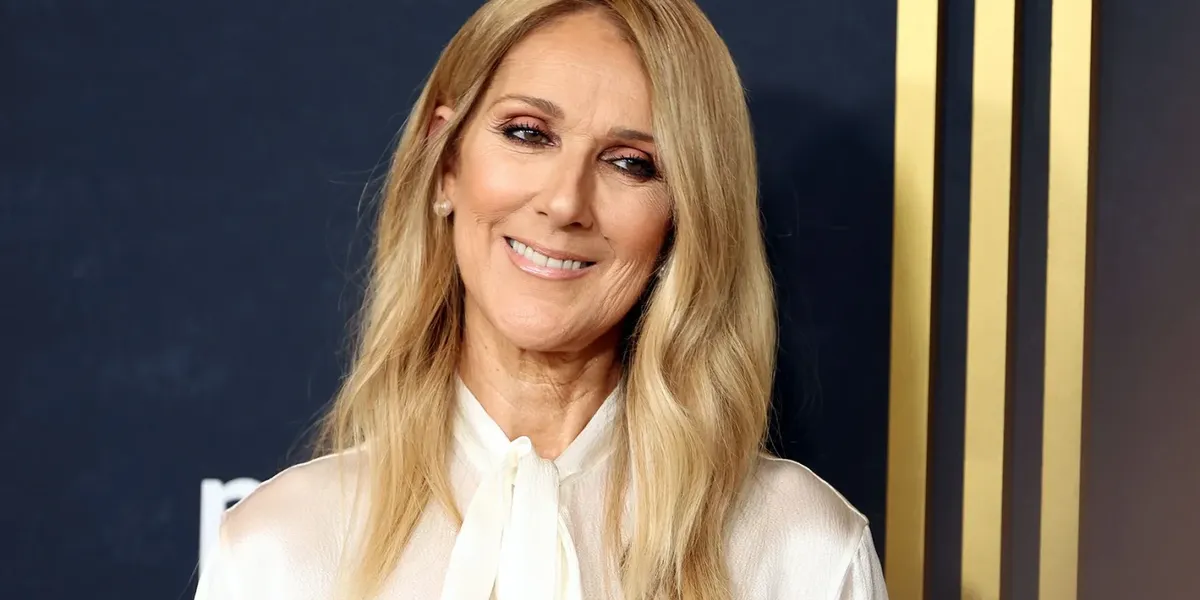

Story video
1 clipThe Québec diva's Paris residency sparks global interest in her vast catalogue.
Billy Eff is the Content Director for Rolling Stone Canada. An award-winning journalist and columnist, he has previously contributed to outlets including VICE and Urbania. A passionate advocate for underground music and a musician himself, he has conducted several hundred interviews with artists and industry professionals across a wide range of styles and genres over the past 15 years. He is based in Montréal, Québec.
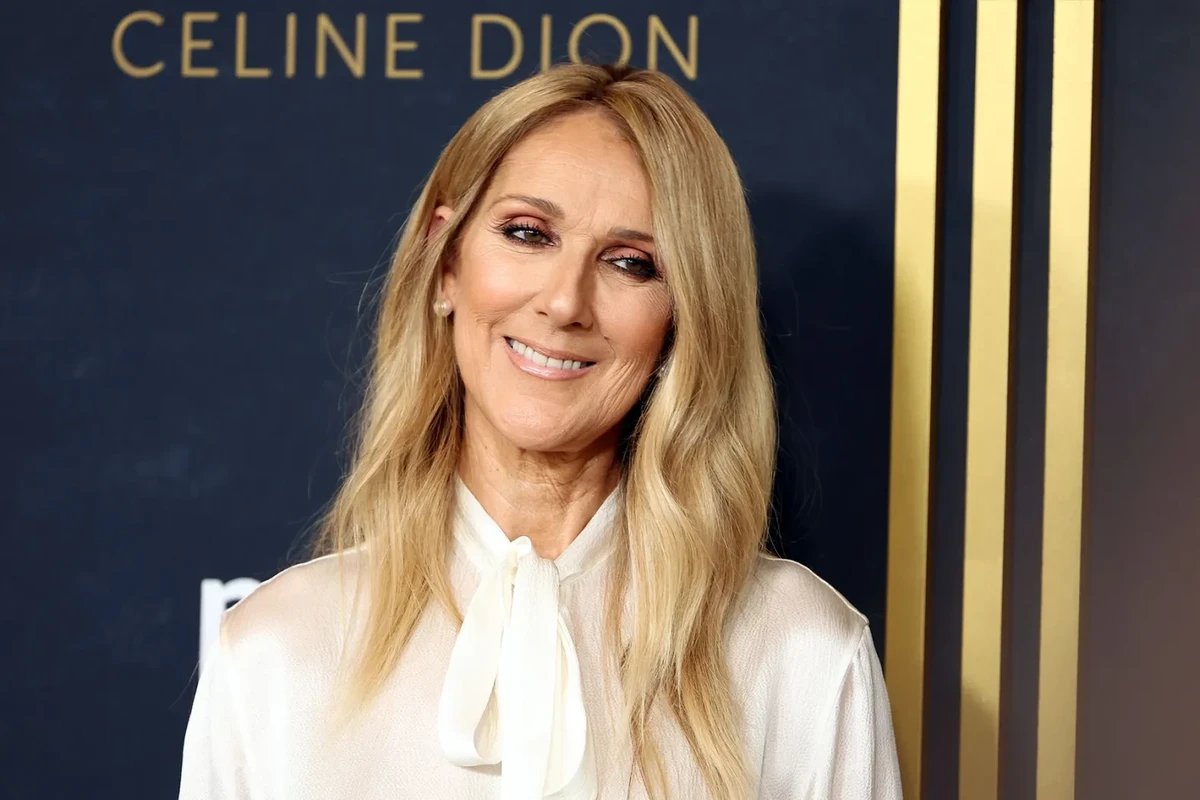
Just two days after launching her first concert residency in six years, Canadian superstar Céline is seeing a major surge in Spotify activity, with listeners across Europe and North America revisiting her catalogue at striking levels.
In Canada, 15 Céline songs landed among Spotify’s top 15 trending tracks, led by «On ne change pas», whose streams were up 322 percent compared with its average. ''S’il suffisait d’aimer'', ''Pour que tu m’aimes encore'' and ''J’irai où tu iras'' also posted significant increases.
France has seen an even bigger spike, with nearly 30 of her tracks trending, as Céline-mania takes over Paris. ''All by Myself (Live)'' jumped 655 percent, while ''Beauty and the Beast'' rose 516 percent. ''On ne change pas'' was up 493 percent, while ''The Power of Love'' and ''Imperfections'' climbed by more than 475 percent. The renewed interest is also crossing language barriers. ''Pour que tu m’aimes encore'' has entered the Top 10 trending songs in Germany, the Netherlands, Switzerland, Belgium and the U.S., where it was the only Céline track among the day’s Top 50 trending songs.
We also finally know what caused the delay on the opening night. Québec music veteran Robert Charlebois, who attended the opening with Céline’s family, revealed on France 5 that the singer arrived 48 minutes late because the group was waiting for Michelle Obama, according to Oprah Winfrey, who was also in attendance. Charlebois said Céline’s family was concerned because such a delay was highly unusual for her. He joked that it was more reminiscent of Madonna.
Céline Dion is scheduled to continue her residency through October 17, with a second run of performances planned for May 2027.
Noel Gallagher with fellow Manchester City fans during a Premier League match between City and rivals Manchester United
Noel Gallagher returned to his favorite press outlet — U.K. sports radio — to drop a few tidbits about Oasis’ 2027 tour amid a much more robust chat about soccer and his beloved Manchester City.
Speaking with talkSPORT host Andy Goldstein, Gallagher revealed that he and his brother Liam knew almost immediately that their hugely anticipated (and hugely successful) 2025 reunion tour wouldn’t be a one-off. Asked when they decided to do a second tour, Gallagher said it was after their second show at Wembley Stadium in London, just a few weeks into the trek.
“Nobody really knew what was going to happen… well, you can see it in the documentary,†Gallagher said, referring to the new film about the reunion tour, Oasis: Don’t Look Back in Anger. “But nobody really knew how it was gonna go, so we did Cardiff and Manchester, and then by the time we got to Wembley, somebody said, ‘Well, you know…’ And it was decided that we were gonna do it. And it was all set in motion then.â€
Part of the reason for the quick decision, Gallagher added, was that Oasis wanted to make sure they brought the show to their fans in Europe, which was skipped entirely during the 2025 tour. “We couldn’t not do Europe,†he said. “Our fans in Italy, and France, Germany, Spain, and Holland have been great with us down the years… so there was always a plan to do that.†(The 2027 run includes multiple shows in all of those countries.)
From there, the itinerary snowballed. Gallagher said Oasis was supposed to play Las Vegas and Boston in 2025 “but couldn’t for some reason,†so they added it to the 2027 tour. Then, they figured, why not do Knebworth Park, where the band famously played in 1996 as part of the Knebworth Festival.
“We were having such a great time that… why wouldn’t you?†Gallagher said.
Nevertheless, Gallagher was noncommittal when asked if he thought he’d want to keep going with Oasis after the 2027 tour. “I dunno,†he replied.
And when asked the obvious, eternal follow-up about a possible new Oasis album, he replied, “There won’t be any new music.†When Goldstein asked if Gallagher wanted to “talk more about it,†the musician cheerfully replied, “No,†before happily chatting at length about soccer.
Oasis will kick off their 2027 tour with five gifts at Celtic Park in Glasgow, Scotland next May. A lengthy run in the band’s hometown of Manchester, England, will be followed by stops in Germany, Spain, Netherlands, France, and Italy. After their Boston and Vegas shows in August, Oasis will close out with two shows in Ireland, followed by that run at Knebworth in September.
It's been a dizzying year for Angine de Poitrine, the Saguenay, QC band who shot to fame within the last few months, thanks to their over-the-top costumes, strong sense of anonymity and polka-inflected microtonal math-rock. They can count nearly every rockstar on Earth as a fan, from Canadian prog-rock veterans Rush to Metallica drummer Lars Ulrich, who has a tendency to fly out to see the band perform whenever he can.
Last night, the duo reached another milestone by making their American TV debut on late-night's biggest stage, Jimmy Fallon's Tonight Show. To mark the occasion, Angine de Poitrine premiered a new song, titled "Zugzegk".
Though not featured on their latest album, Vol. II, the song sounds like it would have its place on a deluxe edition, with its tortuous time signatures that relents into a boppy, surf-rock chorus before going back to their signature complicated harmonies on the double-necked guitar.
Angine de Poitrine are currently wrapping up an American tour before going back to Europe. They come back to Canada in November for shows in Toronto, Québec City and Montréal.
TikTok influencer Gabbie Gonzalez in a Los Angeles court on July 23
TikTok influencer Gabbie Gonzalez, her father, and her ex-boyfriend pleaded not guilty in a California courtroom Monday to charges they plotted to kill Why Don’t We singer Jack Avery with a paid assassin recruited on the dark web.
Los Angeles County prosecutors say the trio conspired to kill Avery amid a bitter and prolonged custody battle over Gonzalez’s seven-year-old daughter with the boy-band singer. Gonzalez, 25; her father, Florida lawyer Francisco Gonzalez, 59; and Hawaii-based surf instructor Kai Faron Cordrey, 26, appeared in court while out of custody on varying conditions. Each is charged with the same three counts of attempted murder, conspiracy to commit murder, and solicitation of murder.
“Yes, your honor,†Gabbie told the judge when asked whether she agreed to postpone her next hearing until Nov. 18. She otherwise remained silent during the proceeding and declined to answer media questions afterward.
“There are two sides to every case, and thus far, the public has heard only one. We are confident that when the evidence is presented, tested, and placed in its proper context, a very different picture of Gabriela and this case will emerge,†her lawyer, Elliot R. Zarabi, said in a statement after the arraignment.
In a prior court filing asking that Gabbie be allowed to see her daughter while the case is pending, Zarabi argued his client “played a comparatively limited role in the alleged conduct,†with the “primary operational aspects†of the alleged scheme purportedly carried out by Cordrey.
“Much of the evidence against Ms. Gonzalez derives from statements made by Cordrey himself, a charged co-defendant, with every incentive to shift blame and minimize his own conduct,†Zarabi wrote to the court. He claimed prosecutors lacked “direct evidence showing that Ms. Gonzalez hired a hit man, negotiated a killing, transmitted cryptocurrency, communicated with undercover operatives, or directly engaged in operational planning.â€
Prosecutors, meanwhile, say Gabbie and her family viewed Avery as “the obstacle to their desired control†over the child. Gabbie and her father’s alleged conduct “escalated from family-court litigation and efforts to discredit Jack, to surveillance and attempted third-party intimidation, and ultimately to a funded murder-for-hire plot designed to remove Jack permanently,†Deputy District Attorney Alexander Bott wrote in a July 22 court filing obtained by Rolling Stone.
Lawyers for Cordrey and Francisco did not immediately respond to Rolling Stone’s requests for comment on Monday.
Prosecutors allege that between October 2020 and May 2021, Gabbie “repeatedly discussed wanting Jack Avery dead,†and that she enlisted Cordrey to help. They say Gabbie and Cordrey discussed using bitcoins on the “dark web†and how they hoped to make the hit “appear to be an accident.â€
According to the felony complaint, Gabbie’s father allegedly sent Cordrey $10,000 in April 2021 to find and hire someone to kill Avery. Prosecutors say Cordrey moved the money into a Gemini cryptocurrency account and began communicating with a dark web murder-for-hire account under the alias “LizardKing69.†On May 22, 2021, Cordrey allegedly identified Avery as the target, provided a Los Angeles address for his location and said Avery could be killed by whatever method was easiest, including a shooting or staged incident, the complaint states.
The account administrator allegedly demanded another $4,000 on June 4, prompting Cordrey to go back to Francisco for more money. Days later, Cordrey allegedly pressed for Avery to be killed within a couple of days, the complaint states.
Prosecutors say the plot continued into September 2021, when an undercover FBI agent posing as a hit man spoke with Cordrey by phone. Cordrey allegedly identified Avery as the target and discussed payment and proof of death. In a later call, Cordrey allegedly said Gabbie wanted Avery killed and that Francisco could pay for it. Prosecutors say Francisco then contacted the undercover agent using the password “Bullrun†and discussed a previous bitcoin payment.
More than a year later, on Oct. 20, 2022, Gabbie allegedly spoke with Cordrey on a recorded call about the supposed hit man and “how to respond to the threat of exposure,†according to the complaint. She also allegedly said she could talk to her father because “he had been handling most of it.â€
If convicted as charged, all three defendants face 25 years to life in state prison, prosecutors say.
A few days before the wild case was made public in May, Avery sought a civil restraining order in Los Angeles County Family Court, saying he had known about the alleged murder-for-hire plot since 2021. “I was notified by the FBI that a hit man was hired to kill me,†Avery wrote in a declaration.
The singer said a detective told him that Gabbie had been arrested on suspicion of attempted murder and was in police custody. Their daughter had been placed with a foster family, he said, and he rushed to pick her up. He claimed Gabbie’s relatives had been calling and texting him “relentlessly†demanding to know where the child was. Two women he identified as Gonzalez’s friends allegedly showed up at his Southern California home, banging on the door and ringing the bell while looking for the girl.
He said the FBI warned him “it was not safe†to be around Gabbie and that he remained “very aware of the safety risks†whenever he arranged visits with his daughter.
“I continued to travel to see [my daughter] and had to learn to manage my own fears and anxiety,†Avery wrote in his petition for a civil restraining order against Gabbie. “I did so because of how important [my daughter] is to me and out of serious concern for her safety and well-being.â€
In certain corners of the internet, Carly Rae Jepsen is not just the woman behind the immortal 2011 hit “Call Me Maybe,†but a bard of pop excellence. Her fans will say she has penned at least five of the century’s best pop songs (though no one can agree on which). She is considered the Canadian equivalent to the Down Under disco queen Kylie Minogue by some, and recalls a young Taylor Swift for her unabashed earnestness. Across her vast discography, she writes, almost exclusively, about this crazy little thing called love, delivering endearing declarations of running away together and bold breakup anthems in her syrupy-sweet voice.
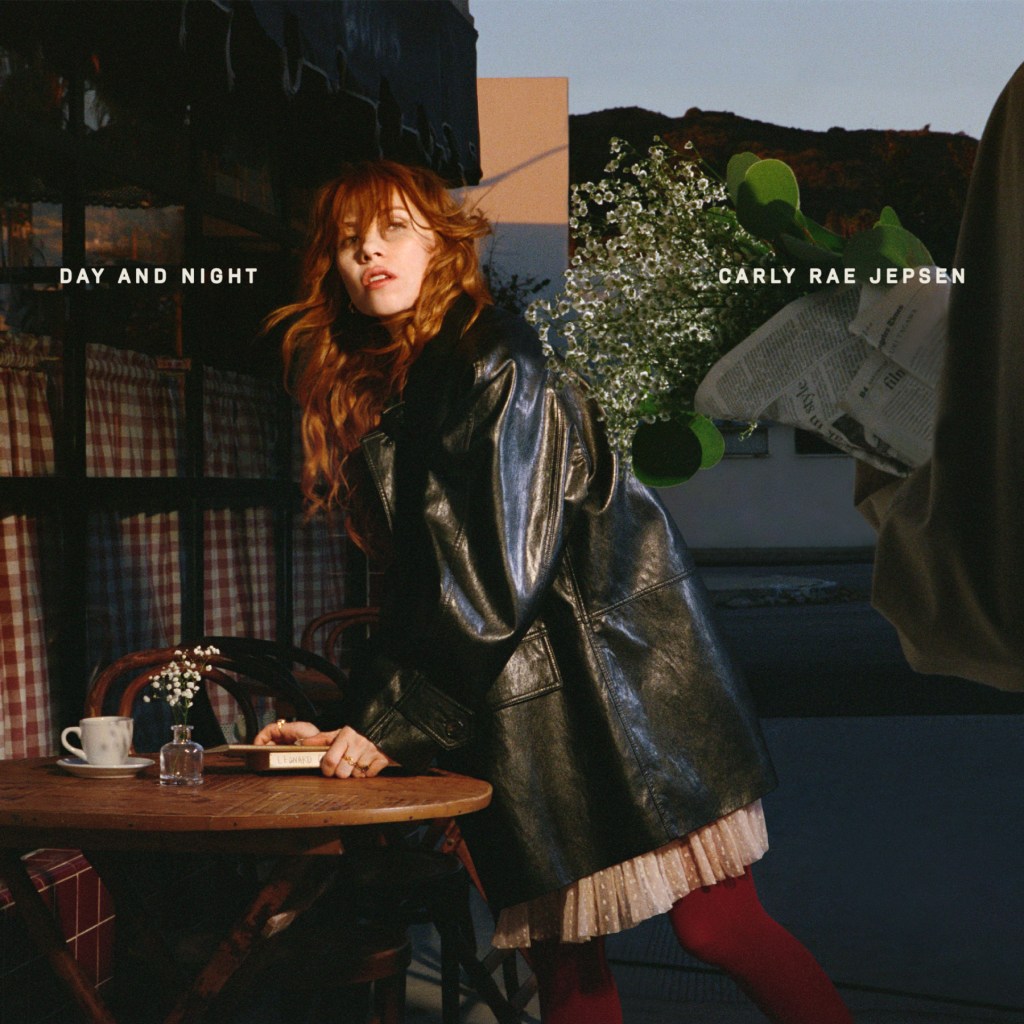
Jepsen’s instinct to follow her heart, whether it’s toward new love or to experiment with an untouched genre, has always been her greatest asset. Her latest record Day and Night isn’t just a double album; it’s also a travelogue — musically and lyrically — of love, some of which is inspired by her romance with producer Cole M.G.N., whom she married last year. From cotton-candy afternoons flecked with Balearic influence to two-stepping sunset soirees and blissed-out bossa-nova confessionals under a twilight sky, it’s Jepsen’s most experimental and exhilarating work, and she makes falling in love feel brand-new all over again.
The Day side of the album draws from silky genres like dream pop and folk pop, where she sounds like she’s on cloud nine. The nu-disco “Habits of Creatures†establishes Jepsen’s desire for stability (“Gimme some more of the same,†she sighs as the synths, which mimic a familiar Todd Terje track, pirouette toward the heavens), and on “Soft,†she lets her guard down and twirls into her lover’s arms. Night jets off to clubs across the globe, where she gets more direct with her desires. There’s the deep house “Near or Far,†the sexy, sample-heavy “Never Let a Good Thing Die,†and a whole lot of disco (this is a Carly Rae Jepsen album, after all). “Don’t Leave Me on the Dance Floor†is a sing-so-hard-you-cry proclamation, where each repeat of the song’s title, from sky-high shouts to cellophane-thin coos, feels like the difference between life and death. “Don’t leave me in the dark to face another song alone,†she beckons to her lover on the metallic chorus, concurrently recalling French touch and ABBA.
Day and Night is a never-ending honeymoon as she saunters through a variety of serene tableaus, like the beach sway of “Blue Skies†or the opulent bacchanal that is “Versailles.†The latter track takes overt inspiration from Sofia Coppola’s 2006 film Marie Antoinette, as Jepsen beckons her love to engage in life’s vices with her, like marring bedsheets with fruit stains and dashing nude through the garden. The record was chiefly produced by Jepsen mainstay Kyle Shearer, who provides Day and Night‘s most danceable tracks, while Bullion, CJ Baran, Magnus Lidehäll, and more, make appearances too. Most notably, M.G.N. co-wrote and produced several songs, including the bubbly ode to family “Motivation†and “Just a Little Walk on the Moon,†which dabbles in bossa nova and acts as a fairytale closer to Day and Night’s first side.
With Jepsen, it’s all about love, all the time, from the dazzling highs to the devastating lows. To her, there’s no shame in airing out your baggage and confessing your feelings in a single song. Night closer “Super Sage†starts with Jepsen nervously pacing, worried she’s driving her lover to the brink as synths pile and pan like spiraling anxieties. Then suddenly, “Super Sage†rockets to the psychedelic-pop cosmos. The tempo picks up, synths undulate like a sine wave, and it all mimics that rush of heat one feels when they’re about to confess everything. Despite the Edenic imagery painted throughout Day and Night, Jepsen’s repeated gasps of “I love you†make for the album’s most romantic and vulnerable moment, full of stark intensity. Seven years ago, on Dedicated‘s “Real Love,†Jepsen screamed to the clouds about wanting genuine connection. On Day and Night, it sounds like she’s found it.
Drake onstage in Toronto last year
Not to be dramatic or anything, but not too long ago, listening to people talk about Drake, you’d think he would never top the charts again. But here we are: With Iceman, he’s broken his own record, earning a 13th week atop Billboard’s Top R&B/Hip-Hop Albums chart on Sept. 5, surpassing Take Care’s 12-week run more than a decade ago. The achievement comes after the great rap civil war of 2024, which was framed as everything from a referendum on Drake’s character as a human being to a cleansing of what popular radio host Ebro would describe, in February 2025, as “a sickness in the game.â€
Again, not trying to be dramatic, but even if you were skeptical of the discourse circa 2024, it is a bit shocking to hear the public’s recent re-embrace of Drake. Consider how far the frenzy around the most salacious allegations on Kendrick Lamar‘s “Not Like Us†extended. There was Christopher Alvarez, a disabled journalist, being dragged into conspiracy theories. There was the woman from the resurfaced concert footage, now 31, having to publicly dispute the creepy significance strangers had assigned to an onstage kiss from when she was 17. Drake said in his lawsuit against UMG that the threats had forced him to pull his seven-year-old son out of school.
What now feels like the absurdity of the moment registered as something deathly serious at the time. By September 2024, Lamar was releasing the ominous “Watch the Party Die,†just days after his Super Bowl halftime performance was announced. Oh, also, a major talking point in American culture a year and a half ago was whether one of the biggest superstars in the world would be publicly branded a pedophile during the Super Bowl.
In what world would any celebrity recover from that?
Except, with time, the online frenzy surrounding the Drake and Lamar feud reads more like a mass-psychosis event than a cultural reckoning. The music, oddly enough, often seemed secondary to the certainty of everyone discussing it. “Not Like Us†was a veritable hit, absolutely. But its cultural dominance became bound up in a widespread vilification of Drake that curdled online, where the most damning interpretation of anything could quickly become the accepted one. For a while, even putting on a Drake song could feel like something you had to explain, as if listening amounted to taking a position on the allegations.
That this all happened in 2024 is meaningful. This was right in the peak of Elon Musk’s reconstruction of Twitter, privileging rage bait and engagement tactics that helped misinformation disseminate like fact. It was also the beginning of AI tools becoming sophisticated enough to produce convincing-sounding tracks. Even before Drake released his first response, “Push Ups,†AI-generated response tracks were circulating across social media. And so, in many ways, the well of public opinion was already poisoned.
Listeners’ recent embrace of Drake feels settled in a broader cultural shift brewing since 2024. The beef, in hindsight, feels like a dying vestige of whatever people want to call “Woke 1.0â€: a particular faith that exposing the right person could amount to a cultural transformation. For a moment, defeating Drake seemed to promise something about the future of hip-hop, about who would belong in it and what it would tolerate.
There were obvious holes in the argument, namely who exactly these arbiters of culture were and why they were uniquely qualified to speak for the entirety of Black people, questions that Drake pokes at on “Ran to Atlanta†from Iceman. Still, these were never even supposed to be binding philosophical truths in the first place. To hear levelheaded commentators discuss it, this was all simply entertainment — two of the genre’s greats duking it out. Even one of the beef’s catalysts, Metro Boomin, echoed the sentiment, lamenting how online fans had turned the battle into something sinister. Hell, even Jay-Z said something similar before himself tossing a few jabs at Drizzy in a freestyle at the Roots Picnic this year. But the artists themselves supplied the allegations. The ability to raise those stakes and then retreat into “simply entertainment†was part of the dynamic, too.
Even so, how it all devolved into a pseudocultural reckoning says more about the environment fans exist in today than it does about either Drake or Lamar. In the years around the beef, shocking revelations about Diddy as well as the global elite’s ties to Jeffrey Epstein have become folded into the background, alongside a sense that accountability remains selective. This atmosphere of collective powerlessness offers one explanation for the conspiratorial thinking at the heart of Lamar versus Drake. A frustration with an increasingly degraded world and dwindling resources to change it means outrage can mobilize an enormous number of people very quickly, with little holding them together once the moment passes.
The language of exploitation and cultural extraction gave the battle a purpose that seemed to extend well beyond either rapper. But even if you took the least charitable opinion imaginable of our Canadian hitmaker, what was supposed to happen after Drake was defeated? The industry whose supposed wickedness Drake allegedly embodied carried on selling the spectacle itself.
What everyone was caught up in was an appetite with a longer history than the social media platforms now feeding it. Lance Oppenheim’s new film, Primetime, returns to Chris Hansen and To Catch a Predator, a television format that made public humiliation feel like a public service. The connection is in the experience offered to the audience. The viewer could enjoy the confrontation with the reassuring sense that watching served some larger good. Never mind if anything that was unfolding on screen amounted to justice.
In the historian Anton Jäger’s book-length essay Hyperpolitics, published earlier this year in English, he describes how the past decade’s surge of political feeling has coincided with a continuing withdrawal from communal life. More isolated digital environments can fuel extraordinary mobilization without the actual community organizations that might turn it into something tangible. Negating Drake, then, became a gesture in itself. A means of signaling a broader dissatisfaction with the direction of hip-hop culture. Where the problems extend to technology and the demoralizing margins of streaming music, for a while it felt good for people to just wrap it all up in one word: Drake.
But on Iceman, it’s hard to take the idea of Drake as an evil force within hip-hop very seriously, even as he himself makes an effort to lean into the role of the villain. Drake’s music is most potent when it’s aimed at the masses, even if he swears his nice-guy days are over. This is the Degrassi kid turned global superstar rivaling Taylor Swift, after all.
Now, with Fear of Missing Out, Drake’s cryptically announced project slated for release this week, we’ve entered a second kind of Drake Renaissance. However delusional it seems, there was a moment when it felt somehow wrong to play Drake. His return to the top of the charts suggests a good deal of people were eager to get back to listening.