yahoo Press
RFK Jr. announces 'the largest autism fraud bust in American history' and it’s in Minnesota
Images
1 / 7
2 / 7

3 / 7

4 / 7
5 / 7

6 / 7

7 / 7
The Department of Justice said Thursday it has arrested and indicted 15 people in Minnesota for fraud schemes involving $90 million in Medicaid funds.

Mehmet Oz, who oversees Medicaid and Medicare, said at a press conference that Minnesota’s government, led by Democratic 2024 vice presidential nominee Tim Walz, had not done enough to prevent it.

It’s the latest salvo in a battle between the Trump administration and Walz this year over Medicaid fraud. Medicaid is the state-federal health insurance program for low-income and disabled people.

Minnesota was also at the center of Democratic resistance to President Donald Trump’s mass deportation campaign. Federal agents killed two protesters in the state earlier this year, prompting Democrats in Congress to withhold funding starting in February for the Homeland Security Department. Lawmakers agreed to fund much of the department three weeks ago after a record-long shutdown. Republican lawmakers plan to pass a party-line bill soon providing funds for the department’s immigration unit.

James Clark, inspector general at Minnesota’s Department of Human Services, said his department has been cooperating with “career federal and state partners for months to help them build criminal cases” against most of the individuals indicted today.

In an emailed statement, Clark said his department stopped payments to some of the businesses connected to today’s charges more than a year ago and has already opened investigations and withheld payment to 11 of the 15 people charged.

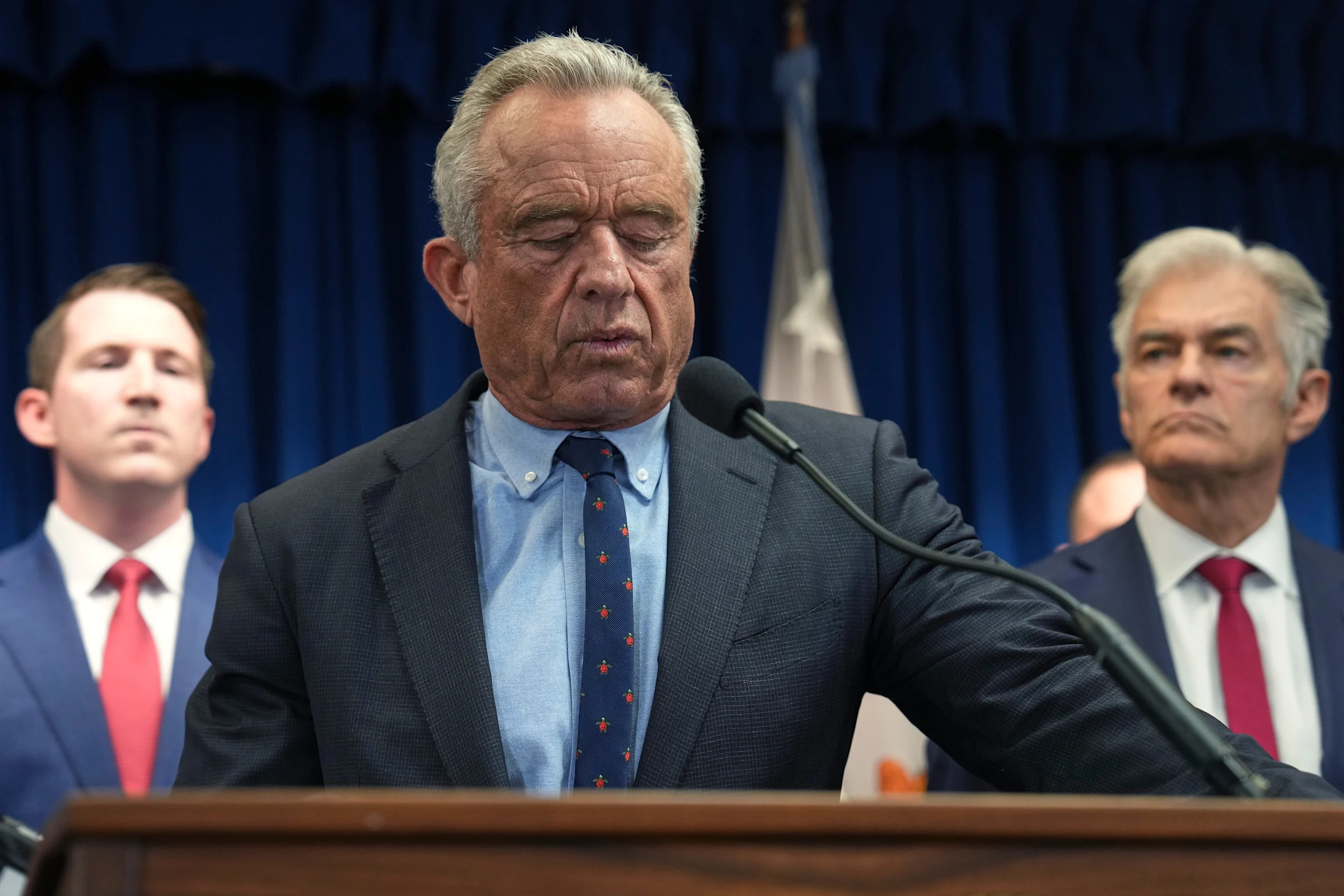
Health Secretary Robert F. Kennedy, who appeared at the press conference alongside Oz and Assistant Attorney General Colin McDonald, said the arrests were “the largest autism fraud bust in American history.”

McDonald said the accused had stolen money intended to house people who are homeless; to provide services for children with autism; and to help people with disabilities live independently.

Two of the defendants indicted Thursday were accused of paying kickbacks to parents who brought their children to autism centers where the children were diagnosed with the neurological condition, “regardless of medical necessity,” and then billed for autism services that were never provided, McDonald said.

One patient who was supposed to receive around-the-clock care but didn’t was later found dead, McDonald said.

Why it matters: Walz, who ran as Kamala Harris’ running mate in 2024, has become a focal point in the administration’s fight to combat fraud. His state drew notoriety in 2025 after it shuttered a housing program due to rampant fraud. Walz subsequently decided not to seek reelection.

So far this year, Oz’s agency, the Centers for Medicare and Medicaid Services, has withheld more than $300 million in Medicaid payments to Minnesota because of questions about whether its medical claims were fraudulent. The state has taken CMS to court over the funding deferrals, arguing they are larger than usual and politically motivated.

In January, CMS sought to withhold $2 billion in future Medicaid payments to the state for not doing enough to fight fraud. The move relied on a federal authority CMS had never used before.

CMS, however, has put that effort on hold after approving Minnesota’s plan to combat fraud in March.

What’s next: Minnesota has agreed to revalidate by May 31 all health providers of services that are at high risk of fraud, including those who offer personal care or care at home.

Of the 5,600 providers that the state is revalidating, 40 percent have not responded or given an inadequate response as of May 7, Oz said during the press conference.

“We believe by the end of this month that half of these providers may no longer be allowed to provide services,” he said.

CMS is also starting to go after Medicaid funding in other states. It announced a $1.3 billion deferral for California earlier this month, alleging the state had not done enough to go after fraud among hospice providers. The state said the accusation is untrue and political.

The agency has imposed a nationwide requirement for all states to issue a report about what their Medicaid fraud control units are doing.

CMS is also asking states to draft plans to revalidate providers of fraud-prone services.